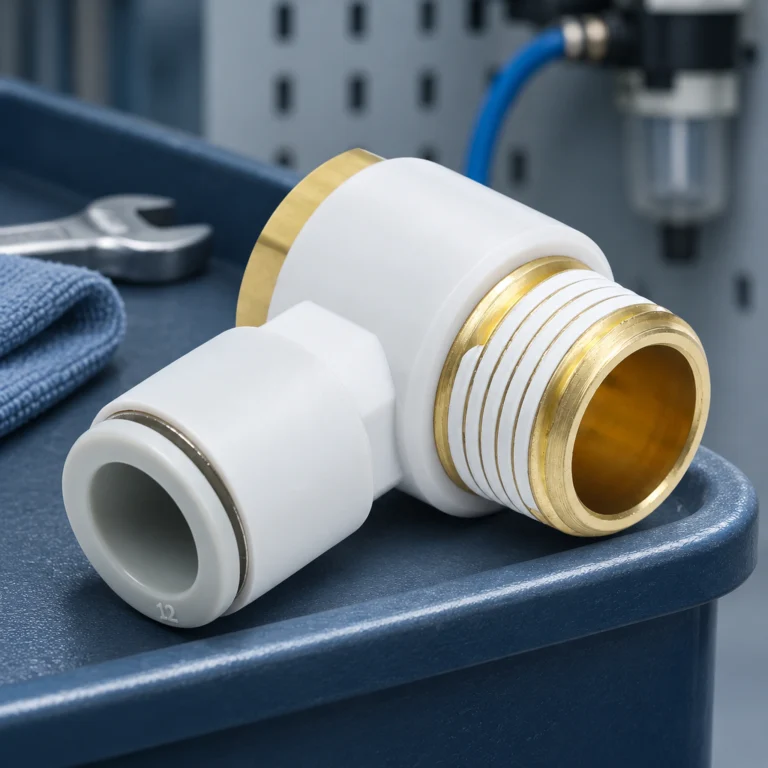
La migliore raccorderia per tubi dell’aria dipende dal tipo di collegamento da realizzare, e non da una classifica universale. Un raccordo rapido per cambi frequenti degli utensili presenta requisiti di prestazione diversi rispetto a un raccordo a innesto, a un gomito filettato o a un’estremità del tubo con spinotto. Anche un componente meccanicamente simile può comunque perdere, limitare il flusso o staccarsi se il tubo, la filettatura, il fluido e la pressione non sono quelli corretti.
Confronta raccordi per tubi dell'aria in base alle dimensioni del tubo o del manicotto, alla filettatura dell'attacco, al fluido, alla pressione, alla temperatura e all'accesso di servizio. ISO 4414 fornisce i principi di sicurezza per i sistemi pneumatici; la documentazione esatta del raccordo ne definisce le condizioni consentite per tubo, fluido e servizio. Scegli il tipo di raccordo per l’imposta, quindi verificare il completo aria compressa Assemblaggio nelle condizioni di prova approvate.
Quali cinque famiglie di raccordi coprono i principali impieghi industriali?
| Famiglia | Utilizzo ottimale | Controllo principale |
|---|---|---|
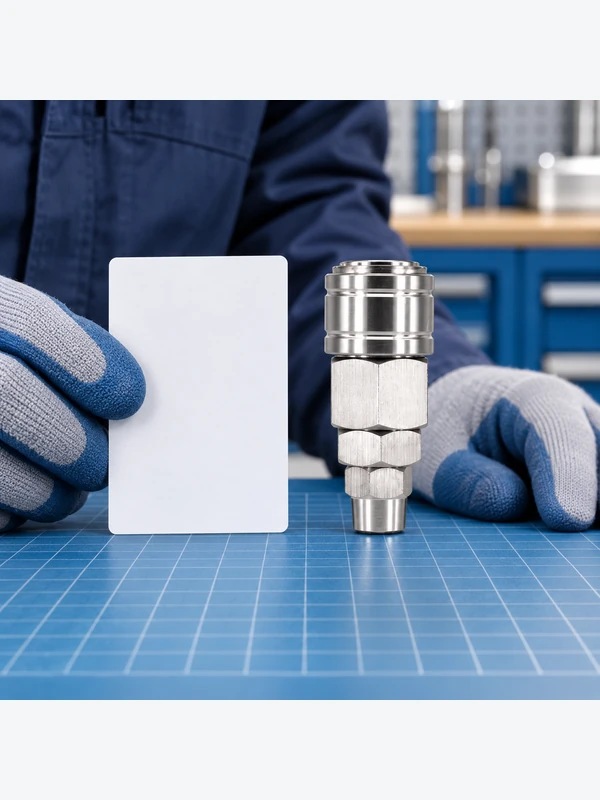
| Raccordo rapido | Frequenti cambi utensile | Profilo esatto della spina/accoppiatore e pressione di esercizio |
| Raccordo a innesto | Circuiti di controllo a tubo in plastica | Diametro esterno del tubo, materiale, taglio e sigillatura |
| Adattatore filettato, raccordo a gomito o raccordo a T | Transizioni delle porte e instradamento | Filettatura BSP, NPT o metrica e metodo di tenuta |
| Raccordo aghiforme | Gruppi di tubi flessibili | Diametro interno del tubo, terminale e metodo di fissaggio (a morsetto o a crimpatura) |
| Raccordo a compressione | Tratte di tubazione fisse | Diametro esterno del tubo, spessore della parete, materiale e istruzioni di montaggio |
Come si devono misurare la dimensione e la filettatura?
Le barbe generalmente corrispondono al diametro interno del tubo; raccordi a innesto Corrispondenza del diametro esterno del tubo. Misurare i componenti esistenti con un calibro e un comparatore per filettature. Le filettature NPT, BSPP, BSPT e metriche possono apparire simili pur garantendo tenute diverse. Registrare il materiale della guarnizione, il materiale del corpo, la temperatura, la qualità dell’aria e le sostanze chimiche prima di approvare una sostituzione.
Quali fattori di confronto sono rilevanti oltre al prezzo unitario?
Includere la limitazione del flusso, i tempi di installazione, il rischio di perdite, la complessità delle parti di ricambio e l’accesso per la manutenzione. Standardizzare un profilo di intercambiabilità approvato può semplificare le riparazioni, ma deve essere convalidato in base all’apparecchiatura e al tubo flessibile. Fissare il limite dell’assemblaggio al componente con la valutazione più bassa e isolare la linea prima della manutenzione.
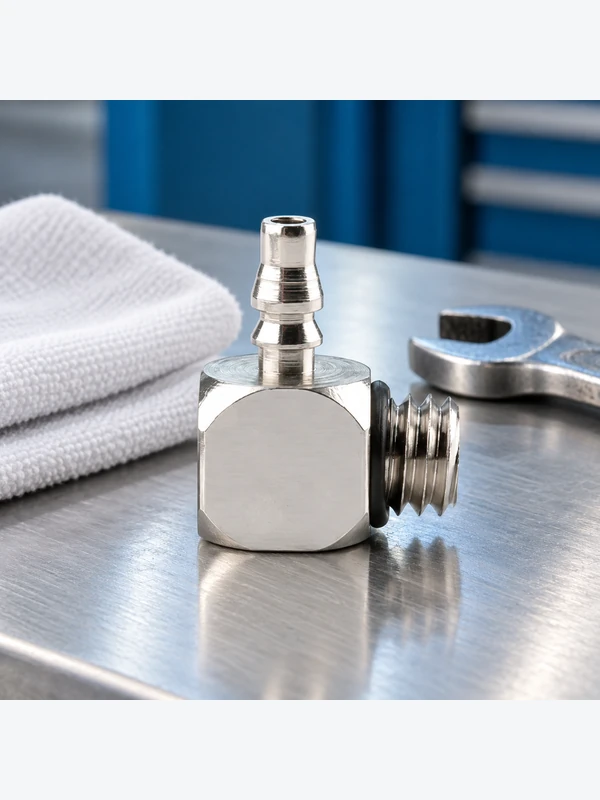
Per le opzioni adiacenti, confronta l’operatività one-touch, esamina i layout di raccordi dritti e invia il compito completo al team di ingegneri.
Come deve approvare un raccordo un team di manutenzione?
Inizia dal punto di utilizzo e risali verso il compressore. Elenca ogni giunto, tubo flessibile, valvola e adattatore all’interno del circuito in pressione. Per ciascun componente, annota la famiglia di connessioni, le dimensioni nominali e misurate, la pressione di esercizio nominale, l’intervallo di temperatura, il fluido e l’orientamento di installazione. Questo semplice registro rende ripetibile una sostituzione d’emergenza: un tecnico può selezionare il ricambio approvato senza dover fare affidamento su una fotografia o sulla sigla del fornitore.
La portata è un fattore distinto dalla compatibilità. Un raccordo o un gomito di piccole dimensioni può introdurre una perdita di carico anche se le filettature sono uguali. Confrontare i dati di portata forniti dal produttore alla pressione prevista e utilizzare il tubo flessibile più corto possibile. Quando uno strumento specifica una portata richiesta, testare l’intero assieme tubo‑raccordi sotto carico anziché basarsi sulle letture di un manometro in condizioni statiche. Se la caduta di pressione si verifica solo durante il funzionamento dello strumento, verificare il diametro interno, il profilo dei raccordi, la lunghezza del tubo e il filtro a monte prima di modificare l’impostazione del compressore.
| Sintomo di guasto | Probabile confine | Prima azione controllata |
|---|---|---|
| Sibilo in un raccordo a innesto | Taglio del tubo, diametro esterno, profondità di inserimento con o-ring | Isolare, tagliare a squadro e ripetere il test con il tubo approvato. |
| Lo strumento si spegne sotto carico | Restrizione, tubo o raccordo di dimensioni insufficienti | Misurare la pressione sull’utensile durante il funzionamento |
| Il giunto separa | Profilo errato, usura del manicotto o carico laterale | Depressurizzare e confrontare entrambe le metà con il numero di parte approvato. |
| La filettatura si allenta lentamente | Vibrazione o metodo di sigillatura non corretto | Verificare il profilo della filettatura e utilizzare la pratica di tenuta specificata. |
Cosa deve essere incluso in una specifica per un ordine ripetuto?
Includi l’esatta famiglia di raccordi, il numero di parte, la revisione, le dimensioni del tubo o del manicotto, standard del filetto, materiale del corpo e della tenuta, limiti di pressione e temperatura, fluido, finitura superficiale ove pertinente, requisiti di imballaggio e ispezione. Indicare se il pezzo è un ricambio critico per la sicurezza e se le sostituzioni richiedono l'approvazione dell'ingegneria. Un ordine di acquisto che riporta solo “1/4-inch raccordo per aria” lascia aperte troppe variabili.
Come devono essere confrontati il flusso, la vestibilità e i costi di assistenza?
A fitting can match a thread and still restrict a tool or create a maintenance problem. Start at the point of use and list every joint in the pressure boundary. Record tube OD, hose ID, thread standard, medium, temperature, working pressure, flow demand and movement. Then compare the complete assembly, because a small bore coupler, elbow or adapter can dominate the pressure drop even when the compressor gauge looks normal.
ISO 4414 is a system-safety reference, not a universal product rating. The pressure value in a catalogue must be tied to the exact fitting, seal, tube and temperature. For proof and burst information, request the method and scope rather than calculating a continuous rating from a burst number. The practical total-cost comparison includes replacement frequency, downtime, leak diagnosis, tool access, tube waste, inventory complexity and the cost of a failed test.
| Selection factor | Cosa confrontare | Useful field question |
|---|---|---|
| Connessione | Push-in, threaded, barbed, compression or coupler profile | Can the technician identify the mating part without guesswork? |
| Flow | Bore, port size, coupler restriction and hose length | Does pressure drop appear only when the tool runs? |
| Manutenzione | Release access, seal availability and replacement method | Can a damaged tube be cut back and retested safely? |
| Prova | Material, pressure, temperature, medium and test record | Does the document apply to this exact model and assembly? |
What failure pattern points to the fitting rather than the machine?
A leak at the tube entry suggests a cut, insertion, OD or seal problem. A leak at the port suggests thread form, sealing method or body damage. A pressure drop under flow suggests bore, coupler profile, hose length or filtration. A fitting that releases under movement suggests inadequate support, wrong tube material or a mismatch between tube tolerance and collet. Isolate the symptom before changing the compressor or replacing every joint.
For procurement, approve one labelled reference assembly and keep the fitting family, part number, revision, tube dimensions and thread standard together. Oulu’s Gamma di componenti pneumatici can be evaluated with the same checklist used for any supplier. The best fitting is the one whose interface and evidence match the duty, not the one with the shortest catalogue description.
How can two similar flow ratings lead to different choices?
Compare flow values only after checking their stated inlet pressure, pressure difference, temperature and reference conditions. A catalog may describe volumetric flow at a reference condition, whereas another document may report a different flow measure or test arrangement. Equal nominal port sizes do not establish equal restriction through the valve or coupling mechanism. If the documents cannot be compared directly, request matching test conditions rather than deriving a ranking from the largest printed number.
Keep connection type and disconnection procedure together. A coupler intended for frequent tool changes has an operating role different from a fixed tube fitting, and neither should be selected solely by unit price. Assess access to the release mechanism, residual-pressure precautions and the possibility of hose movement during service. ISO 4414:2010 provides system-safety context; the product instruction determines the actual procedure. For hot-work installations, compare the documented tube and cover conditions, such as the SMC series-specific tubing descriptions, before treating ordinary tube-fitting compatibility as sufficient.
Domande frequenti
Are all air-hose quick couplers interchangeable?
No. The plug profile, socket mechanism and sealing arrangement must belong to an approved interchange combination. A plug that appears to latch does not establish the correct engagement or flow behavior. Identify both halves by their documented profile and part numbers. Isolate and depressurize before checking a mismatched connection rather than testing interchange by pressurizing it.
Is a push-in fitting sized by tube ID or OD?
Push-in fittings are normally selected against tube outside diameter, material and permitted tolerance. Hose barbs, by contrast, are usually reviewed against hose inside diameter and the approved attachment method. Keep those dimension conventions separate on the purchase order. A matching nominal number can refer to a different physical measurement in another connection family.
Why does an air fitting leak after installation?
The cause depends on where the air escapes. A tube-entry leak may involve a damaged cut, wrong OD, contamination or incomplete insertion; a port leak may involve the thread or its sealing method. Isolate the line before correcting the identified boundary. If the fitting or seal is damaged, replace it according to the maker’s instructions rather than relying on extra force.
Can BSP and NPT air fittings be connected together?
Do not assume compatibility because the nominal size is similar. The thread form and the intended seal location must match the mating port. Record whether a connection seals on a taper, a gasket, an O-ring or another specified surface. Use a documented adapter where a transition is needed rather than treating apparent thread engagement as an approved assembly.
Why is tool pressure low when compressor pressure is normal?
A static upstream reading does not show the loss across a hose and fittings while the tool consumes air. Check pressure at the relevant point during the intended operation and review coupler restriction, hose dimensions, length and upstream treatment. Use flow data with stated measurement conditions. Do not increase compressor pressure before identifying the restriction and confirming the limits of the entire assembly.
When should an air-hose fitting be replaced rather than resealed?
Replace a component with damaged retention parts, threads, sealing surfaces or other defects covered by its service instructions. A leak caused by an incorrectly prepared tube may be corrected without replacing an undamaged fitting, but that distinction requires inspection. Record repeated failures so the approved spare or routing can be reviewed. Recommission the connection under the project’s procedure rather than accepting the absence of an audible hiss as the only check.
Riferimenti
- ISO 4414:2010: pneumatic systems and components.
- UK HSE INDG261: pressure-system responsibilities and precautions.
- SMC: tubing series and hot-work material boundaries.
Riepilogo
The best air-hose fitting is the one whose interface, flow behavior and service method match the task. Quick couplers, push-in connectors, threaded adapters, barbs and compression fittings are not ranked by one universal performance number. Begin with the connection family and measured dimensions, then confirm the thread, medium, temperature and complete assembly pressure boundary. Compare pressure loss under the intended operating condition rather than relying on a static compressor gauge. Preserve an approved mating assembly and its documentation so maintenance can repeat the selection without guessing. Oulu’s pneumatic parts range can be evaluated against those requirements, with model-specific evidence and controlled commissioning taking precedence over a generic catalog description.