
Um conector de bloco de gás é frequentemente especificado como se fosse um acoplador reto mais resistente e, em seguida, testado com um valor de pressão copiado de outro produto. Essa simplificação pode confundir duas funções distintas: a passagem de ar comprimido por um caminho vazio e a vedação contra pressão após a instalação do cabo. A seleção correta deve começar pelo diâmetro externo do duto, pelo diâmetro externo do cabo, pelo projeto da vedação e pelas instruções precisas do fabricante.
A conector de bloco de gás veda o espaço anular ao redor de um cabo instalado, enquanto um conector reto une dutos e uma tampa final fecha um duto vazio. A página de produtos de Oulu indica uma condição de insuflação de barras 10 para seu bloco de gás; um requisito final de vedação do cabo deve ser confirmado separadamente para o modelo encomendado. Verifique o exato microduto, cabo e método de teste; não generalize as classificações. Um controlado teste de vedação deve identificar a interface com vazamento.
O que veda um bloco de gás?
Ele veda o espaço entre um microduto compatível e o cabo que passa por ele. O Oulu Página do produto de bloco de gás para microduto Deve ser consultado juntamente com o desenho dimensional e as instruções de instalação. As instruções do Optimus da Nestor distinguem a instalação do cabo da ativação do selo final; nem a sequência de operação nem as especificações podem ser transferidas para outro número de peça.
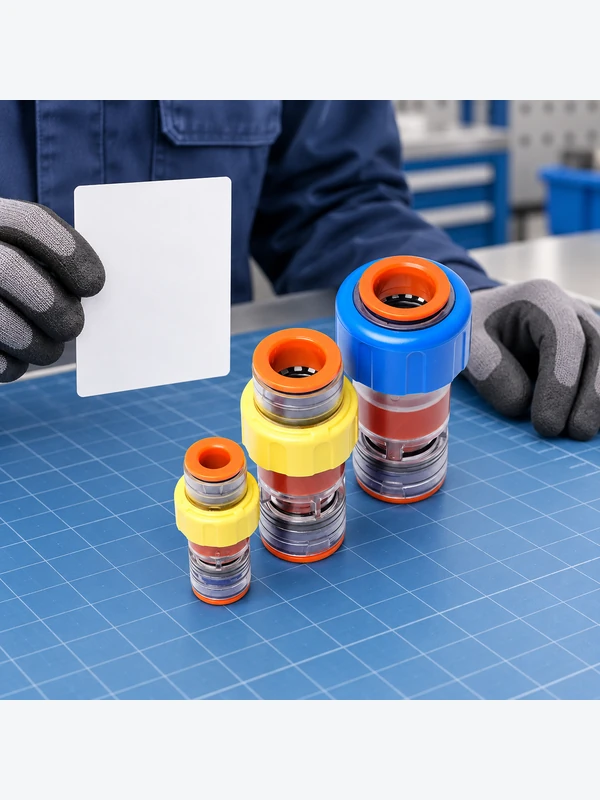
| Estado do percurso | Função correta do componente | Verificar |
|---|---|---|
| Dois dutos de mesmo tamanho | Conector reto | Diâmetro externo do duto, profundidade de inserção e vedação da carcaça |
| Cabo instalado através de uma entrada | Bloco de gás | Diâmetro externo do duto, diâmetro externo do cabo, ativação da vedação e condição de teste |
| Extremidade vazia do duto | Tampa de extremidade | Ajuste da fechadura e ambiente da rota |
Verifique a capa do cabo antes de escolher a vedação.
O diâmetro do cabo indicado para a compra deve corresponder à bainha no local de vedação efetivo. Solicite ao fornecedor do cabo a sua tolerância dimensional e, em seguida, inspecione o trecho instalado quanto a achatamentos, arranhões, contaminação ou presença de luva de reparo. A quantidade de fibras não define o diâmetro da bainha, e uma classificação nominal do cabo não garante que um determinado insert seja adequado. Registre o insert e o corpo selecionados em conjunto, para evitar que uma entrega posterior substitua por uma vedação diferente da mesma família de produtos.
Verifique a superfície que o selo de cabo entrará em contato. Se houver danos, obtenha um procedimento de reparo ou realocação aprovado antes de montar a conexão. Não aplique compressão adicional para compensar uma faixa de cabo incorreta ou uma bainha danificada. Mantenha o cabo apoiado na entrada para que a conexão não seja utilizada para endireitar uma curva ou suportar a tensão do cabo.
O lubrificante também deve ser incluído na avaliação de compatibilidade. A Nestor solicita especificamente aos usuários do seu produto Optimus que verifiquem a compatibilidade do lubrificante com os materiais do bloco de gás. Para outro fornecedor, solicite as instruções correspondentes relativas à bainha do cabo, ao vedante e ao lubrificante de instalação utilizados. Registre os nomes dos produtos aprovados no pacote de trabalho; um lubrificante adequado para o duto não garante automaticamente a adequação ao vedante do cabo. Essas verificações complementam o Processo de seleção do conector ABF quando uma rota muda de um duto vazio para um ocupado.
Por que as pressões de sopro e pós-instalação são diferentes?
Durante o sopro, o ar circula pelo duto para impulsionar um conjunto de fibras; o conector deve manter o fluxo de ar especificado do trajeto sem vazamentos. Após a instalação, a vedação pode precisar apenas limitar a migração de gases ou água ao redor do cabo. Pressão, duração, temperatura e meio influenciam o resultado. Registre qual estado de montagem está sendo testado e utilize o limite de aceitação correspondente a esse estado.
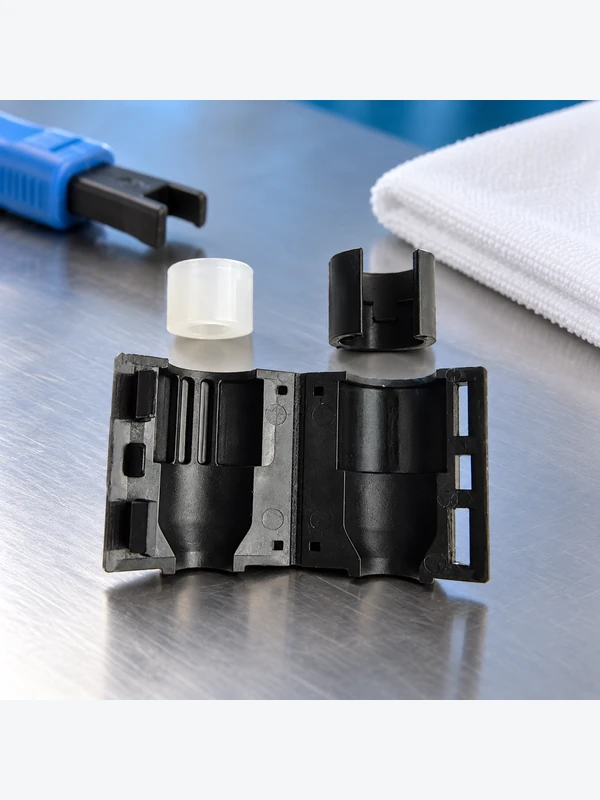
Before activation, measure both ODs, clean the duct and cable jacket, and confirm the cable is centred without side load. If leakage occurs, isolate the duct-to-body interface from the cable-to-seal interface rather than replacing parts without diagnosis.
How should a buyer specify a gas block?
- List duct material, measured OD and tolerance.
- List cable jacket OD and whether the cable is already installed.
- State the medium, pressure, stabilization and hold period for each test.
- Request the exact drawing, seal material, installation sequence and traceable part identification.
What should a gas-block connector quotation identify?
The quotation should list empty-duct blowing conditions and occupied-duct sealing conditions separately. It should identify the duct outside diameter, the installed cable diameter, seal configuration, body material, temperature range, installation sequence and the medium used for the test. It should also state whether a pressure value is a continuous working value, a short-term blowing value, a proof condition or a burst result. Without those labels, two numbers that look similar may describe completely different risks.
Public product pages show why model-specific review matters. The Oulu gas-block page describes a connector used around an installed cable and gives a model-specific blowing condition. Nestor’s Optimus Gas Block describes an open position for cable installation and tightening after installation, with separate short-term and burst information. Those details are useful examples of evidence categories, not ratings that can be transferred to another manufacturer’s part.
| Quotation item | Por que isso importa | Ação do comprador |
|---|---|---|
| Duct and cable OD | Determines fit, retention and seal compression | Measure the installed parts and attach the drawing |
| Pressure definition | Prevents working, proof and burst values being mixed | Write the test state, duration and acceptance limit |
| Assembly state | Blowing and post-install sealing have different duties | Specify whether the duct is empty or occupied |
| Service evidence | Future maintenance may require reopening or replacement | Request removal, reuse and traceability instructions |
How can a leak be located without replacing the whole assembly?
Stabilize the approved test condition first, then isolate the route into sections. Check open ends, branch valves and the connector body before assuming that the cable seal is at fault. A leak that appears only during blowing points to a different boundary than a leak that appears after cable installation. Record the duct, cable, connector revision, pressure, medium, stabilization time and observed loss so a supplier can review the same condition.
Connector choice should also account for the next operation. If a cable may be replaced, keep the release path accessible and document the seal activation step. If the route will be buried or exposed to water, request environmental evidence for the actual model and duration. The Hexatronic duct-integrity guidance is a useful reminder that pre-fiber testing reduces avoidable cable waste, but the project owner still defines the acceptance method.
Check the duct interior and building penetration separately
At a building entry, identify each possible passage on the drawing: the space around the cable inside the microduct, the space around the duct through the opening, and any unused neighbouring ducts. A connector selected for the cable annulus addresses its documented interface. The designer should separately specify the wall penetration and any required fire-stopping arrangement. A connector pressure result should not be entered as acceptance evidence for an untested building penetration.
Record who inspects each interface before it becomes concealed. Keep access to the cable-seal release mechanism where the manufacturer requires it, and mark spare ducts so later work does not leave them open. After a cable change, inspect the disturbed components and repeat the checks required for the new assembly. The HDPE microduct maintenance guide explains how to retain route and closure records alongside those changes.
Perguntas frequentes
Is a gas block connector the same as an end cap?
No. An end cap closes an empty microduct, whereas a gas block seals around a cable passing through an occupied duct. The cable outside diameter is therefore an additional selection variable for the gas block. A part that closes the duct end cannot be assumed to provide a seal around a cable simply because the duct diameter matches.
Can a gas block be used on any 15 bar blowing route?
No. A blowing value applies to a particular product, assembly state and set of test conditions. For example, the Oulu product page states a 10 bar blowing condition, while Nestor describes a separate 25 bar short-term condition for its Optimus product. Neither value qualifies another manufacturer’s part. Obtain the relevant model instruction and project limit rather than selecting a rating from a different catalog.
Can one gas block fit several cable diameters?
Some product families offer a cable-diameter range, but the range must belong to the actual ordered seal and body combination. Measure the cable jacket rather than inferring its size from fiber count. Confirm the duct OD, cable OD and any required insert together. A seal compressed beyond its documented range is not an acceptable substitute for the correct part.
When should the cable seal be tightened?
Follow the model-specific installation sequence. Nestor instructs installers to keep the Optimus compression arrangement fully open for cable installation and tighten it afterward; this is an example for that product, not a universal procedure. Check the cable position and jacket condition before activation. Do not pull cable through a closed seal unless the selected manufacturer explicitly permits that operation.
How can a leaking gas block be diagnosed?
First establish the approved test condition and check the other ends of the test section. Then distinguish a duct-to-body leak from a cable-to-seal leak, using the project-approved detection method. Record dimensions, pressure, medium and assembly state so the result can be reproduced. Stop if damage or an incorrect seal range is found instead of compensating with extra compression.
Can a gas block be reopened when a cable is replaced?
That depends on the exact design and the supplier’s service instructions. Confirm whether the seal can be released, whether an insert must be replaced and which parts are permitted to be reused. Nestor warns against pulling cable while its seal is closed and asks users to check lubricant compatibility. Keep the release access and replacement instructions available before the route is buried or enclosed.
Does a gas block also seal the hole through a building wall?
Check the documented interfaces. A gas block may seal the cable inside a microduct, while the opening around that duct needs a separately specified penetration seal. Any fire-stopping requirement also needs its applicable arrangement and evidence. Have the responsible designer identify each interface and its acceptance method.
Should lubricant compatibility be checked before installing a gas block?
Yes. Confirm compatibility with the cable jacket, seal and connector materials for the exact product. Nestor includes this check in its Optimus instructions. Obtain the corresponding approval for the selected supplier and lubricant rather than assuming that a lubricant used elsewhere on the route is suitable.
Referências
- Nestor Optimus Gas Block: installation and product-specific pressure conditions.
- Hexatronic: duct-integrity testing guidance.
- egeplast: distinct connector, gas-block and closure duties.
Resumo
Select the gas block for the installed cable, duct and required sealing conditions. The decision begins with measured duct and cable diameters, then moves to the seal range, installation sequence and environment. Separate empty-route blowing conditions from occupied-route sealing conditions, and require pressure figures to state their medium, duration and assembly state. A burst figure or another manufacturer’s catalog cannot supply a missing working limit. Before acceptance, locate any leak at the correct interface and retain a test record for the installed part. Oulu’s catálogo de produtos can help identify candidate components, but the purchase should be confirmed against the exact gas-block drawing and project procedure.



