
Illustrative procurement scenario: When Li Wei, a maintenance engineer in Shenzhen, routed a flame-retardant tube beside a welding cell, a brief hot-particle exposure caused the outer surface to mark and the line to lose its intended shape. The reversal was useful: the issue was not automatically a bad product, but a mismatch between the requested flame-retardant property, the exposure, the installation clearance, and the evidence supplied with the tube.
Кыскача мазмун: Flame retardant tubing can help limit ignition or flame spread in a specified application, but it is not automatically fireproof, heat-proof, or suitable for direct flame contact. Buyers should verify three things before approval: the exact test method and result, the tube construction and size, and the real exposure at the installation. ISO 9772, for example, is a small-cell plastics flammability test scope; it does not certify an entire hose assembly or installation. Define the hazard first, then request documentation that matches it.
What flame retardant tubing is designed to do
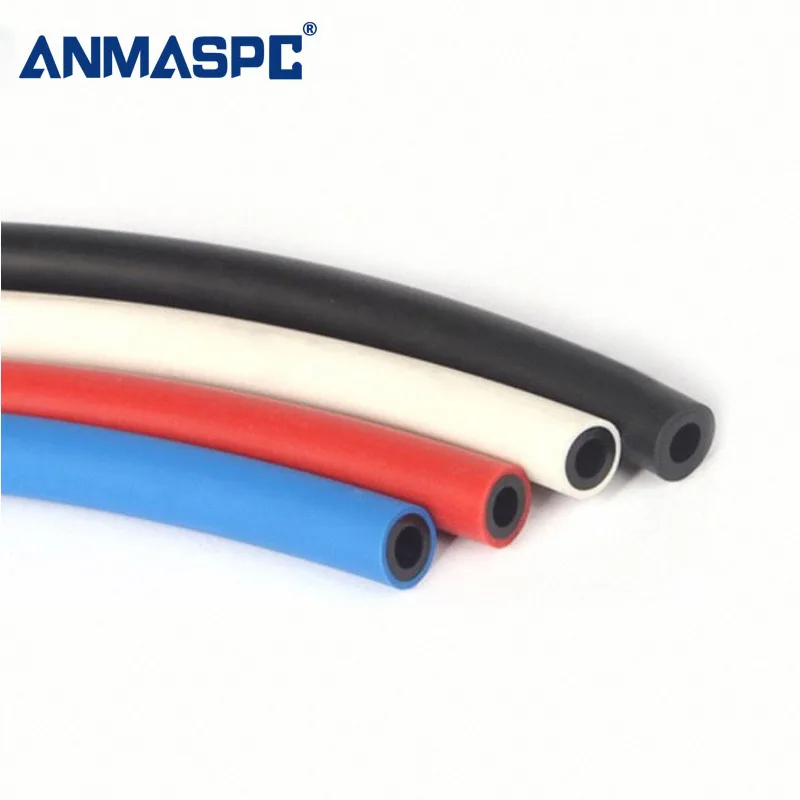
“Flame retardant tubing” is a product description, not a universal performance grade. A formulation may be intended to resist ignition or slow flame spread under a named test condition, while still softening, shrinking, producing smoke, or failing mechanically when exposed to sustained heat. The honest question is therefore not “Is this tube fireproof?” but “Which fire-related behavior was tested, on what specimen, and for which use?”
In pneumatic and industrial routing, tubing also has to retain a pressure seal, bend through the planned radius, and remain compatible with the fitting and fluid. A fire-related claim cannot replace checks for working pressure, temperature range, abrasion, chemicals, or installation geometry. Review the PU and PA air hose differences when the base polymer choice is still open.
Where a flame resistant tube can add value
The practical advantage is risk control at a defined location. A tube may be useful where a pneumatic line, cable sleeve, or protective route passes near a likely ignition source and the specification calls for reduced flame propagation. It can create more time for isolation or shutdown, protect the route from a short-duration event, or support a documented material-selection decision.
That benefit is conditional. A flame-retardant tube is not a fire barrier for an enclosure, a substitute for guarding, or proof that a system will remain operational during a fire. Keep separation, shielding, ventilation, and emergency procedures in the design. NFPA’s codes and standards directory is a useful starting point for identifying the application code that governs the installation; the relevant code depends on the market and use, not on the marketing adjective alone.
How to verify fire-performance claims
Start with the named method
Ask for the standard number, edition, laboratory or internal method, specimen thickness, orientation, conditioning, and reported result. UL’s flammability testing overview explains why a plastics test has to be tied to a defined material and test setup. A method name without the tested construction is incomplete evidence.
Separate test method from certification
ISO 9772 covers small-cell plastics flammability testing. It is a test scope, not a blanket certification of every tube made from a similar resin. A report for a flat plaque, a different wall thickness, or a different color may not represent the finished tube. Request a report or declaration that identifies the actual construction being purchased, and confirm whether the requirement is for the material, the component, or the assembled system.
Match the test to the exposure
Short-duration flame exposure, radiant heat, welding spatter, hot surfaces, and an enclosed fire scenario are different hazards. Record the expected contact, duration, clearance, movement, and whether the tube must remain pressure-tight. If the required evidence is unavailable, describe the tube conservatively as flame-retardant tubing rather than fire resistant tubing with an implied rating.
Selection trade-offs for engineering and purchasing
Fire performance is only one line in the specification. A tube that passes a named flammability test can still be the wrong choice if its bend radius, fitting grip, pressure capability, or chemical compatibility does not suit the route. Treat total cost as the cost of the tube, compatible fittings, installation time, inspection, replacement, and the consequence of an unplanned shutdown; avoid assuming that a higher-cost formulation is automatically the lowest-risk option.
| Decision dimension | What to compare | Buyer action |
|---|---|---|
| Flame behavior | Named method, specimen, result, and exposure relevance | Obtain the report for the exact construction |
| Mechanical fit | Outside diameter, wall, bend route, pressure, and fitting grip | Check the drawing and perform a representative assembly trial |
| Чөйрө | Heat, abrasion, chemicals, UV, moisture, and moving parts | Use the supplier’s compatibility data and define limits |
| Тейлөө | Inspection access, replacement interval, and spare format | Document a visual and pressure-check routine |
| Commercial risk | Traceability, change control, lead time, and evidence pack | Make documentation a purchase-order requirement |
Choose by application, not by the label alone
| Арыз берүү шарты | Сурануу үчүн далилдер | Open question before approval |
|---|---|---|
| Near occasional hot particles | Exposure description and material test scope | What prevents direct, sustained contact? |
| Inside a guarded machine | Assembly drawing, routing and inspection instructions | Can the tube be replaced without disturbing the guard? |
| Continuous outdoor routing | UV, temperature and weathering limits, if required | Is the fire requirement separate from outdoor durability? |
| Pressure line with frequent motion | Pressure, bend, cycle and fitting compatibility data | Does the selected tube remain secure through the motion? |
Standards, compliance, and responsible wording
- UL plastics flammability testing: a testing service overview; confirm the method, material, specimen and report scope before using a result in a specification.
- ISO 9772: a small-cell plastics flammability test standard. It describes a test method and classification context, not automatic approval of a finished tube in every application.
- NFPA codes and standards: an index for application-specific fire and life-safety requirements. The applicable edition and jurisdiction must be checked by the project team.
Unsupported wording can create technical and commercial exposure: a “fireproof” claim may be read as continuous fire endurance, while the available evidence may only address flame spread in a laboratory specimen. Put the limitation in the datasheet and purchase specification. The same discipline applies to claims about smoke, toxicity, self-extinguishing behavior, or regulatory approval.
Procurement checklist for a flame retardant tubing project
- Describe the hazard: flame, hot particle, radiant heat, hot surface, or another condition; include duration and clearance.
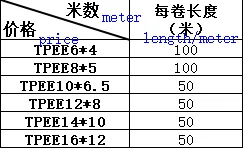
- Define the tube job: air or fluid, pressure, motion, bend radius, fitting family, and inspection access.
- Request the exact test method, report or declaration, specimen details, and any exclusions.
- Trial the selected size and fitting in a representative route; inspect for kinks, pull-out, abrasion, and heat exposure.
- Freeze the approved construction and require change notification for resin, wall, color, supplier, or process changes.
For fitting selection, use the practical checks in our guide to choosing plastic pneumatic fittings. If you need to compare available connection options, review the pneumatic fittings range alongside the tubing drawing rather than treating the tube as a standalone component.
Көп берилүүчү суроолор
Is flame retardant tubing fireproof?
No. Flame retardant normally describes a defined resistance to ignition or flame spread under a test condition; it does not promise continuous fire exposure, structural integrity, or zero smoke. Verify the method and application limits before using the term in a safety claim.
What is the difference between flame-resistant and flame-retardant tubing?
Usage varies by supplier and industry, so the words are not a reliable substitute for a test result. Ask what behavior was measured, on which construction, and whether the result applies to the finished tube or only a material sample.
Can flame retardant tubing be used near welding equipment?
Possibly, but proximity to welding introduces hot particles, radiant heat, abrasion, and movement that may not be represented by a plastics flammability test. Define shielding, clearance, exposure duration, and pressure requirements, then confirm the route with the responsible safety engineer.
Does a UL or ISO reference mean the tube is certified?
Not by itself. UL and ISO references can identify a test service or method; certification, listing, or approval requires the specific program and scope to be verified. Request the document that names the purchased construction and the claim you intend to make.
How should I specify a flame retardant tube for a pneumatic line?
Specify the medium, pressure, temperature, outside diameter and wall, bend and motion, fitting system, environmental exposure, and required fire-performance evidence. Include the test method and documentation requirement instead of relying on “flame resistant” as the only line item.
What should I do if the supplier cannot provide a test report?
Ask for a signed technical declaration with the exact construction and limitations, or commission a suitable evaluation before making a regulated or safety-critical claim. Until evidence is available, use conservative language and do not treat the tubing as a verified fire-protection component.
Деректер
- UL, Flammability Testing.
- ISO 9772, Plastics — Determination of burning characteristics using a small flame.
- NFPA, Codes & Standards.
Takeaway: The advantage of flame retardant tubing is not a blanket promise of fire protection; it is a documented, application-specific contribution to risk control.
Microductconnector can help you compare tubing and compatible пневматикалык фитингдер against your route, exposure, and documentation requirements. Send the intended medium, size, operating conditions, and required test evidence to request a technical review.


