
FTTXは、単一の製品でも、すべての顧客が同一の光ファイバ経路を提供されるという約束でもありません。それは、光ファイバの最終到達先が住宅、建物、路上端局、またはノードと異なる、アクセスアーキテクチャの一群です。この違いが重要なのは、残存する銅線区間や構内配線、土木工事、電源供給および保守計画が、光ケーブル同様にプロジェクトの成否を左右するからです。本改訂版ガイドでは、FTTXによって実際に何が変わるのか、アーキテクチャどうしをどのように比較すべきか、そしてマイクロダクト用コネクタが管理された展開においてどのような位置づけを持つのかを解説します。.
FTTXは、ローカルループの一部または全部に光ファイバーを敷設しますが、「X」の部分によって残りの区間と設計上の境界が決まります。FTTHは建物内まで到達し、FTTBは建物まで、FTTCおよびFTTNはそれよりも手前の地点で終端します。経路の経済性、エンドポイントへのアクセス、伝送容量、保守性、地域ごとの要件などを考慮して最適なネットワーク構成を選定し、ケーブル敷設前にダクトとコネクタの組み合わせ全体を検証してください。.
FTTXは、従来の銅線アクセス回線とどのように異なりますか?
光ファイバーは光として情報を伝送し、金属製のアクセス媒体に比べて電磁干渉の影響を受けにくい。ただし、「ファイバーは速い」というだけではプロジェクト仕様としては不十分である。ユーザーに提供されるサービスは、アクセス機器、光損失余裕、残りのローカル区間、スプリット構成、電力、経路状況、および顧客設備によって決まる。.
| 建築 | ファイバーが途切れる場所 | 計画すべきことは何ですか |
|---|---|---|
| FTTH | 自宅または敷地 | ドロップ回線、エントリーポイント、ONT/ONU、および建物内配線 |
| FTTB | 通信室の建設 | ライザー、フロア配線、電源および建物へのアクセス |
| FTTC | 路上設置型キャビネット | キャビネット電力、バックホールおよび最終ローカル区間 |
| FTTN | 近隣ノード | ノードの位置、給電容量および残存アクセス設備 |
どのプロジェクト条件がそれぞれのFTTX方式に適していますか?
| 条件 | 調査対象のアーキテクチャ | 必要な証拠 |
|---|---|---|
| 新しい一戸建て開発 | アクセス可能な引き込み線と予備経路を備えたFTTH | 小包計画、進入経路およびサービス境界 |
| 既存の集合住宅 | リザーアクセスに応じて、FTTBまたはFTTH | ライザー調査、防火・地域規制のレビュー、および端点計画 |
| 長い田舎道 | より深いファイバーと段階的なノード展開を比較する | セクションの長さ、アクセスポイント、および修理のロジスティクス |
| Mixed legacy network | Phased upgrade with measured transitions | Actual duct/cable data and acceptance criteria |
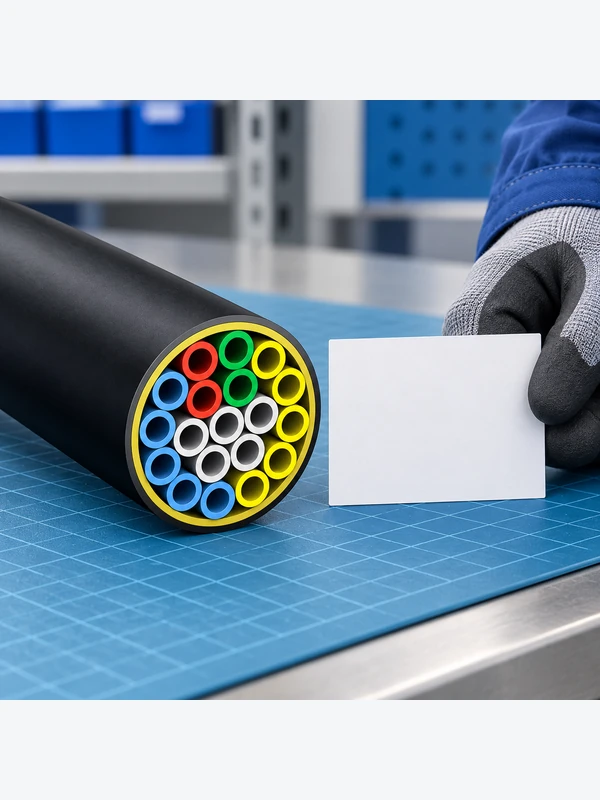
For a staged optical route, the HDPEマイクロダクトシリーズ should be specified with outside diameter, inside diameter, wall, route condition and identification method. A fitting is not interchangeable merely because the printed size looks similar.
Where do microduct connectors affect FTTX reliability?
Connectors join equal-size ducts, transition between sizes, close spare pathways or control gas and water migration where a purpose-designed closure is required. Their effect is local but important: an incomplete insertion, damaged seal or wrong transition can reduce the usable air path and delay blowing. Select from the 製品カタログ by measured OD and function, then inspect the assembled joint before it is buried or enclosed.
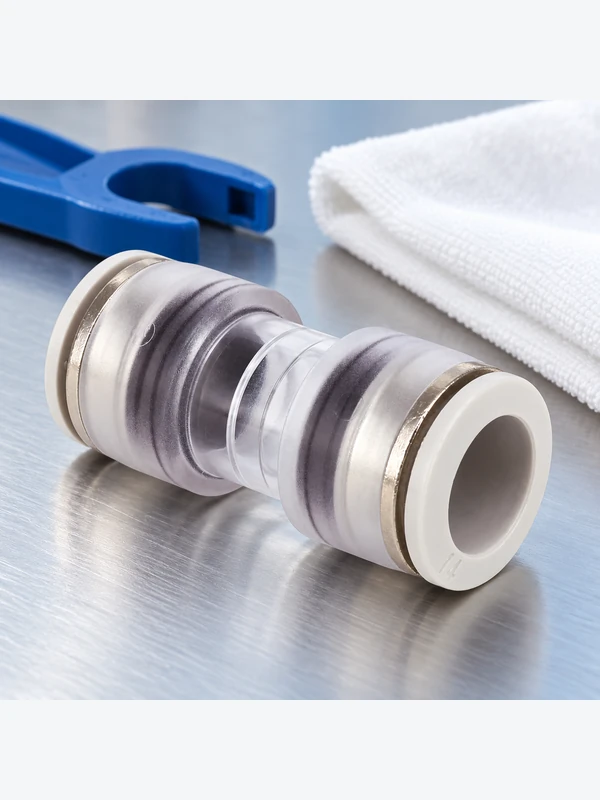
At each duct joint, cut the duct square, clean the sealing area, mark the specified insertion depth and seat the connector without side load. Record the part number and location, then apply the project’s pressure or leakage procedure to the defined test section. IEC 60794-5-20 provides the specification scope for microduct fibre units, microducts and protected microducts for blowing installation. It does not replace the network owner’s method statement, determine every field test condition or approve an unspecified fitting. Use the installed configuration and agreed acceptance criteria when closing the handover record.
How should FTTX acceptance records identify each handover boundary?
Record the route section, duct and cable identifiers, connector SKU, measured dimensions, insertion check, pressure-test setup, stabilization time, start and end readings, temperature and any corrective work. If a reading changes, isolate temporary caps, gauges and shorter sections before concluding that a buried connector has failed. This record is valuable for future expansions because it distinguishes a route limitation from an equipment limitation.
FTTx architecture is a family of endpoint choices, not one installation method. FTTH, FTTB, FTTC and FTTN leave different segments to design, power and maintain. VIAVI’s public guide treats FTTx as a network design and testing topic; the useful procurement improvement is to connect each architecture decision to a route identifier and a separate acceptance record.
| Boundary | What it should prove | What it cannot prove |
|---|---|---|
| Duct acceptance | Continuity, dimensions, joints, closure and route condition | Optical loss of a cable not yet installed |
| Cable installation | Cable/duct identity, machine, settings and interventions | Every optical event or service result |
| Optical acceptance | Specified fibers, wavelengths, loss and event records | Condition of an unused spare duct |
Use a common section ID across civil, duct, blowing and optical records. For a microduct transition, cut square, clean the sealing land, seat the connector, record the part and location, and apply the project method before cable installation. The site’s HDPEマイクロダクトシリーズ そして ブロー成形機の情報 are starting points for a documented specification, not proof that a route is qualified.
Keep optical test terminology precise. An insertion-loss measurement and an OTDR trace answer different questions, so the contract may require both. Identify the fiber and endpoints, record the wavelengths, test direction, instrument settings and result, and state which connections are included in the measurement. Retain project-specific pass criteria in the optical acceptance plan. A successful duct pressure test cannot establish optical loss or service availability; link the pathway and optical records through the route identifier while preserving their separate acceptance decisions.
Why must duct acceptance and optical acceptance be separate?
A duct pressure or continuity check cannot establish the optical loss of a fibre that has not yet been installed. Conversely, a passing optical test does not document the condition of every spare duct. Use separate acceptance packages for the pathway and the optical link, connected by the same route identifiers. This is a recommended handover structure; exact procedures and limits belong in the project specification.
〜のために optical acceptance testing, distinguish overall insertion loss from individual-event characterization. フルーク・ネットワークスのOTDRガイド explains that an optical loss test set measures total insertion loss, whereas an OTDR characterizes events such as connectors, splices and bends. Set the relevant fibre type, wavelengths, test directions and instrument settings for the actual network. Do not apply one blanket loss limit or enterprise-cabling test tier to every PON route.
Which records should connect civil work, cable installation and service handover?
Use a common section identifier across the duct acceptance record, cable-laying record and optical report. The pathway package should identify the installed duct, accessible joints, transitions and agreed preparation checks. The laying package should identify the actual cable and machine configuration, settings and interventions. The optical package should identify tested fibres, endpoints, test methods, results and corrective work. Include as-built changes instead of leaving the original design drawing as the only route record.
Where room-level distribution follows FTTH, that is another handover boundary rather than a substitute for the outside access network. The FTTR versus FTTH guide explains the difference. Specify which team owns each boundary and who closes outstanding defects. A network is ready for its agreed service only when the required checks are complete, not merely because the ducts are buried or the cable has reached the far chamber.
Who should close outstanding issues at each FTTX handover?
Assign responsibility at the same boundaries used in the architecture and acceptance records. The team completing civil work should identify the actual route and any changes to access or chamber locations. The pathway team should identify which duct sections and joints have passed the agreed preparation checks. The cable and optical teams should identify what was installed and tested, using the same section and fibre identifiers.
Keep incomplete work visible instead of combining unlike results into one network-ready statement. An accepted duct section does not mean that its cable has been installed, and a successful optical test on an occupied duct does not verify the condition of every spare pathway. Record the owner of each outstanding action, the affected section and the evidence needed to close it. The exact test methods and limits should remain in the project specification.
Before service handover, compare the final records with the selected architecture. Confirm where fibre stops, which remaining segment is in scope and which team owns endpoint power, access and maintenance. If a component is substituted, update its identity and supporting documentation rather than leaving the original part in the as-built schedule. This makes the handover usable for expansion and fault finding as well as for completion reporting.
よくある質問
Does FTTX always mean FTTH?
No. FTTX is the family term; FTTH is only the architecture whose fiber reaches the home or premises.
Does fiber eliminate all access bottlenecks?
No. Split ratios, electronics, remaining copper, optical budget, route condition and customer equipment can still limit service.
Why reserve spare microducts?
Accessible spare pathways can support later cable placement without repeating civil work, but only when they are sealed, labeled and recorded.
How should a connector size be chosen?
Measure the actual duct outside diameter and compare it with the connector’s approved range and function. Do not rely on nominal labels alone.
Can a standards reference replace a field test?
No. The standard’s scope and test method must be matched to the exact component and project; the assembled route still needs acceptance evidence.
What equipment is needed for air-blown fiber?
を使用する cable blowing machine whose approved cable, duct, control and safety envelope matches the route. Confirm the combination before mobilization.
Can OTDR testing replace every insertion-loss measurement?
Not automatically. Fluke’s guide distinguishes event characterization from total insertion-loss verification. Follow the specified acceptance method and use the required instruments; do not approve a link from a trace alone when the contract requires a separate loss measurement.
Should duct preparation and optical tests use the same pass criteria?
No. They assess different systems. Define pathway criteria before blowing and optical criteria for the installed link, then connect both sets of results through route and fibre identifiers.
Does the FTTx label specify the endpoint equipment?
No. It describes where fiber stops. ONT/ONU, splitters, power and remaining access segments need a separate design.
参考文献
- IEC 60794-5-20: microduct fibre units and microducts installed by blowing
- IEC standards portal (verify the applicable 60794-5 edition)
- European Commission, State of the Digital Decade 2025
- VIAVI FTTx design and testing context
要約
FTTX describes where fibre reaches, while the complete route determines what must be built and accepted. Choose the endpoint and remaining access segment from the project’s service and site requirements, qualify the duct-and-connector path before cable installation, and keep optical acceptance separate from pathway checks. Use a shared route identifier and clear ownership at each handover. Match the 製品カタログ to the approved dimensions and functions so future repairs can trace the installed assembly.



