
Fiber-blowing equipment is often compared by a headline speed or a claimed distance. That is a weak starting point for a European FTTH project. A machine is useful only when its approved cable range, duct range, propulsion method, control window, safety provisions and service plan match the route. The better procurement question is whether the machine helps a crew install the specified cable repeatably through a prepared microduct while making stoppages traceable.
The short answer: compare a hydraulic or pneumatic cable-blowing machine as part of a cable–duct–route system. Request the exact operating envelope, setup procedure, safety documentation, test basis, spare-parts plan and service coverage. Do not transfer a product-page speed or distance to a different cable, duct, bend profile or weather condition without qualification.
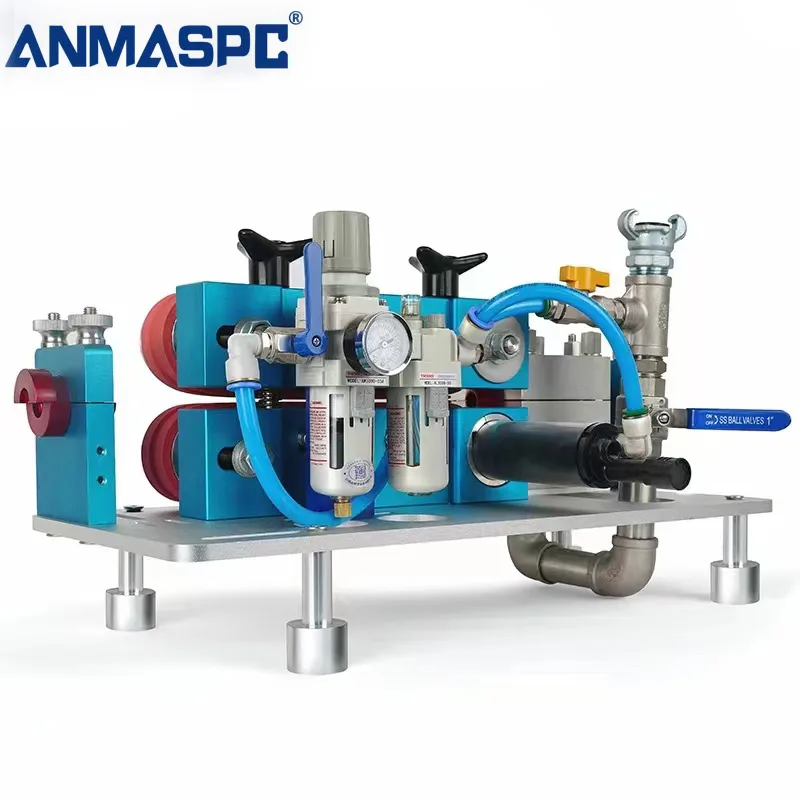
What does a fiber-blowing machine actually control?
Depending on the design, the machine controls cable feed, traction, air-assisted movement or a combination of these functions. The crew still needs a continuous duct, compatible cable surface, suitable bends, controlled air supply and a safe stopping method. The machine cannot correct a crushed duct, a leaking connector, an obstructed chamber or a cable outside the approved range.
| Comparison area | Question for the supplier | Dokaze zatražiti |
|---|---|---|
| Cable and duct fit | Which cable diameters, duct IDs, surfaces and bend conditions are approved? | Operating envelope and route qualification notes |
| Control | How are feed force, air flow, speed and stopping controlled? | Controls description and setup procedure |
| Safety | How are stored energy, guarding and emergency stops managed? | Manual, risk information and training material |
| Usluga | What calibration, wear parts and response support are available? | Maintenance schedule and spare-parts list |
How do hydraulic and pneumatic propulsion approaches differ?
Hydraulic actuation can provide controlled mechanical force; pneumatic systems use compressed air to propel or assist the cable. Neither approach is automatically safer or more efficient. Risk and output depend on guarding, stored energy, route preparation, operator training, settings and the exact cable and duct combination.
| Project question | Hydraulic emphasis | Pneumatic emphasis |
|---|---|---|
| Force control | Specify pressure, traction and relief controls | Specify air pressure, flow and feed coordination |
| Route preparation | Check alignment, feed path and cable surface | Check duct sealing, airflow path and joint leakage |
| Field records | Record force/settings and interventions | Record air settings, hold checks and interventions |
| Decision boundary | Use only within the approved cable and duct limits | Do not infer performance from compressor capacity alone |
The cable blowing machine range should be reviewed alongside the HDPE microduct specifications i straight connector specifications. A complete system check is more informative than a machine-only comparison.
What route checks should happen before mobilization?
Verify duct continuity, section length, bends, chamber access, water, obstruction, cable compatibility and joint condition. Inspect every accessible connector for a square cut and full insertion. Qualify a representative cable–duct section using the documented method before releasing production quantities. During the run, log the machine, cable, duct section, settings, start/stop points and any intervention.
Why do European buyers ask about sustainability and serviceability?
Public connectivity reporting, including the European Commission’s State of the Digital Decade report, describes the continuing importance of fiber-based access. For an equipment buyer, the actionable implication is not a promised market size; it is the need for repeatable, documented work across different contractors and route conditions. Fewer repeat visits, maintainable equipment, controlled cable handling and future-accessible pathways are reasonable procurement questions, but they should be supported by project evidence.
What should be in a complete machine quotation?
Ask for a dimensional drawing, approved cable and duct ranges, control limits, safety documentation, test conditions, noise or emissions information where relevant, maintenance intervals, wear parts, training, commissioning support and service response. Treat claims such as “high speed,” “long distance” or “universal” as incomplete until the conditions are stated.
Does hydraulic drive remove the need to control compressed air?
No. Distinguish the drive that feeds the cable from air assistance in the duct. A machine with a hydraulic drive may still use compressed air for cable installation; the supplier must identify the configuration actually offered. Compare its cable feed control, approved pressure limits, connections, guarding and stop procedure rather than assuming the drive label describes every energy source.
As one manufacturer-specific example, Plumettaz’s IntelliBox lists monitoring of pushing force and belt slippage, stopping at preset limits, and recording installation parameters. This supports asking suppliers which variables their offered system measures and controls. It does not establish that every blowing machine has these functions or that another supplier’s machine provides equivalent protection.
Which EU machinery rules apply to a 2026 or 2027 purchase?
Check the date the equipment is first placed on the EU market, not just the order date. The European Commission’s machinery guidance, checked on 7 October 2026, states that machinery placed on the market before 20 January 2027 must comply with Directive 2006/42/EC; Regulation (EU) 2023/1230 applies mandatorily from 20 January 2027. Confirm the applicable scope and conformity route for the specific machine and supplied assembly.
Request model-specific conformity documentation, instructions and the supplier’s explanation of applicable legislation. The Commission warns that additional voluntary certificates are not a recognised substitute for the required conformity procedure. Do not treat a certificate image, an EU sales address or a generic CE claim as proof that the offered configuration is compliant or suitable for the route. Resolve country-specific or classification questions with the relevant authority.
Which questions do buyers ask about fiber-blowing machines?
Is pneumatic propulsion automatically safer than hydraulic propulsion?
No. Safety depends on stored energy, guarding, emergency controls, training, route condition and the approved procedure.
Can one machine serve every FTTH route?
No. Cable diameter, duct ID, bend profile, access and propulsion method vary by section.
What causes a blowing run to stop?
Check obstruction, leakage, a bend, cable compatibility, feed alignment, lubrication and settings before diagnosing the machine.
Should headline speed decide procurement?
No. Compare route fit, control, safety, records, service and total ownership cost under stated test conditions.
What should operators record?
Record cable and duct IDs, machine configuration, air or feed settings, start/stop points, interventions and route notes.
When is a quotation incomplete?
When it lists motor power or speed without cable and duct limits, safety information, test basis, service scope and spare parts.
Can a hydraulically driven machine also use compressed air?
Yes, depending on its design. Ask the supplier to distinguish cable-drive energy from air assistance and identify the operating limits and safe isolation procedure for each. The drive label alone is not a complete description.
Does a voluntary certificate replace the required EU declaration?
No. Verify the documentation required by the applicable legislation for the exact machine. The Commission’s machinery guidance warns against relying on additional voluntary certificates as a substitute for the prescribed conformity assessment.
2026 comparison update: rate the machine by the route it can control
Compare a fiber-blowing machine by its cable and duct envelope, feed-force control i service evidence, not only by “hydraulic” or “pneumatic” labels. A published speed or distance remains a model-specific claim tied to stated conditions.
| Procurement field | Dokaze zatražiti |
|---|---|
| Compatibility | Cable diameter, construction, duct ID, route geometry and approved combinations. |
| Control | Feed mechanism, force limit, stopping response, air or hydraulic requirement. |
| Ownership | Guards, emergency stop, training, wear parts, spares and repair response. |
Use the site’s cable blowing machines page to identify a candidate, then define a representative acceptance run with the actual cable, duct, route and settings.
Additional buyer questions
Is pneumatic propulsion always faster?
No. Route geometry, cable/duct fit, setup and troubleshooting often determine field productivity more than the drive label.
What should be recorded in a machine trial?
Record cable and duct IDs, air or hydraulic conditions, feed settings, speed, stops, restarts and any cable damage.
What does a route check prevent?
It separates blocked or leaking ducts, tight bends and bad joints from genuine machine limitations before force is increased.
Conclusion: The right fiber-blowing machine is the one whose documented control and safety envelope matches the cable, duct and route that will actually be installed. Confirm the path first, qualify a representative section, and record settings so a stoppage can be investigated instead of guessed at. Hydraulic and pneumatic approaches can both be appropriate; neither should be selected from a headline number alone. Oulu / ANMASPC provides blowing-machine, HDPE microduct and microduct connector information for buyers who want the equipment and pathway specified as one installation system.
Reference
- European Commission, State of the Digital Decade 2025
- ITU-T L.1700, outside-plant optical-fiber network requirements
- IEC standards portal (verify the applicable 60794-5 edition)
- IEC 60794-5-10:2014 — official outdoor microduct cable publication.
- ITU-T L.108 (08/2026) — official recommendation for blowing-cable characteristics and tests.
- ISO 4414:2010 — official pneumatic system safety reference.
Summary
Machine comparison becomes clearer when the route is part of the specification. Confirm cable and duct compatibility, force control, utilities, safety and service, then test the candidate under representative conditions. A headline speed cannot replace a route record or acceptance criterion. When a run stalls, inspect the duct, joints and alignment before escalating force.


