
Boru eğik kesilmiş, dış çapı uygun değil veya bağlantı yeri nedeniyle, itme tipi bağlantı sızıntı yapmasına rağmen doğru monte edilmiş gibi görünebilir. konu eşleşmedi. Kolan ve elastomer contası, yalnızca boru, bağlantı parçası, diş ve işletme koşulları tek bir bağlantı olarak belirtildiğinde işlev görür.
Tek dokunuşla monte edilen bağlantı parçaları Boru tutmak için bir kolan kullanın ve etrafını saran O-halka veya benzeri bir conta ile sızdırmazlık sağlayın. boru dış çapı. ISO 14743, pnömatik akışkan gücü itme bağlantılarını kapsamaktadır ve ISO 4414 ise sistem güvenliğini ele almaktadır; ikisi de kapsamlı bir ürün sertifikası değildir. Boru dış çapını, metrik veya inç sistemi, bağlantı yuvası dişini, kullanılan ortamı, basıncı ve sıcaklığı eşleştirin ve yeniden kullanımda yalnızca üreticinin iznine başvurun.
Kollet ve O-halka nasıl çalışır?
Boru, bir serbest bırakma halkasından geçer, çene ve conta İç durdurma noktasına kadar itin. İtme işlemi, contanın borunun dış çapı ile temas etmesini sağlar; çekme kuvveti ise sıkma yuvasını devreye sokar. Kare, düzgün ve tırtık bırakmayan bir kesim, contayı korur. Oval, çizgili veya boyutundan küçük olan borular sızıntı yapabilir veya tutuş özelliğini kaybedebilir.
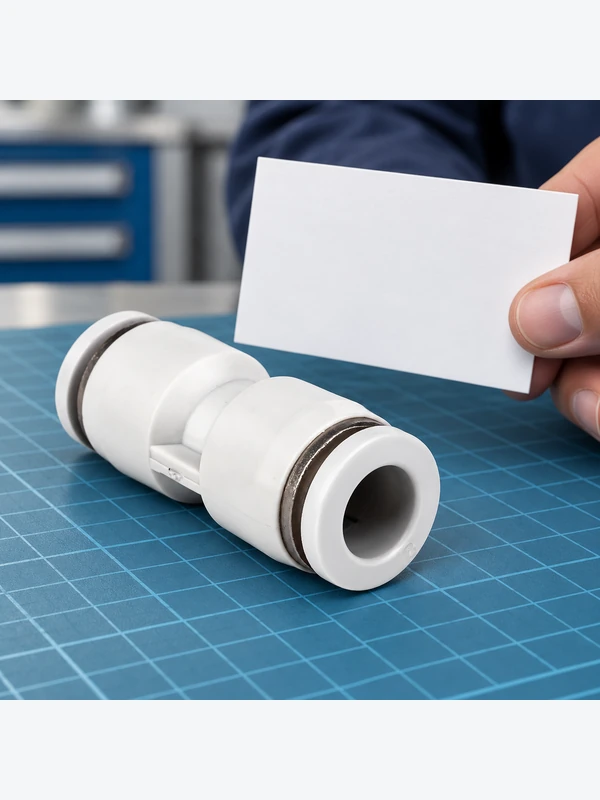
Hangi boyutlar eşleşmelidir?
| Arayüz | Onayla | Tipik hata |
|---|---|---|
| Boru ucu | Ölçülen dış çap, malzeme, sertlik ve kesim | Hortum iç çapını veya yaklaşık boyutlardaki bir boruyu kullanarak |
| Liman | Diş profili, boyut, cinsiyet ve sızdırmazlık | NPT, BSP veya metrik dişlerin karıştırılması |
| Hizmet | Basınç, sıcaklık, ortam ve vakum | Su veya kimyasallar için hava verileri kullanmak |
| Geometri | Bükülme yarıçapı ve destek uzunluğu | Çekmeceyi hemen yan yüklemek |
Tek dokunuşla monte edilen bağlantı parçaları yeniden kullanılabilir mi?
Basıncı düşürün, serbest bırakma halkasına eşit şekilde basın ve boruyu çekip çıkarın. Yeniden kullanım; contanın durumu, borunun hasar görmesi, kirlenmesi ve üreticinin talimatlarına bağlıdır. Kontrollü bir sızıntı ve işlev testinden önce bağlantı elemanını kontrol edin, boruyu kısaltın veya değiştirin. Sürekli söküp takmayı sınırsız kullanım ömrü olarak kabul etmeyin.
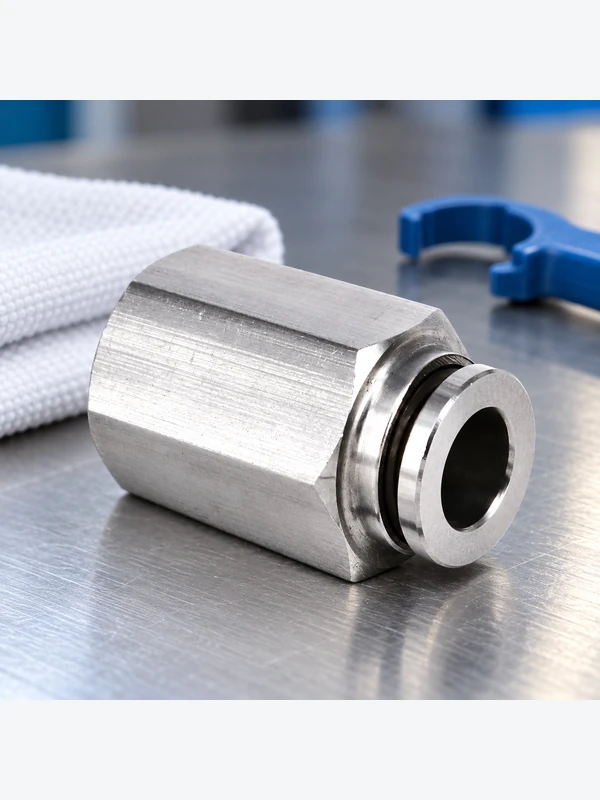
Yan yana seçim için, hava bağlantı elemanı ailelerini karşılaştırın, düz dizilişleri inceleyin ve görevi gönderin. pnömatik parçalar ekibi.
Tek dokunuşlu bir devre nasıl devreye alınmalıdır?
Boruyu, malzeme için tasarlanmış bir aletle dik kesin, kenar tırtıklarını temizleyin ve üretici tarafından öneriliyorsa takma derinliğini işaretleyin. Boruyu sonuna kadar itin, tutunmayı doğrulamak için hafifçe geri çekin ve ilk büküm öncesinde boruyu destekleyin. Bağlantıyı gözlemleyerek basıncı kademeli olarak artırın, ardından sahada onaylanmış sızdırmazlık ve işlev testini gerçekleştirin. Statik teste dayanan bir bağlantı, titreşim veya tekrarlayan hareketler söz konusu olduğunda hâlâ başarısız olabilir.
Boru hattı, contalar ve bağlantı parçalarını temiz tutun. Yağ, kesme talaşı ve diş sızdırmazlık macunu bir O-halkayı zararlandırabilir veya kelepçenin kavramasını engelleyebilir. Eğer bağlantı yeri dişliyse, sıkmadan önce diş ölçüsünü ve sızdırmazlık yüzeyini kontrol edin; uyumsuz bir dişe aşırı güç uygulamak gövdeyi çatlatabilir veya yanıltıcı bir güven hissi yaratabilir.
Monte edilen parçanın parça numarası ve revizyonunu, boru boyutu, malzemesi ile onaylanmış çalışma koşullarıyla ilişkilendiren bir devreye alma kaydı tutun. Sızıntı testi yöntemi, sonucu ve muayene tarihini de ekleyin. Sürekli sızıntı durumunda, bileşenleri değiştirmeden önce havanın boru girişinden mi yoksa dişli bağlantı noktasından mı sızdığını belirleyin. İlk bağlantının yerinde boru girişi ve desteklemeyi yeniden kontrol edin; ikincide ise diş profili ve sızdırmazlık yöntemini doğrulayın. Basınçlı bir bağlantıyı ayarlamayın. Onaylanmış kombinasyon, doğru şekilde yeniden montaj yapıldıktan sonra hâlâ sızdırıyorsa, hizmeti durdurun ve üreticiden kaydedilen koşulları ile hasar görmüş parçaları incelemesini isteyin.
| Hizmet koşulu | Ek kontrol | Varsaymayın |
|---|---|---|
| Yüksek döngü hareketi | Bükülme desteği, gerilim azaltma ve kırılma dayanımı | Statik basınç, dinamik dayanıklılığı kanıtlar. |
| Su veya kimyasallar | Mühür, gövde, boru ve kimyasal uyumluluk | Sıkıştırılmış hava onayı sıvıları da kapsar. |
| Vakum | Manufacturer vacuum limit and tube collapse resistance | Positive-pressure rating applies unchanged |
| Frequent re-use | Collet and seal inspection or replacement rule | Unlimited removal and reinsertion |
When should a fitting be rejected?
Reject a part with damaged threads, a cracked body, a distorted release ring, contaminated seal, uncertain part identity or a tube interface outside the stated range. Quarantine the assembly until the cause is understood. A replacement that merely stops the symptom can leave an incorrect tube, pressure or medium specification in service.
How should a one-touch fitting be specified for real service?
Start with the complete connection rather than the fitting body. Record tube outside diameter, tube material and tolerance, metric or inch system, port thread, seal material, medium, working pressure, temperature and movement. ISO 14743 provides a scope reference for push-in connectors used with thermoplastic tubes, while ISO 4414 addresses pneumatic system safety; neither document removes the need for model-specific limits. A supplier should identify the approved tube and the sealing method for the exact part.
Service conditions decide whether a simple push-in connection is appropriate. A stationary control line may need different support and inspection from a vibrating tool line. Water, oil, cleaning chemicals and temperature cycling can affect the seal even when the tube fits on day one. If a connection is safety-critical or inaccessible after installation, request the drawing, material information, test method and replacement policy before approval.
| Gözlenen belirti | Muhtemel sınır | Next safe action |
|---|---|---|
| Air at tube entry | Cut, insertion, OD, collet or seal | Depressurize, inspect and reassemble with a clean square cut |
| Air at threaded port | Thread form, sealant or body damage | Verify thread standard and sealing method; do not tighten blindly |
| Leak under movement | Bend support, tube strain or vibration | Support the first bend and retest under the service movement |
| Repeated failure | Wrong material, medium, pressure or temperature | Stop service and ask the maker to review recorded conditions |
Reuse is conditional, not automatic. Depressurize, release the collet evenly, inspect the seal and tube, cut back damaged tubing and retest the complete assembly. The ürün yelpazesi is a starting point for matching parts, but the approved combination must be confirmed against the service duty.
What separates retention, sealing and service qualification?
The collet and seal answer different questions. Retention concerns whether the approved tube remains engaged under the documented conditions; sealing concerns the interface around that tube. A gentle assembly check cannot establish all pressure, temperature or movement limits, and passing a static leak check does not prove long-term dynamic performance. Inspect the tube surface and support arrangement as well as the fitting body before attributing repeated leakage to the seal alone.
ISO 14743:2020 supplies a connector-assembly standard reference, not approval for every medium or safety application. Its catalog scope explicitly excludes air-braking systems. When an installation differs from a stationary pneumatic control line, ask for evidence covering that use rather than broadening a generic air-fitting claim. Record tube material, fitting identity, operating range and any required support or replacement condition together.
For multilayer or protective tubing, determine which surface the fitting is designed to engage. SMC’s spatter-resistant tubing families show that layered products have different constructions; they should not be treated as ordinary tube simply because the nominal size matches. Follow the particular tubing and fitting preparation instructions. This interface check becomes especially important when a protective layer is stripped, altered or exposed during assembly.
Sıkça sorulan sorular
Why does a one-touch pneumatic fitting leak?
Identify whether the leak is at the tube entry or the threaded port before changing parts. Tube-entry issues can include an incorrect outside diameter, angled cut, contamination, incomplete insertion or damage to the seal. A port leak requires a separate thread and sealing-surface review. Isolate and depressurize first, then correct the documented cause instead of tightening or manipulating a live joint.
Are metric and inch pneumatic tubes interchangeable?
No. Close-looking dimensions are not identical: 1/4 inch equals 6.35 mm, not 6 mm. The selected fitting must approve the actual tube size and its tolerance. Also check material and wall requirements rather than relying on a caliper reading alone. Use the documented tube system throughout the connection instead of forcing a near-size substitute.
Can a one-touch air fitting be used for water?
Only if the manufacturer approves the exact body, seal and tube combination for the stated water conditions. Positive air pressure alone does not establish liquid or chemical compatibility. Check temperature, pressure and the relevant water composition or treatment chemicals. Obtain a documented application approval where the catalog does not cover the intended duty.
Can a fitting with a positive-pressure rating also be used for vacuum?
Do not infer a vacuum rating from the positive-pressure limit. Vacuum service changes the pressure condition and may introduce tube-collapse and leakage considerations. Confirm the manufacturer’s vacuum statement for the exact fitting and tube. Test the intended vacuum configuration under its own acceptance method rather than relabelling a compressed-air result.
How is tubing safely removed from a one-touch fitting?
Use the site’s isolation procedure and confirm that the line is depressurized before operating the release ring. Follow the manufacturer’s release instructions and inspect the removed tube and fitting. Reuse only where permitted, preparing or replacing damaged tubing as required. A connection that can be released mechanically is not proof of unlimited reuse or unchanged sealing performance.
What does ISO 14743 cover for push-in connectors?
ISO 14743:2020 addresses push-in connectors for thermoplastic tubes used in pneumatic fluid-power applications. The public catalog describes complete connector-assembly test methods and excludes air-braking systems. It is not a certificate for every fitting carrying the same generic name. Confirm the actual model, approved tube and applicable test evidence rather than using the standard reference as a universal service rating.
Kaynakça
- ISO 14743:2020: push-in connectors for thermoplastic tubes.
- ISO 4414:2010: pneumatic system safety scope.
- UK HSE INDG261: pressure-system precautions.
- SMC: series-specific multilayer tubing constructions.
Özet
A one-touch fitting needs two functions to work together: retention must hold the approved tube, and the seal must close around its correct outside diameter. Start with the exact tube system and material, then confirm the port thread, seal method and service conditions. A near-size inch tube is not a metric substitute, and a positive-air-pressure result does not automatically qualify vacuum or water service. Assemble a clean, square-cut tube using the maker’s instructions, support the route and verify the joint under the intended operating conditions. Do not adjust a pressurized connection or assume unlimited reuse. Oulu’s pneumatic parts range can be reviewed against that complete connection specification before a part is approved.



