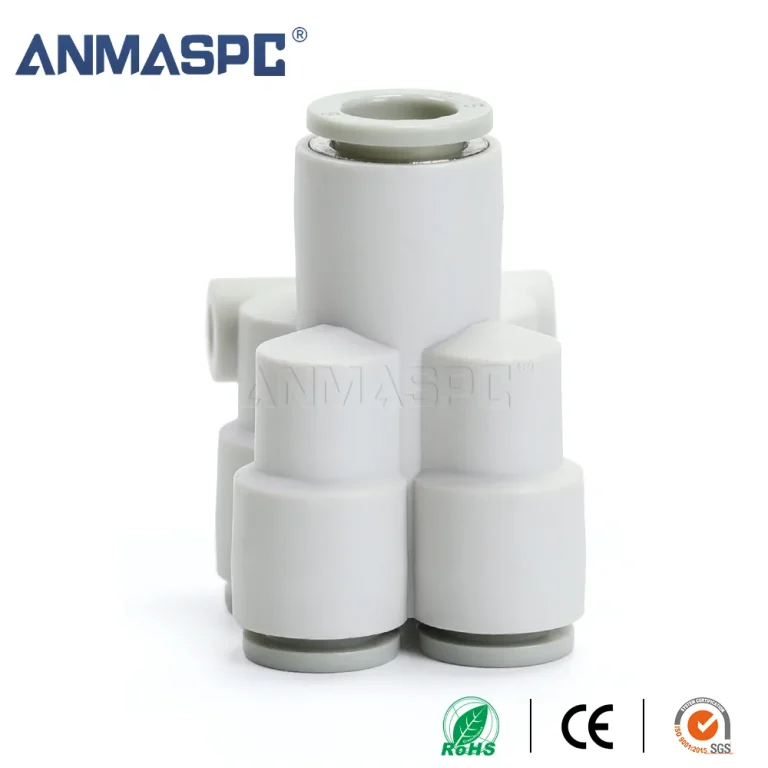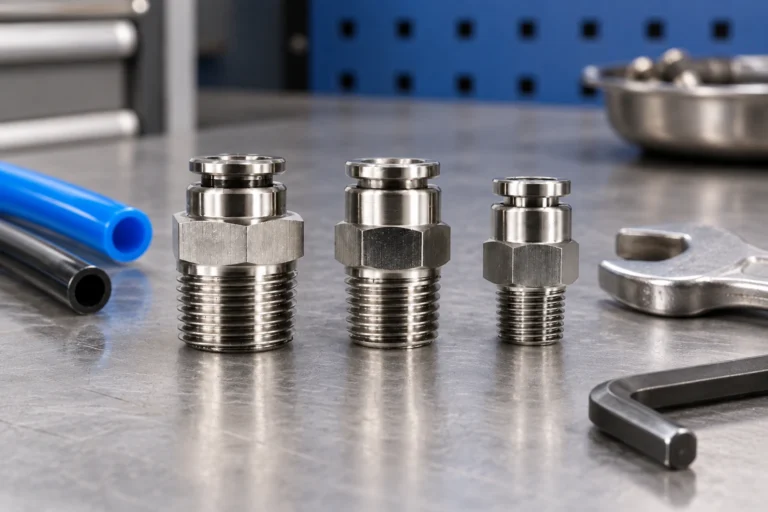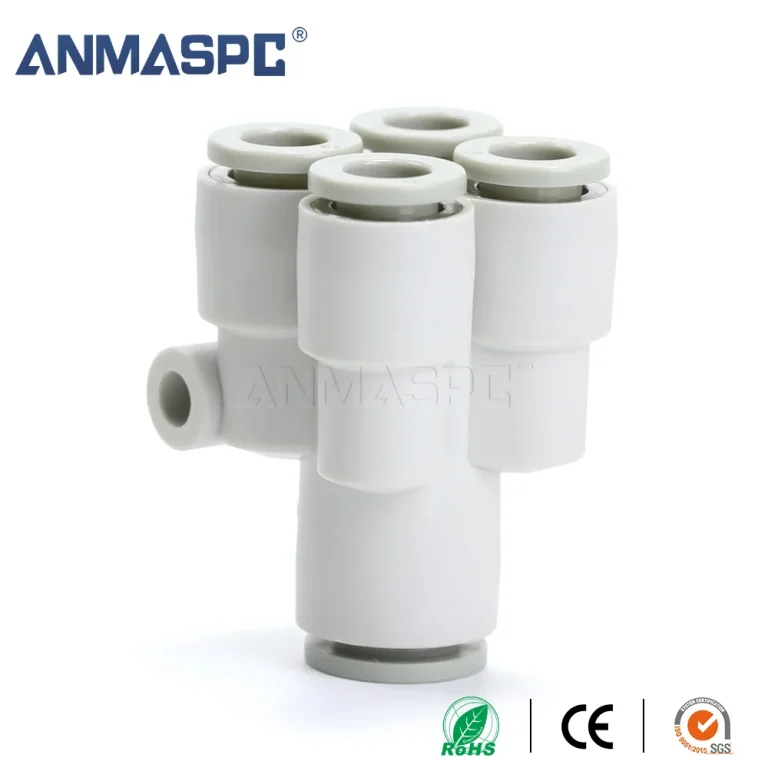
A push-in fitting can appear correctly assembled while leaking because the tube was cut at an angle, the outside diameter was wrong or the port thread did not match. The collet and elastomer seal work only when the tube, fitting, thread and service conditions are specified as one connection.
The short answer is that One-touch fittings use a collet to retain tubing and an O-ring or similar seal to close around the tube OD. ISO 14743 covers pneumatic fluid-power push-in connectors and ISO 4414 addresses system safety; neither is a blanket product certificate. Match tube OD, metric or inch system, port ខ្សែស្រឡាយ, medium, pressure and temperature, and reuse only with maker permission.
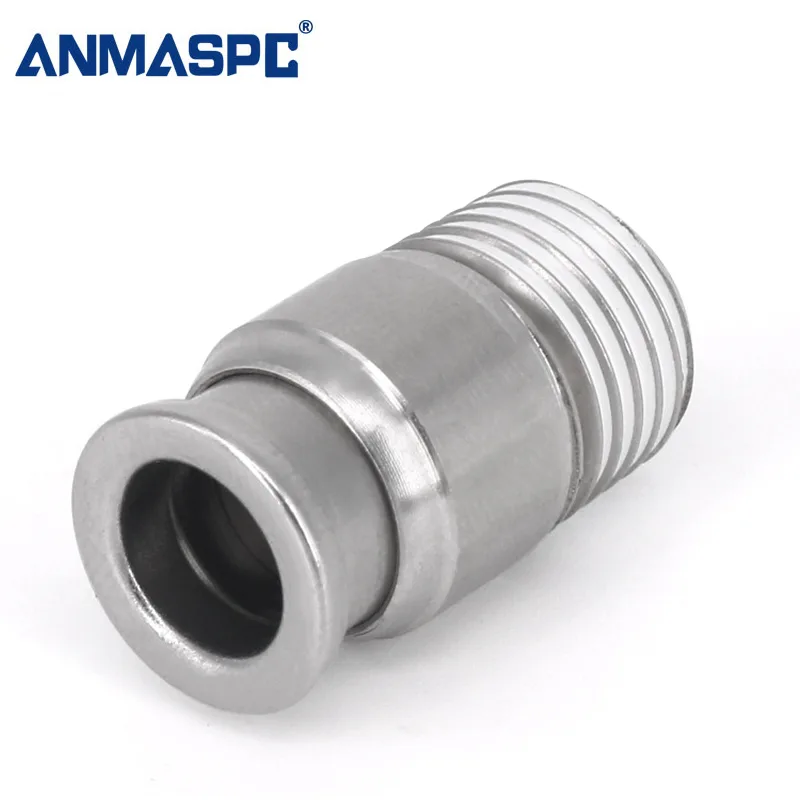
How do the collet and O-ring work?
The tube passes a release ring, collet and seal to an internal stop. Insertion lets the seal contact the tube OD; pull force engages the collet. A square, clean, burr-free cut protects the seal. Oval, scored or undersized tubing can leak or lose retention.
Which dimensions must match?
| Interface | Confirm | Typical error |
|---|---|---|
| Tube end | Measured OD, material, hardness and cut | Using hose ID or a near-size tube |
| Port | Thread form, size, gender and seal | Mixing NPT, BSP or metric threads |
| សេវាកម្ម | Pressure, temperature, medium and vacuum | Using air data for water or chemicals |
| Geometry | Bend radius and support length | Side-loading the collet immediately |
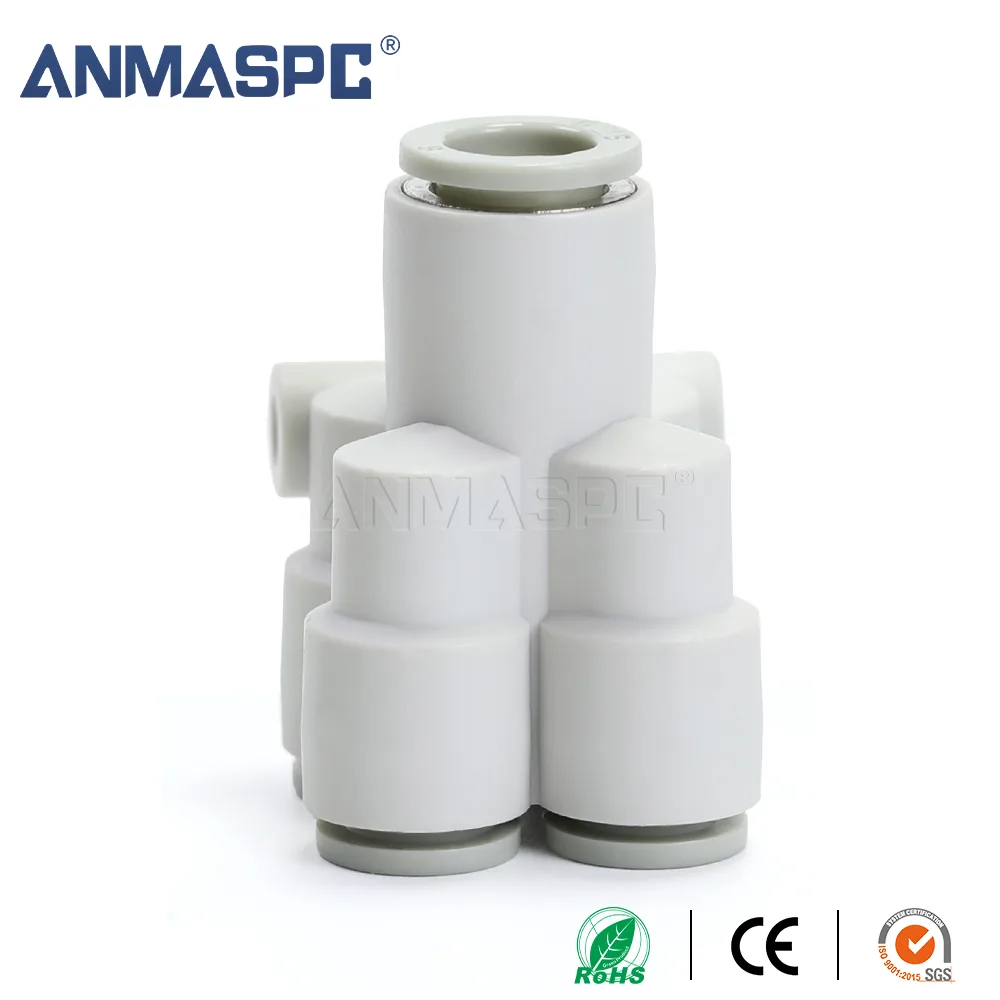
Can one-touch fittings be reused?
Depressurize, press the release ring evenly and withdraw the tube. Reuse depends on seal condition, tube damage, contamination and the maker’s instructions. Inspect the fitting and cut back or replace the tube before a controlled leak and function check. Do not treat repeated removal as unlimited service life.
For adjacent selection, compare air fitting families, review straight layouts and send the duty to the pneumatic parts team.
How should a one-touch circuit be commissioned?
Cut the tube square with a tool intended for the material, remove burrs and mark insertion depth if the manufacturer recommends it. Push the tube to the stop, pull back gently to confirm retention and support the tube before the first bend. Pressurize gradually while observing the joint, then perform the site-approved leak and function check. A connection that survives a static check may still fail when vibration or repeated movement is introduced.
Keep tubing, seals and fittings clean. Oil, cutting debris and thread sealant can damage an O-ring or prevent the collet from gripping. If the port is threaded, verify the thread gauge and sealing face before tightening; adding force to a mismatched thread can crack the body or create a false sense of security.
Retain a commissioning record linking the fitting part number and revision to the tube size, material and approved operating conditions. Include the leak-test method, result and inspection date. For a recurring leak, identify whether air escapes at the tube entry or threaded port before replacing components. Recheck tube insertion and support at the first interface; verify thread form and sealing method at the second. Do not adjust a pressurized connection. If the approved combination still leaks after correct reassembly, stop service and ask the manufacturer to review the recorded conditions and damaged parts.
| Service condition | Additional check | Do not assume |
|---|---|---|
| High cycle movement | Bend support, strain relief and fatigue evidence | Static pressure proves dynamic life |
| Water or chemicals | Seal, body, tube and chemistry compatibility | Compressed-air approval covers liquids |
| Vacuum | Manufacturer vacuum limit and tube collapse resistance | Positive-pressure rating applies unchanged |
| Frequent re-use | Collet and seal inspection or replacement rule | Unlimited removal and reinsertion |
When should a fitting be rejected?
Reject a part with damaged threads, a cracked body, a distorted release ring, contaminated seal, uncertain part identity or a tube interface outside the stated range. Quarantine the assembly until the cause is understood. A replacement that merely stops the symptom can leave an incorrect tube, pressure or medium specification in service.
How should a one-touch fitting be specified for real service?
Start with the complete connection rather than the fitting body. Record tube outside diameter, tube material and tolerance, metric or inch system, port thread, seal material, medium, working pressure, temperature and movement. ISO 14743 provides a scope reference for push-in connectors used with thermoplastic tubes, while ISO 4414 addresses pneumatic system safety; neither document removes the need for model-specific limits. A supplier should identify the approved tube and the sealing method for the exact part.
Service conditions decide whether a simple push-in connection is appropriate. A stationary control line may need different support and inspection from a vibrating tool line. Water, oil, cleaning chemicals and temperature cycling can affect the seal even when the tube fits on day one. If a connection is safety-critical or inaccessible after installation, request the drawing, material information, test method and replacement policy before approval.
| រោគសញ្ញាដែលបានសង្កេតឃើញ | Likely boundary | Next safe action |
|---|---|---|
| Air at tube entry | Cut, insertion, OD, collet or seal | Depressurize, inspect and reassemble with a clean square cut |
| Air at threaded port | Thread form, sealant or body damage | Verify thread standard and sealing method; do not tighten blindly |
| Leak under movement | Bend support, tube strain or vibration | Support the first bend and retest under the service movement |
| Repeated failure | Wrong material, medium, pressure or temperature | Stop service and ask the maker to review recorded conditions |
Reuse is conditional, not automatic. Depressurize, release the collet evenly, inspect the seal and tube, cut back damaged tubing and retest the complete assembly. The product range is a starting point for matching parts, but the approved combination must be confirmed against the service duty.
What separates retention, sealing and service qualification?
The collet and seal answer different questions. Retention concerns whether the approved tube remains engaged under the documented conditions; sealing concerns the interface around that tube. A gentle assembly check cannot establish all pressure, temperature or movement limits, and passing a static leak check does not prove long-term dynamic performance. Inspect the tube surface and support arrangement as well as the fitting body before attributing repeated leakage to the seal alone.
ISO 14743:2020 supplies a connector-assembly standard reference, not approval for every medium or safety application. Its catalog scope explicitly excludes air-braking systems. When an installation differs from a stationary pneumatic control line, ask for evidence covering that use rather than broadening a generic air-fitting claim. Record tube material, fitting identity, operating range and any required support or replacement condition together.
For multilayer or protective tubing, determine which surface the fitting is designed to engage. SMC’s spatter-resistant tubing families show that layered products have different constructions; they should not be treated as ordinary tube simply because the nominal size matches. Follow the particular tubing and fitting preparation instructions. This interface check becomes especially important when a protective layer is stripped, altered or exposed during assembly.
សំណួរដែលសួរញឹកញាប់
Why does a one-touch pneumatic fitting leak?
Identify whether the leak is at the tube entry or the threaded port before changing parts. Tube-entry issues can include an incorrect outside diameter, angled cut, contamination, incomplete insertion or damage to the seal. A port leak requires a separate thread and sealing-surface review. Isolate and depressurize first, then correct the documented cause instead of tightening or manipulating a live joint.
Are metric and inch pneumatic tubes interchangeable?
No. Close-looking dimensions are not identical: 1/4 inch equals 6.35 mm, not 6 mm. The selected fitting must approve the actual tube size and its tolerance. Also check material and wall requirements rather than relying on a caliper reading alone. Use the documented tube system throughout the connection instead of forcing a near-size substitute.
Can a one-touch air fitting be used for water?
Only if the manufacturer approves the exact body, seal and tube combination for the stated water conditions. Positive air pressure alone does not establish liquid or chemical compatibility. Check temperature, pressure and the relevant water composition or treatment chemicals. Obtain a documented application approval where the catalog does not cover the intended duty.
Can a fitting with a positive-pressure rating also be used for vacuum?
Do not infer a vacuum rating from the positive-pressure limit. Vacuum service changes the pressure condition and may introduce tube-collapse and leakage considerations. Confirm the manufacturer’s vacuum statement for the exact fitting and tube. Test the intended vacuum configuration under its own acceptance method rather than relabelling a compressed-air result.
How is tubing safely removed from a one-touch fitting?
Use the site’s isolation procedure and confirm that the line is depressurized before operating the release ring. Follow the manufacturer’s release instructions and inspect the removed tube and fitting. Reuse only where permitted, preparing or replacing damaged tubing as required. A connection that can be released mechanically is not proof of unlimited reuse or unchanged sealing performance.
What does ISO 14743 cover for push-in connectors?
ISO 14743:2020 addresses push-in connectors for thermoplastic tubes used in pneumatic fluid-power applications. The public catalog describes complete connector-assembly test methods and excludes air-braking systems. It is not a certificate for every fitting carrying the same generic name. Confirm the actual model, approved tube and applicable test evidence rather than using the standard reference as a universal service rating.
ឯកសារយោង
- ISO 14743:2020: push-in connectors for thermoplastic tubes.
- ISO 4414:2010: pneumatic system safety scope.
- UK HSE INDG261: pressure-system precautions.
- SMC: series-specific multilayer tubing constructions.
Summary
A one-touch fitting needs two functions to work together: retention must hold the approved tube, and the seal must close around its correct outside diameter. Start with the exact tube system and material, then confirm the port thread, seal method and service conditions. A near-size inch tube is not a metric substitute, and a positive-air-pressure result does not automatically qualify vacuum or water service. Assemble a clean, square-cut tube using the maker’s instructions, support the route and verify the joint under the intended operating conditions. Do not adjust a pressurized connection or assume unlimited reuse. Oulu’s pneumatic parts range can be reviewed against that complete connection specification before a part is approved.