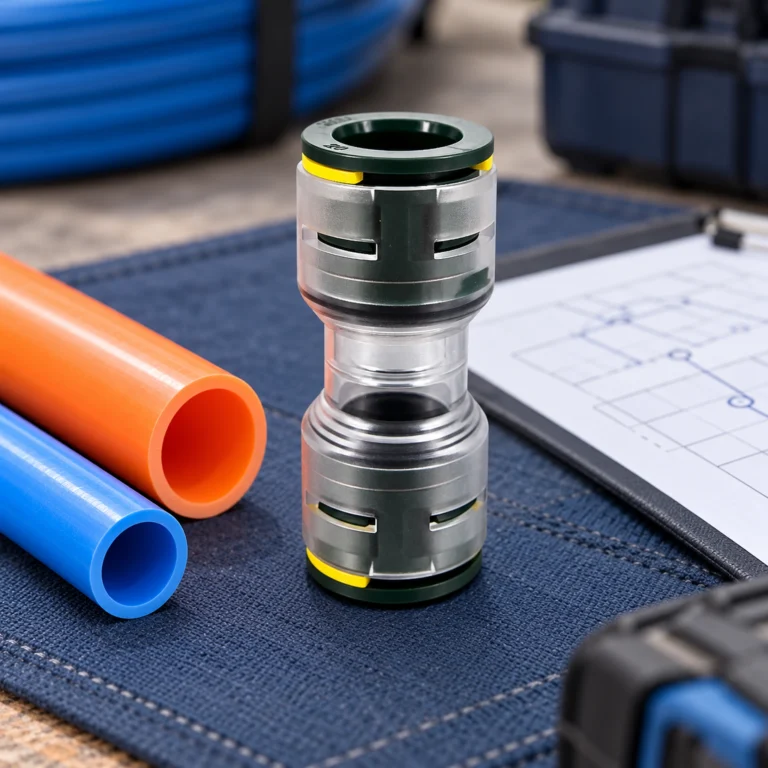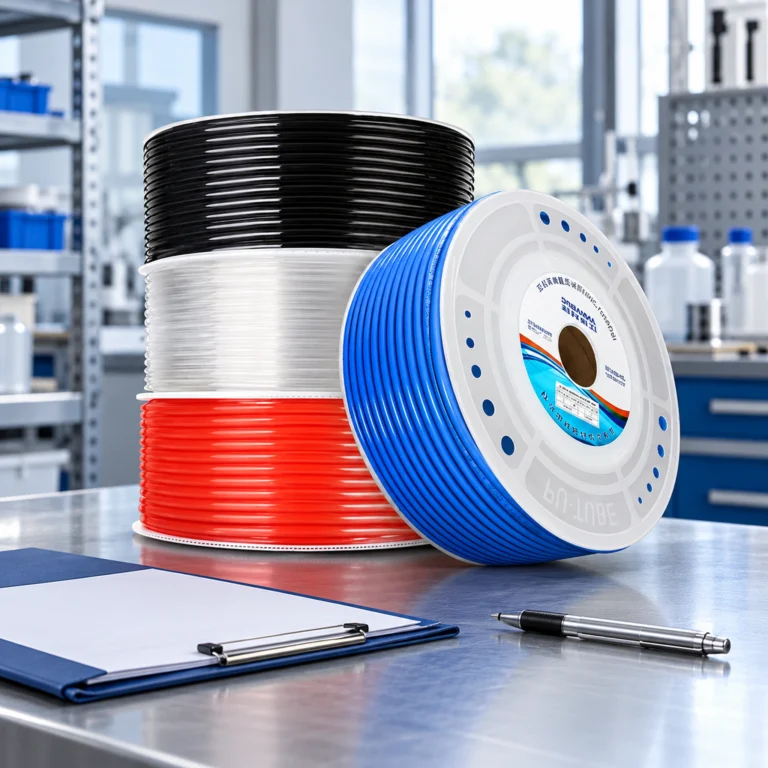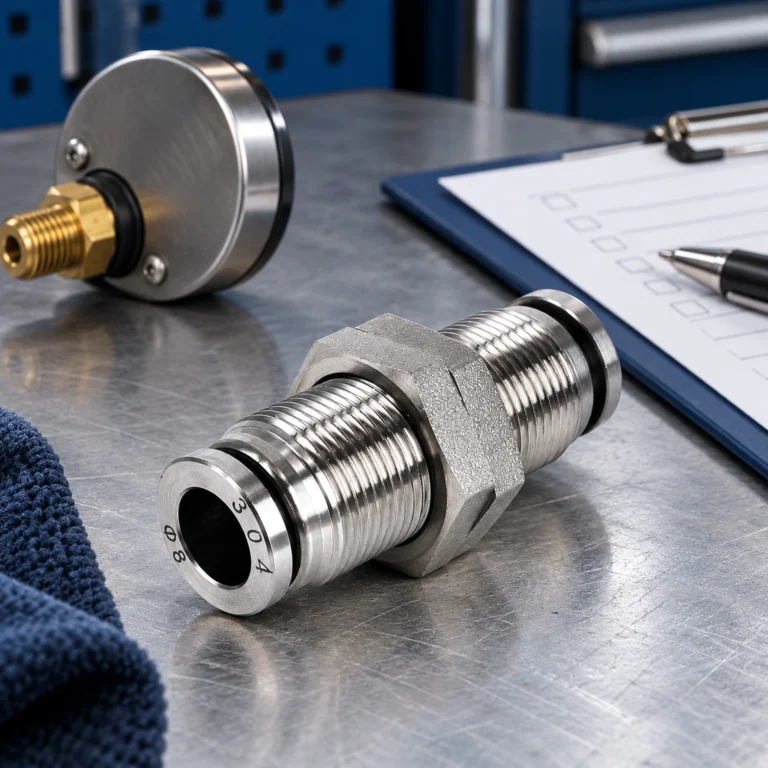
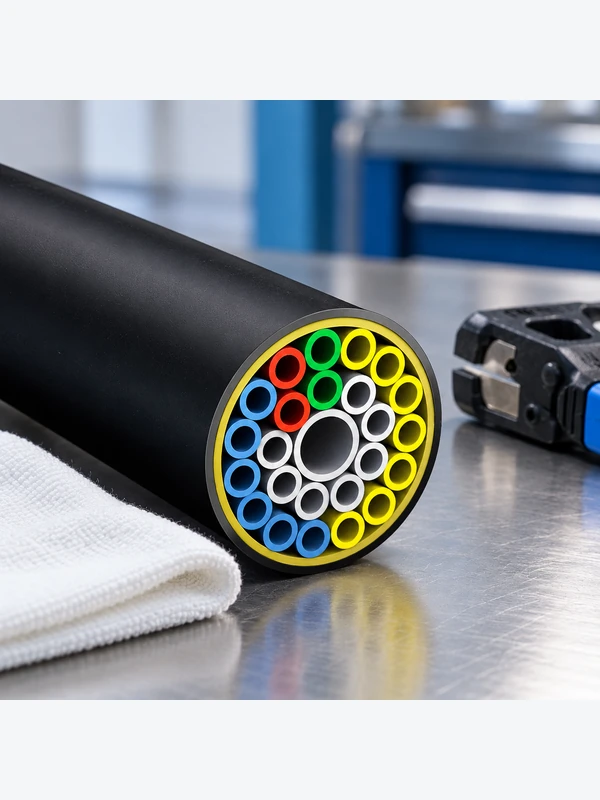
An air-blown microcable route combines a protective pathway, suitable microducts, connectors and a cable approved for the installation method. Microducts may be placed in an existing main duct or installed as part of a new route; access, existing occupation, mechanical protection and the duct supplier’s instructions determine the permitted arrangement. Do not use a universal area-fill percentage as a substitute for that design. Count the available bore and transitions, distinguish the cable-to-microduct diameter ratio from the bundle-to-main-duct area ratio, and check how the proposed components will be installed and maintained. The resulting pathway must remain continuous and accessible at the agreed intervention points.
Air assistance and a compatible feeding mechanism move a qualified cable through the microduct, but the attainable run length remains route-specific. Bends, elevation changes, connector alignment, friction, cable stiffness, air supply and equipment settings can all affect the result. A quoted distance such as 1.6 km is not a universal capability and should be used only with the exact cable, duct, machine and test conditions that support it. Establish the approved operating limits before the run, retain communication between the feed and receiving ends, and stop when the method’s intervention criteria are reached. Record the actual stopping point and conditions before adjusting equipment or changing the route.
Air-blown microcable can support a staged network build where a qualified microduct route is available. The benefits should be assessed against a conventional cable installation serving the same demand, access conditions and planning period. The points below identify potential project advantages; they are not guaranteed savings or performance values for every site.
Initial cable expenditure can be staged when later fiber is installed only as demand develops. Compare the first-phase cost of ducts, chambers, cable, installation equipment and testing with the complete alternative design. Later phases still require access, route checks, labor and equipment, so the capital profile must be calculated from project quantities and quotations. No fixed 65–70% saving is established by the installation method alone.
(2) It can be used for newly deployed HDPE main pipes or existing PVC main pipes, and can be connected to new users without affecting the normal operation of optical cables that have been opened.
(3) The optical fiber assembly density is high, and the tube hole resources are fully utilized by laying reusable sub-tubes.
(4) The fiber optic cable can be blown in batches with the increase of communication business volume to meet the needs of users in a timely manner. It is convenient to adopt new types of optical fibers in the future and maintain technically.
(5) It is easy to expand in parallel and vertically, reduce the workload of trenching, and save the cost of civil engineering.
(6) The air blowing speed of the micro cable is fast and the air blowing distance is long, and the laying efficiency of the optical cable is greatly improved.
What must be qualified before air-blown fiber installation starts?
An air-blown system joins a compatible microcable, microduct route e blowing equipment. Current guidance places more emphasis on empty-duct qualification, route records and controlled feed than on a universal pressure or distance claim.

| Before the run | Evidence to record |
|---|---|
| Route | Continuity, bend points, access, obstruction and water or contamination checks. |
| Joints | Connector seating, sealing, alignment and the approved leak or continuity test. |
| Settings | Cable and duct IDs, air condition, feed force, speed and stop/restart events. |
Use the site’s conectores para microdutos and maintenance guidance as part of the pathway check. If pressure rises without cable movement, inspect the route and joints before escalating force.
Air-blown fiber is a combination of cable, microduct, air supply and feeding equipment. Sumitomo Electric Lightwave distinguishes air-blown fiber from air-blown cable even though both use jetting; product construction, fiber count, installation controls and the approved duct combination can differ. That distinction prevents a team from copying a speed or distance claim from another cable family.
| Qualification area | O que verificar | Why it matters |
|---|---|---|
| Microduto | Continuity, ID/OD, bends, water, debris and joint condition | Restriction or leakage can stop the run |
| Cable | Diameter, surface, stiffness and approved blowing method | Not every fiber cable is designed for jetting |
| Equipment | Feed control, air condition, safety boundary and settings | Force and speed must stay within the approved window |
| Records | Route, cable, duct, machine, start/stop and final check | Enables diagnosis and later expansion |
Before the run, clean and qualify the route with the project method. Check each connector for square preparation, insertion, locking and sealing, then isolate the test boundary. If pressure rises without cable movement, preserve the condition and inspect the nearest joint, bend or obstruction before increasing force. After the run, record the actual settings and stopping points instead of reporting only that the cable arrived.
Use the site’s conectores para microdutos e blowing-machine information as procurement starting points, then request model-specific compatibility. ITU-T L.108 provides application context, while the project method statement controls acceptance.
How should a stalled run be checked against cable, duct and machine limits?
A stalled run is a diagnostic event, not a reason to increase pressure immediately. Compare the recorded air condition and feed force with the selected equipment instructions, then check whether the duct has a leak, sharp bend, water, debris or a damaged joint. Review cable diameter and surface as well. The same machine setting can behave differently with another cable construction or route length. Preserve the stop location and restart condition in the handover record so the next crew can reproduce the diagnosis.
Before mobilization, confirm access to every chamber, the planned recovery method and the safe isolation point. A short section test can reveal a connector or duct problem before the full reel is committed. Record the result even when the run succeeds; a clean baseline makes later troubleshooting faster. Also record the cable reel identity, lubricant or preparation material, ambient conditions and any restart delay so a later comparison uses the same boundary.
How should installation changes be recorded for the next crew?
A useful run record explains how the cable reached its final position, including interruptions. Identify the reel, cable construction, duct section, joints, access points and machine configuration. Keep the initial approved settings separate from adjustments made during installation. A final arrival time alone does not show whether the run required recovery work, a connector repair or a change to the planned section boundary.
When a run stops, record its location and the observations available before changing the setup. Note whether the cable was moving, whether the air condition changed and which route section was isolated for inspection. Follow the approved safety and recovery procedures before opening or adjusting equipment. Check the relevant duct, cable and machine documentation together; the limit of one component should not be treated as permission to exceed another component’s limit.
Close the air-blown fiber installation record with the actual corrective action and the result of the agreed checks. If a joint was changed, update its identity and location. If an access point or section length changed, update the as-built route rather than leaving the original plan as the only reference. Record any preparation material and restart condition that matters to the approved method. These details support later fault finding and expansion without promising that another cable or route can reproduce the same distance, pressure or speed.
Perguntas frequentes
Does a longer route need a higher pressure?
Not as a general rule. Cable construction, duct condition, leakage, bends, equipment and the approved operating window all affect the result.
Can a conventional fiber cable be blown into any microduct?
No. Diameter, surface, stiffness, route condition and the cable-to-duct combination must be approved for the intended method.
What is the most useful installation record?
Record route section, cable and duct identifiers, machine settings, air condition, stopping points and final continuity or acceptance checks.
What is air-blown fiber?
It is a compatible fiber unit or microcable installed through a prepared microduct using controlled compressed air and a feeding system.
Why is a pre-blowing sponge useful?
It can reveal obstructions, water or an unexpectedly restricted section before the valuable cable is introduced, when required by the project method.
What causes a cable to stop during blowing?
Possible causes include leakage, obstruction, excessive bend, poor lubrication, unsuitable settings, cable damage or an incompatible duct-to-cable fit.
Should pressure and speed be copied from another project?
No. Use the selected cable and machine documentation, then adjust within the approved operating window for the actual route.
What should be recorded after a blowing run?
Record route section, duct and cable IDs, equipment, settings, weather or temperature notes, start/stop points and inspection results.
Referências
- IEC 60794-5-10:2014 – official outdoor microduct cable publication.
- ITU-T L.108 (08/2026) – official recommendation for microduct blowing cable characteristics and tests.
- IEC 60794-5-20:2014 – official microduct cabling publication.
- Sumitomo Electric Lightwave air-blown fiber and microduct cable comparison
- Corning duct-cable application information
Summary
Air-blown fiber is a system decision. Qualify the duct, connectors, cable and machine together, and record the conditions that produced an accepted run. Standards frame the cable and test context, but they do not guarantee a distance or speed on an unqualified route. When a run stops, check continuity, sealing, alignment and feed before changing pressure.