로테르담의 한 네트워크 조달 담당 매니저는 설치 전 공기 점검에 실패한 사례를 접하자, 작업팀에게 눈에 띄는 부분을 교체해 줄 것을 요청했습니다. 종점 캐비닛 부근에서 측정했을 때, 게이지는 몇 분간 회복되었다가 다시 떨어졌다. 구매 주문서를 검토한 결과, 해당 클로저는 실제 외경, 절단 상태 및 배관의 사용 여부가 아닌 공칭 배관 규격에 따라 선택된 것으로 확인되었으며, 급격한 고장은 단순히 불량 부품 때문이 아니라 사양상의 문제였다.
간단한 답변: 시스템 인터페이스로 광섬유 엔드 스톱을 조달하십시오. 주문 전에 덕트의 외경, 예상되는 케이블 밀폐 성능, 케이블 점유율 및 문서화된 인수 절차를 확인하십시오. 실외용 마이크로덕트 케이블 시스템에서, IEC 60794-5-20는 관련 시스템 컨텍스트를 제공하며, ISO/IEC 11801-1는 일반 케이블링을 다룹니다. 두 표준 모두 개별 종단 지점을 자동으로 인증하지 않습니다. 실제 조치는 치수 도면과 공급업체의 해당 시험 증거를 요청한 다음, 프로젝트 방식에 따라 설치된 경로를 시험하는 것입니다.
관련 읽을거리: 종단 설치 가이드.
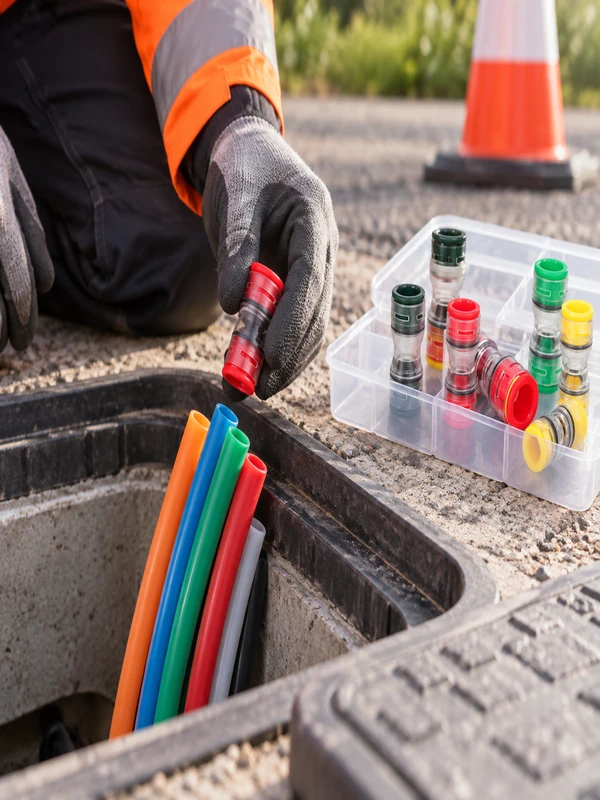
A 광섬유 엔드 스톱엔드 캡, 덕트 플러그 또는 마이크로덕트 클로저라고도 불리는 이 부품은 열려 있는 덕트의 끝을 밀폐합니다. 이는 케이블 설치를 기다리는 경로 내부에 먼지, 습기 및 이물질이 유입되는 것을 방지하는 데 도움이 되며, 특정 설계의 경우 이미 설치된 케이블 주변의 덕트를 밀폐하도록 규정될 수도 있습니다. 제품명이 일관되지 않게 사용되는 경우가 많으므로, 구매자는 견적을 비교하기 전에 해당 부품의 기능을 명확히 정의해야 합니다.
노선의 종점 정류장을 선택하세요.
첫 번째 구분 기준은 해당 덕트가 비어 있는지, 일시적으로 사용 중단되었는지, 상시 예비로 배치되어 있는지, 또는 이미 케이블을 수용하고 있는지 여부입니다. 비어 있는 마이크로덕트의 경우, 프로젝트에서 단순히 보호된 종단 처리만 필요하다면 폐쇄형 설계를 사용할 수 있습니다. 반면, 케이블이 설치된 마이크로덕트에는 전용 통과형 또는 밀봉 장치가 필요합니다. 케이블 위에 고정식 캡을 강제로 부착하면 케이블이 손상되거나 통제되지 않은 개구부가 남을 수 있습니다.

다음으로, 덕트의 실제 외경, 벽체 구조 및 제조사가 명시한 공차를 기록하십시오. “10 mm”와 같은 라벨은 측정된 접합부를 대신할 수 없습니다. 절단 상태를 확인하십시오: 직각이어야 하고 깨끗하며, 압착되거나 모난 부분이 없어야 유지 및 밀봉 요소가 일관되게 작동합니다. 현장 관리를 위해 관련 시험은 소유자가 문서화한 경로 압력 또는 공기 유지 검사이며, 이는 적절히 고정된 장비를 사용하여 수행해야 하며, 카탈로그 이미지에서 추론된 가상의 시험이 아닙니다.
| 노선 상태 | 적합한 기능적 개념 | 주요 구매 체크 | 일치하지 않을 경우의 위험 |
|---|---|---|---|
| 케이블 블로잉을 기다리는 비어 있는 덕트 | 폐쇄형 마이크로덕 엔드 스톱 | 측정된 덕트 외경 및 임시 또는 영구 사용 목적 | 오염물 유입 또는 느슨한 고정 |
| 사용하지 않은 예비 경로 | 경로 식별 기능이 있는 보호용 씰 | 액세스 계획 및 환경 노출 | 향후 작업은 미지의 덕트 상태에서 시작됩니다. |
| 종단부의 점유된 덕트 | 케이블 호환 밀봉 솔루션 | 케이블 외경 범위, 덕트 외경 및 케이블 유형 | 케이블 손상 또는 밀봉되지 않은 인터페이스 |
| 공기 제어가 필요한 구역 | 지정된 용도에 대해 검증된 폐쇄 | 공급업체 증거 및 프로젝트 시험 절차 | 재시험, 문제 해결 및 일정 지연 |
가격뿐만 아니라 밀봉 성능과 서비스 수명을 비교하세요.
엔드 스톱은 작은 품목이지만, 명확하지 않은 인터페이스는 예상치 못한 현장 비용을 초래할 수 있습니다. 거부된 덕트 부재는 케이블 블로잉 작업 창을 낭비하고, 작업팀의 재방문을 필요로 하며, 설치업체, 덕트 공급업체, 피팅 공급업체 간의 책임 소재를 모호하게 만들 수 있습니다. 따라서 신중한 비교에는 단가 경향뿐만 아니라 추적성, 도면 품질, 포장 상태, 기술 문의에 대한 응답 시간까지 포함되어야 합니다.
| 팩터 | 좋은 증거는 어떤 모습인가요 | TCO 영향 |
|---|---|---|
| 치수 호환성 | OD 범위, 도면 및 덕트 인터페이스가 명확히 기재됨 | 부정확한 피킹 및 사이트 분류를 줄입니다. |
| 밀봉 청구 | 정의된 사용 사례 및 해당 테스트 기록(해당되는 경우) | 지원되지 않는 수락 가정을 줄입니다. |
| 로트 추적성 | 부품 번호, 배치 식별자 및 포장 라벨 | Speeds investigation and controlled replacement |
| Installation guidance | Cut, insertion, removal, and occupied-duct limitations documented | Limits avoidable field rework |
| 단위당 원가 성향 | Quoted against the same scope and evidence package | Prevents a low quote from excluding critical support |
Ask for the test report that matches your project
Standards are useful guardrails, but their scope matters. IEC 60794-5-20 concerns outdoor microduct cabling; ISO/IEC 11801-1 provides generic-cabling requirements. They can inform system language in a specification, yet they do not replace a product-specific qualification record. Likewise, an air or pressure test is a method for checking an installed section, not proof that every component in isolation has a particular performance rating.
State the destination market, installation environment, and claim you intend to make. If the project requires a particular ingress, pressure, temperature, flame, or material statement, put it in the request for quotation and ask for evidence tied to that exact statement. Do not market an end stop as “certified” merely because the wider duct or cable system references a standard.
What to ask before you approve a supplier
- Issue a duct schedule with measured OD, route ID, wall construction, and the expected cable status at each termination.
- Separate empty-duct closures from cable pass-through or gas-blocking requirements; they are not interchangeable functions.
- Request a dimensioned drawing, material declaration where needed, installation instructions, part number, and batch-marking method.
- Agree the installed-route test method, test boundary, recording format, and acceptance owner before delivery.
For buyers building a complete accessory schedule, the overview of microduct connectors clarifies the roles of straight connectors, reducers, and closures. The related guide to common ABF-system connector types is useful when a route also includes distribution fittings. Oulu’s Microduct Connector range includes end caps and related microduct accessories; ask for configuration and documentation that match the stated route duty rather than treating a name or image as a specification.
An end stop is not always a gas block
An end stop may simply close and protect an unused microduct. A gas-block or water-block product adds a barrier function only when the design and test evidence cover that duty. When a quotation uses “airtight,” “gas-tight,” or “waterproof,” ask what was tested, on which size, with which duct material, and for how long. A generic product-family statement is not enough for a project acceptance file.
| Buyer requirement | Ask the supplier for | Record at receipt |
|---|---|---|
| 임시 폐쇄 | Fit range, removal method and cap protection | Size, batch and storage condition |
| Air-blown fiber readiness | Seal design and applicable pressure test | Test method and acceptance limit |
| Building or chamber boundary | Barrier scope, material limits and installation drawing | Location, orientation and installer sign-off |
| Future re-entry | Reuse or replacement instructions | Seal inspection and replacement decision |
Compare this with the microduct fitting function guide and confirm the selected part against the connector product range before requesting a sample.
관련 읽을거리: 마이크로덕트 커넥터 선택 가이드.
How should end-stop sourcing handle an empty or occupied duct?
Write the route state in the RFQ. An end stop for an empty duct controls contamination, protects a spare opening and may support a documented isolation test; a gas block seals around an installed cable and has a different diameter and activation requirement. egeplast’s accessory information distinguishes reusable connectors and sealing arrangements for occupied ducts. That distinction prevents an empty-duct cap from being promoted to a cable seal without evidence.
Ask for the removal and storage limits as well as the initial fit. A route that will be reopened needs access, a clean length of duct and a record of whether the seal or retention component may be reused. If the closure will remain in an exposed or buried location, request the environmental scope and test method for the intended duration. Do not convert a temporary construction closure into a permanent barrier by wording alone.
| Route state | Component duty | 증거 필요 |
|---|---|---|
| Vacant spare | Protect and identify the duct end | OD range, retention and re-entry method |
| Pressure-test boundary | Close the defined test section | Medium, pressure, duration and acceptance limit |
| 설치된 케이블 | 케이블과 덕트 주위에 씰을 부착하세요. | Cable OD, seal activation and model instructions |
자주 묻는 질문
What is a fiber optic end stop?
A fiber optic end stop is a component used to close the open end of a microduct or similar cable pathway. It is commonly used to protect an unused duct end from debris and environmental exposure. Its exact sealing role depends on the design and the project specification.
How do I choose the right end stop for a microduct?
Choose it from the measured outside diameter of the duct, the duct construction, and whether the route is empty or occupied. Confirm the permitted use on the supplier’s drawing or instructions, then inspect the field cut before installation. Do not select solely by a nominal size in a bill of materials.
Do fiber microduct end stops prevent air leaks?
Some end stops may be intended to support sealing, but no buyer should assume an air-leak result without the relevant product evidence and an installed-route check. Leaks can also originate at duct cuts, joints, valves, or other boundaries. Use the project’s documented test procedure to locate and resolve the actual cause.
Can I use an end stop on an occupied microduct?
Only use a design specifically intended for the cable and duct interface. A closed-end cap for an empty duct is not automatically suitable around a cable. Provide the cable OD, 덕트 외경, and termination arrangement to the supplier before selection.
What product information should I request when sourcing end stops?
Request the part number, dimensional drawing, compatible duct OD range, intended application, installation instructions, packaging quantity, and lot identification. Where performance is claimed, ask for the test method, conditions, and record that support the precise claim. This keeps technical and commercial comparisons aligned.
How should fiber end stops be stored and handled?
Keep them in their original packaging until use, protected from contamination, crushing, and conditions outside the supplier’s stated storage guidance. Avoid mixing similar sizes in unlabelled field containers. Before installation, check the component and duct end for dirt, damage, or deformation.
관련 읽을거리: 오울루 커넥터 회사 정보.
참고문헌
- egeplast telecom accessories – vacant and occupied duct roles.
- IEC 60794-5-20 – 마이크로덕트 케이블링 범위.
- ITU-T L.87 – optical cable maintenance context.
- Oulu microduct end cap product page.
요약
A fiber optic end stop is selected by route state, duct dimensions and future access rather than by the strongest catalogue phrase. Empty-duct protection, test isolation and occupied-cable sealing are separate duties. Match the measured duct OD, check the closure and environmental evidence, and record whether removal or reuse is allowed. Include the closure in the accepted test boundary and preserve the route label and drawing for the next crew. IEC and ITU references provide application context, while the supplier drawing defines the actual part limits. Oulu’s microduct product range can support a sourcing review when the duct schedule and re-entry plan are available.