
노팅엄의 한 유지보수 엔지니어가 정기적으로 세척되는 기계 옆에서 교체용 공기 호스를 선택하고 있다고 상상해 보십시오. 기존 호스는 유연하여 배관이 용이하므로 주문서에는 단순히 ‘PU 호스’라고만 기재되어 있습니다. 몇 주 후, 새로운 세제가 도입된 뒤 팀은 표면 상태에 변화가 생긴 것을 확인합니다. 이 가상의 사례는 중요한 점을 보여줍니다. 즉, 고분자 재질명만으로는 실제 사용 환경과의 호환성을 충분히 규정할 수 없다는 것입니다.
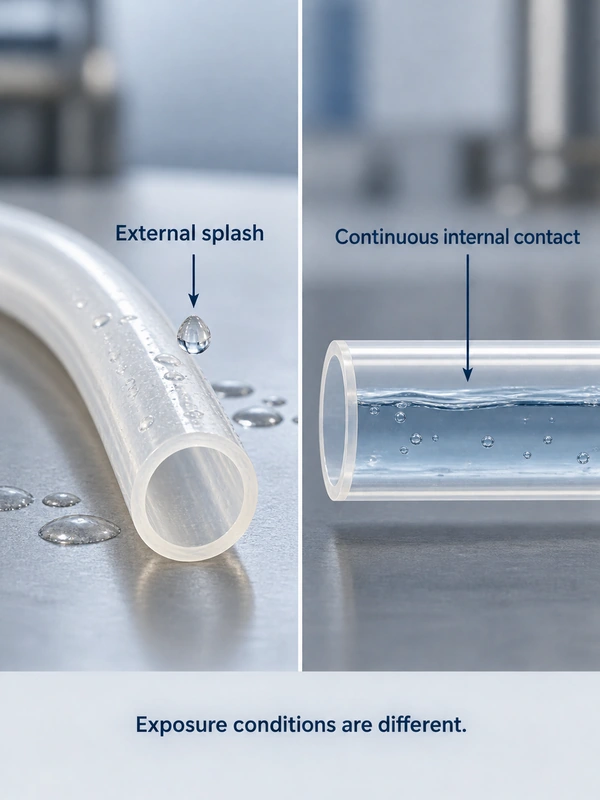
A PU 튜브 해당 고무재료는 사용되는 정확한 유체 또는 외부 오염물질, 농도, 온도, 접촉 시간 및 압력 조건에 대해 승인되어야 합니다. 해당 평가에는 연결 부속품과 밀봉재도 포함되어야 합니다. 압축공기에 대한 적합성이 곧 지속적인 오일 또는 물의 이송에도 적합함을 의미하지 않으며, 간헐적인 튐(스플래시) 상황은 상시 내부 접촉 조건과 동일한 사용 조건이 아닙니다.
외부 노출과 튜브 내부에 운반되는 유체를 분리하십시오.
화학물질이 튜브의 어느 부분에 닿는지 설명하십시오. 외부 분사 시에는 헹굼 또는 건조 전 짧은 시간 동안 튜브 벽의 일부분만 접촉할 수 있습니다. 내부 유체는 지속적으로 접촉하여 이음부 밀봉부까지 도달하며, 이로 인해 압력과 온도 조건이 달라질 수 있습니다. 따라서 침수, 간헐적 스플래시, 증기 및 압축공기에 포함된 윤활유는 각각 별도의 노출로 기록해야 합니다.
접촉 시간은 농도와 함께 중요한 요소입니다. 검증된 짧은 세척 주기 동안에는 무해한 세정제라도 클램프 아래에 잔여물이 축적될 경우 허용되지 않을 수 있습니다. 마찬가지로, 짧은 침적 후에도 외관상 변화가 없는 튜브라 하더라도, 사용 수명 동안 요구되는 기계적 특성을 유지한다는 것이 입증된 것은 아닙니다. 시각적 검사는 유용하지만, 이는 호환성 증거의 일부에 불과합니다.
혼합물을 정확하게 기재하십시오. ‘오일’은 서로 다른 베이스 오일과 첨가제 조합을 의미할 수 있으며, ‘세정제’는 다양한 제형을 가리킬 수 있습니다. 일반적인 범주에 대한 승인을 요청하기보다는 제품의 정확한 식별 정보와 관련 안전 또는 기술 문서를 확보하십시오. 정상 희석 비율, 예상 최대 농도, 그리고 유지보수 중 배관에 유입될 수 있는 모든 세척용 또는 플러싱용 액체를 포함하십시오.
| 노출 | 필요한 정보 | 왜 일반적인 답변으로는 부족한가요? |
|---|---|---|
| 컴프레서 오일 이송 | 윤활유의 정체성 및 예상 접촉 | 오일의 화학 성분과 첨가제는 서로 다릅니다. |
| 내부에 운반되는 물 | Water type, temperature, duration and pressure | PU grades have different water restrictions |
| External cleaning spray | Cleaner, dilution, dwell time and rinsing | Residue and temperature alter the exposure |
| Chemical mixture | Complete composition and working conditions | A chart for one pure chemical may not apply |
Check the actual polyurethane grade before approving water service
폴리우레탄 튜브 includes different formulations and constructions. A colour or flexible feel does not identify the grade. Ask for the manufacturer’s exact series and written fluid restrictions, particularly where water, humidity or hot cleaning is involved. Do not approve a water duty simply because another polyurethane product from a different series is listed for it.
SMC’s TU catalogue provides a concrete example. The TU/TIUB section lists air and water with stated conditions, while the TUH precautions prohibit water because of hydrolysis. These are manufacturer-specific instructions, not an evaluation of every PU formulation. They demonstrate why a broad statement such as polyurethane is waterproof is not adequate for selecting a pressurized tube assembly.
The same document gives a maximum operating pressure at a specified temperature and separate temperature conditions for water. This reinforces a second point: fluid approval and mechanical limits have to be read together. A tube may be suitable for a medium within one defined range without being suitable at every temperature or pressure listed elsewhere in a catalogue.
For recurring failures, retain the tube packaging, supplier code and batch information when available. Compare these with the original approved material. If the only recorded description is blue PU, it may be impossible to tell whether the replacement uses the same grade. A more complete purchasing description helps distinguish an exposure change from an unintended material substitution.
Assess oil and chemical contact across the entire assembly
The tube is only one wetted component. Check the fitting body, gripping arrangement, seal and any thread-sealing material that can encounter the fluid. A stainless fitting can contain an elastomer with different chemical limits. SMC’s KQG2 fluid guidance evaluates body and seal materials separately, which is a useful reminder that metal compatibility does not establish assembly compatibility.
Do not treat a chemical-resistance chart as a complete operating approval. Check the tested material, concentration, temperature, exposure time and the meaning of its rating. A chart based on static immersion does not necessarily establish pressure capability, fatigue life or performance of a stressed tube in motion. Where the duty is consequential, request confirmation for the actual use and a suitable qualification plan.
그 stainless fitting media compatibility guide explains this component-by-component review. It is particularly relevant when the tube appears to survive but leakage develops at the socket. A seal response, dimensional change or tube-surface damage can affect the connection without visible corrosion of the metal body.
Watch for swelling, softening, cracking, unusual stiffness and changes at the clamped or inserted sections. These observations should trigger investigation rather than a definitive chemical diagnosis. Remove affected components from service under the approved procedure and retain evidence where useful. Do not continue pressurized testing merely to see how long visibly degraded tubing will last.
Keep temperature, pressure and routing within the approved range
Pressure-temperature limits are tied to the exact tube construction. The Oulu PU tube listing identifies available size combinations, including 6 × 4 mm and 8 × 5 mm, and states a temperature range. That information is not a complete pressure-versus-temperature curve or a chemical-service approval. Request the missing working and bend data for the chosen variant before specifying the assembly.
Record outside and inside diameters separately. The socket matches the approved outside diameter; the bore contributes to flow delivery. A tube with the correct outer size may still restrict a long pneumatic run if its bore is smaller than the original. Do not compensate for that change by increasing supply pressure without investigating the actual restriction and permitted operating limits.
Routing can increase the effect of an unsuitable exposure. A tight bend, abrasion point or heavily compressed clamp creates an additional mechanical concern at the same location. Keep the line away from sharp edges and hot surfaces, provide room for motion and follow the exact minimum bend requirement. A room-temperature bend value should not be assumed to validate continuous flexing in a warm chemical environment.
Cut and insert tubing only after safe isolation and depressurization. Use a suitable cutter, inspect the outside sealing surface and insert to the fitting’s specified position. The PU hose leak and kink guide helps distinguish installation damage from a broader material-compatibility problem. Neither a fresh cut nor a new fitting can make an unapproved chemical duty suitable.
Ask for compatibility evidence that matches the real duty
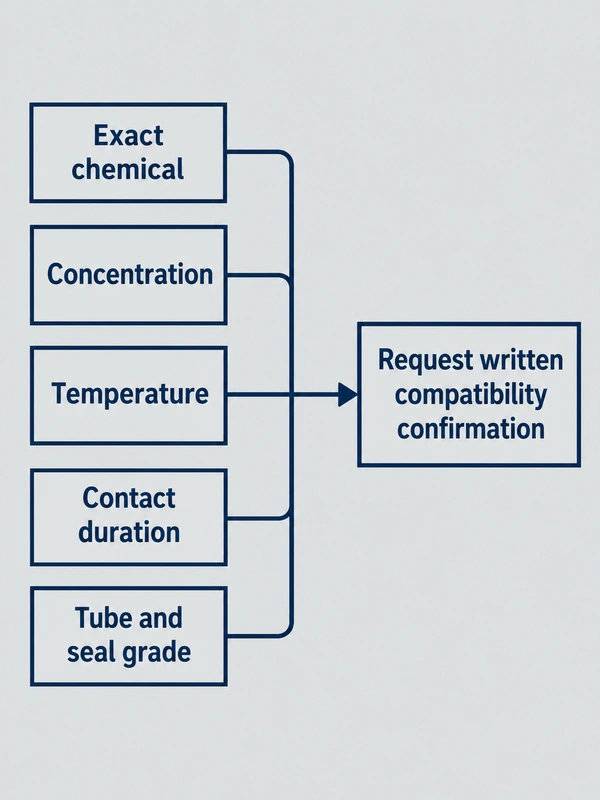
Send a complete enquiry rather than asking whether PU resists chemicals. Include exact tube grade and dimensions, fitting and seal identity, chemical name, concentration, fluid and ambient temperatures, pressure, contact duration and whether the tube moves. State any cleaning cycle or abnormal exposure that the system is expected to tolerate. Missing information should remain an open question, not become an assumed approval.
| Required field | Example of useful information | Evidence requested |
|---|---|---|
| Material identity | Exact tube series, size and fitting seal | Matching datasheets and variant confirmation |
| Chemical identity | Named fluid and documented dilution | Compatibility statement for that composition |
| Operating conditions | Pressure, temperatures and contact duration | Limits and any derating or exclusions |
| Mechanical duty | Fixed route or repeated motion | Bend and installation requirements |
| Special requirements | Actual food contact or clean-air duty | Documents covering the intended use |
Define the acceptance criteria before any application trial. These may include leakage, dimensional change and mechanical condition under a documented procedure, with limits agreed by the responsible engineer and supplier. A casual soak test is not certification. If food contact or clean process air is required, obtain the applicable documents for the exact material and use; a generic industrial PU listing is insufficient.
Keep compatibility decisions with the maintenance record so future changes can be reviewed. A new cleaner, higher temperature or different lubricant may invalidate an earlier selection even if the tube part number stays the same. The most useful approval states its conditions clearly enough that technicians can recognize when those conditions have changed.
자주 묻는 질문
What tube size and bend radius should be used?
Select outside diameter to match the approved fitting and inside diameter to support the required flow. Use the bend limit for the exact tube size, grade and conditions. A generic PU description does not provide a universal radius or confirm suitability for repeated movement.
How do you prevent abrasion and kinks in PU tubing?
Provide supported routing with adequate bend clearance and room for machine movement. Avoid sharp edges, hot surfaces and clamps that distort the wall. Inspect the complete movement range and keep side load away from the fitting entry.
What pressure and temperature limits apply to a PU tube?
Use the exact product’s working limits and temperature-dependent restrictions, including the connected fittings and seals. Do not substitute burst pressure for working pressure. A rating quoted at room temperature may not apply at the hottest operating condition.
Which connector thread matches a PU tube without leaking?
The tube itself is matched to a socket by outside diameter, approved material and tolerance, not by a pipe thread. If the connector has a threaded equipment end, identify that port separately. Both interfaces must be correctly specified for a reliable assembly.
How should PU tubing be cut and inserted for a reliable seal?
After isolation, make a clean square cut and check that the tube is round and free of scoring. Insert it straight to the fitting manufacturer’s required position and perform the specified retention check. Replace damaged or degraded tube rather than reusing an unsuitable sealing surface.
Can a PU tube carry oil, water or chemicals?
Only where the exact grade and complete assembly are approved for the named medium and conditions. Water restrictions can differ even between polyurethane series from the same manufacturer. Obtain written compatibility confirmation covering concentration, temperature, pressure and contact duration.
참고문헌
- SMC: TU, TIUB and TUH fluid and temperature precautions
- SMC: KQG2 body and seal fluid guidance
- SMC: KQ2 fitting and tube selection information
요약
PU compatibility depends on a defined material meeting a defined exposure, not on the polymer name alone. Check the fluid, concentration, temperature, duration and mechanical duty, then include every wetted seal and fitting in the decision. For an Oulu polyurethane tube quotation, provide that operating information with the required OD and ID so the proposed product can be checked against the intended service before installation.



