
은색 부속과 황동색 부속은 정비 작업대에서 서로 교체 가능한 것처럼 보일 수 있습니다. 두 부속 모두 동일한 튜브를 장착하고 같은 포트에 나사로 체결될 수 있지만, 표면 처리 방식, 밀봉재 및 승인된 사용 조건은 서로 다를 수 있습니다. 색상만으로 선택하면 가장 중요한 문제들이 해결되지 않은 채 남게 됩니다.
니켈 도금 황동 피팅 문서화된 코팅이 해당 응용 분야의 표면 노출 요구 사항을 충족하는 경우, 이를 고려해 볼 만합니다. 실제 합금과 완전한 부속품이 사용 조건을 충족한다면, 도금되지 않은 황동도 적합한 선택이 될 수 있습니다. 두 마감 모두 자동으로 더 높은 압력 등급, 범용 내화학성 또는 식수 허가를 보장하지 않습니다. 결정하기 전에 제품 사양, 유체 및 설치 환경을 반드시 비교하세요.
니켈 도금은 황동 피팅의 어떤 특성을 변화시킵니다?
니켈 도금은 황동 부품에 표면층을 추가합니다. 기저 재료는 여전히 황동입니다. 마감 처리는 외관과 표면 특성에 영향을 미칠 수 있지만, 부품을 스테인리스강으로 바꾸거나 설비 내부의 다른 모든 부품의 적합성을 보장하지는 않습니다.
Parker의 LF 3600 기술 브로슈어는 고인 함량 화학 니켈 도금 황동 부품을 식별하고, FKM O-링을 별도로 명시합니다. 해당 도금 시스템이 내마모성과 내식성을 제공한다고 설명합니다. 이는 명시된 제품군에 대한 증거일 뿐, 모든 실버 피팅이 동일한 코팅이나 성능을 갖는다는 보장은 아닙니다.
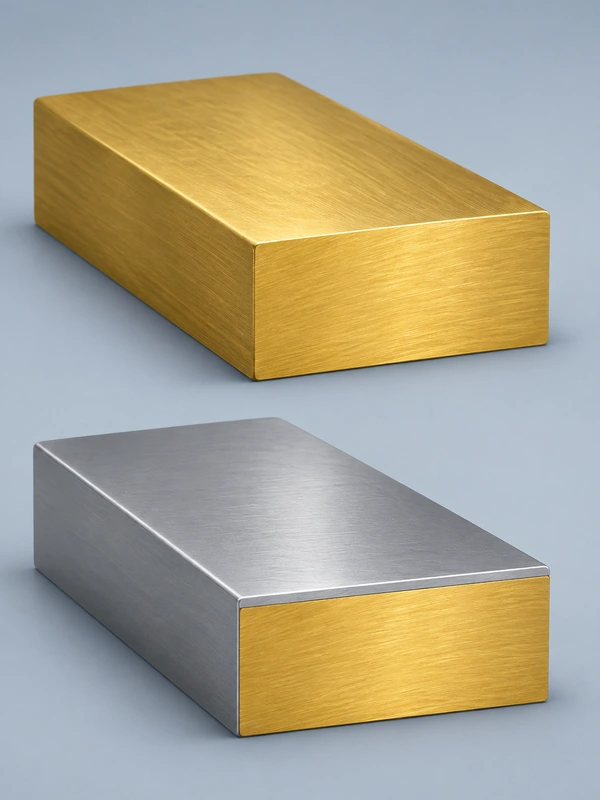
견적에 전기도금 니켈인지 무전해 니켈 도금 시스템인지 명시되어 있는지 확인하고, 관련 도금 사양을 요청하십시오. ‘니켈 도금’이라는 설명만으로는 공정, 두께, 피복도 또는 수락 기준을 규정할 수 없습니다. 무전해 니켈-인 도금의 경우, 인 함량이 명시된 시스템의 일부일 수 있으므로 모든 니켈 도금이 동일하다고 가정하지 마십시오.
재료 도해는 개념적 비교를 나타낸 것으로, 명확성을 위해 표면층을 과도하게 확대하여 표현했습니다. 이 도해는 특정 부속품의 구조나 코팅 두께를 나타내지 않습니다. 본 문서 내 다른 곳에 수록된 제품 이미지는 검사 및 식별 방법을 보여주며, 외관만으로는 해당 부속품의 코팅 유형을 판단할 수 없습니다.
무도금 황동은 언제 합리적인 선택인가요?
도금되지 않은 황동 피팅 합금, 매체, 밀봉재 및 운전 한계가 적합함이 문서화된 경우, 보호된 서비스 환경에서 사용하는 것이 적절할 수 있습니다. 마감 처리의 등급 향상은 실제 노출 조건이나 유지보수 요구사항을 충족해야 하며, 더 밝은 부품이 더 견고해 보인다는 이유만으로 사양에 추가되어서는 안 됩니다.
보호된 압축공기 캐비닛의 경우, 먼저 필요한 튜브 치수, 나사산, 압력, 온도 및 외부 환경 조건을 설정하십시오. 안내서는 황동 공압 이음부의 크기 및 나사 선택 이러한 기계적 검사를 포괄합니다. 해당 조건들이 충족되면, 표면 처리가 해당 위치에 대해 문서화된 이점을 제공하는지 비교하십시오.
| 선택형 질문 | 니켈 도금 황동 | 도금되지 않은 황동 |
|---|---|---|
| 밑에 어떤 재질이 있나요? | 황동; 합금 및 코팅 시스템을 확인하십시오. | 황동; 합금을 확인하십시오 |
| 환경과 접촉하는 것은 무엇입니까? | 커버리지가 명시된 코팅과 노출된 모든 구성 요소 | 노출된 황동 및 기타 조립 재료 |
| 외관이 호환성을 입증할 수 있나요? | 아니요; 은색 마감은 전체 재료 사양을 나타내지 않습니다. | 아니요; 노란색 외관만으로는 합금이나 승인 여부를 확인할 수 없습니다. |
| 마감 처리가 압력 등급을 결정합니까? | 게시된 피팅의 정확한 한계값을 사용하십시오. | 게시된 피팅의 정확한 한계값을 사용하십시오. |
| 어떤 추가 증거가 유용한가요? | 코팅 공정, 도포율 및 관련 노출 시험 | 합금 식별 및 관련 노출 적합성 |
이 비교에서는 의도적으로 절대적인 우승자를 선정하지 않습니다. 애플리케이션에 황동 기판을 승인하는 데 필요한 정보가 부족한 경우, 명시되지 않은 코팅을 추가하더라도 그 격차를 해소할 수 없습니다. 공급업체에 전체 작동 조건을 평가하도록 요청하십시오.
니켈 도금 황동은 해당 유체와 세척용 화학물질에 내성이 있습니까?
내부 유체 노출과 외부 세정 노출을 구분하십시오. 압축공기를 공급하는 피팅이라도 세제가 분사되거나 냉각수가 접촉하거나 응결에 노출될 수 있습니다. 화학적 성분, 농도, 온도 및 접촉 시간을 기록하십시오. 일반적인 내식성 설명만으로는 해당 호환성 여부를 판단할 수 없습니다.
모든 관련 재료를 확인하십시오: 코팅, 황동 기판, O-링, 플라스틱 이형 부품, 윤활유 및 튜브. SMC의 KQ2 카탈로그에는 하나의 피팅 계열 내에 여러 가지 재료가 나열되어 있으며, 허용되는 유체와 작동 조건을 구분해 놓았습니다. 실질적인 교훈은 본체 재료만으로는 전체 어셈블리를 설명할 수 없다는 것입니다.
Consider a hypothetical maintenance change: a workshop switches cleaning products while keeping the same air fittings. A finish that previously performed acceptably does not establish compatibility with the new cleaner. Before blaming the supplier for later deterioration, compare the revised exposure with the approved specification and inspect the other affected materials.
For frequent washdown or an aggressive process environment, evaluate an explicitly approved alternative rather than assuming a thicker-looking nickel layer will solve every problem. Obtain a written compatibility statement for the selected product. Avoid transferring another brand’s resistance claims to a visually similar part.
What coating damage should be checked before installation?
Inspect accessible surfaces for flaking, blistering, pitting and obvious mechanical damage. Compare incoming parts with the supplier’s finish acceptance criteria and retain the batch identification. A visual check can identify a reason for further investigation, but cannot measure coating thickness or prove internal coverage.
Distinguish a superficial handling mark from damage that may affect a functional surface. A mark near a sealing interface or a thread deserves attention even when the fitting still appears usable. Isolate suspect stock and ask the supplier whether replacement or further inspection is required; do not polish away evidence before the cause is understood.
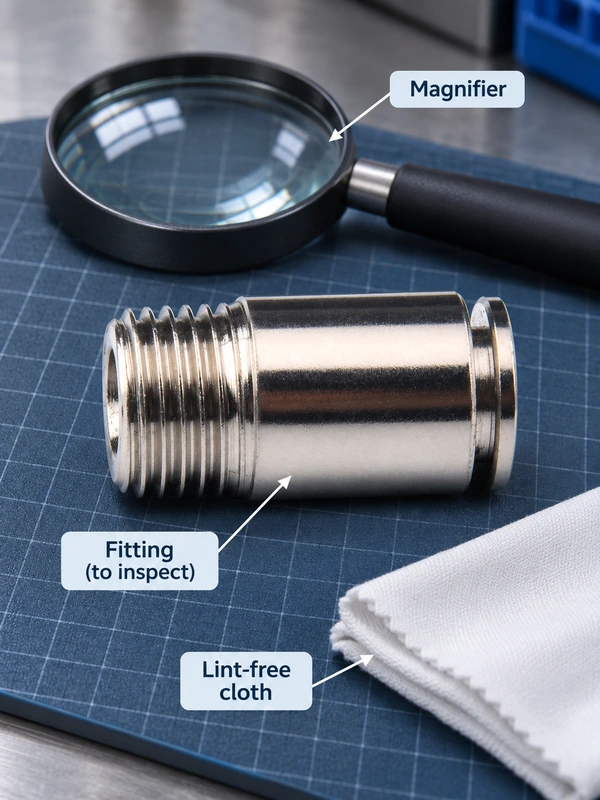
Follow the specified wrenching and installation method. Do not grip a finished body with an inappropriate tool, scrape its surface to improve fit, or attempt field replating of an assembled fitting. Coating repair can affect dimensions, cleanliness and seals, and needs a documented process rather than an improvised cosmetic correction.
If the joint leaks, investigate tube condition, thread compatibility, insertion and sealing arrangements as well as surface damage. The brass fitting leak-check guide helps separate these causes. A leak should not automatically be diagnosed as a plating fault.
Does nickel plating change thread sealing or pressure limits?
The connector design determines how a joint seals. A threaded port may use a specified thread sealant, washer, O-ring or another arrangement; a push-in tube entry uses its own sealing interface. Nickel plating is not a substitute for any of these features.
Confirm the actual thread designation and the manufacturer’s tightening instructions. Similar diameters do not make BSPP, BSPT and NPT interchangeable. Compare the coating condition against the supplied finished-part dimensions rather than treating plating as permission to force a tight connection.
Use the lowest applicable limit in the assembled system, including tube, fitting, valves and other connected components. Parker’s LF 3600 brochure distinguishes product generations and their associated seals when discussing performance. That is a useful warning against assigning a pressure or temperature rating from the finish name alone.
After installation, use the equipment manufacturer’s approved leak-check and commissioning procedure. Depressurize before disconnecting or adjusting a fitting. Neither a shiny body nor a successful initial seal establishes indefinite service life.
Does nickel plating make a brass fitting lead-free or food-safe?
No. A surface finish does not establish the brass alloy’s composition or the finished product’s approval for drinking water. The US Environmental Protection Agency describes a maximum weighted average lead content of 0.25% across the wetted surfaces of covered pipes, fittings and fixtures. This is a regulatory definition with a defined scope, not a visual inspection rule.
EPA also explains certification requirements for products regulated under the US Lead Free Rule and the existence of exemptions. Check the actual application, market and product documentation. Do not apply the drinking-water rule indiscriminately to every industrial pneumatic fitting, and do not describe an industrial fitting as potable-water approved without the relevant evidence.
The LF 3600 brochure references ASTM B733-04 for autocatalytic nickel-phosphorus coatings and makes product-specific material compliance statements. That historical reference identifies a coating specification; it is not a blanket drinking-water certificate, nor proof that an unrelated product complies. Request the currently applicable document and exact model coverage for a new purchase.
Food-contact suitability, cleaning compatibility and drinking-water approval are separate questions. A fitting near a food-processing machine may have a different exposure from one carrying a beverage. Describe the actual contact and service conditions when requesting documentation.
When does nickel plating justify the extra cost?
Compare installed cost and maintenance consequences, not just the unit price. A documented finish may be useful where it addresses a relevant exposure and reduces the need for replacement or cleaning intervention. Those benefits need evidence from the selected product and application; they should not be presented as guaranteed savings.
Use fitting material compatibility as the first approval step. Then compare purchase cost, installation labour, access, planned replacement and the consequence of an unexpected stoppage. If exposure is mild and both approved products meet the requirements, an additional finish may not deliver a meaningful operational advantage.
| 지원 조건 | What to investigate | Evidence needed before choosing |
|---|---|---|
| Protected dry air cabinet | Whether a surface-treatment requirement actually exists | Complete fitting and tubing suitability |
| Regular external cleaning | Compatibility with the actual cleaner | Chemical, concentration, temperature and contact-time assessment |
| Repeated maintenance handling | Surface damage and correct tool access | Installation instructions and finish acceptance criteria |
| Drinking-water service | Applicable product approval and lead requirements | Model-specific certification within its scope |
| Corrosive process exposure | Whether coating, substrate and seals are all suitable | Application-specific material approval or an alternative assembly |
What should a nickel-plated brass fitting quotation include?
Send the supplier the tube size, thread designation, operating pressure and temperature, internal fluid and external exposure. Request the exact brass alloy, coating system and applicable seal materials. Add any cleaning, food-contact or drinking-water requirements explicitly rather than assuming they follow from the material name.
Ask which surfaces are coated and how coating quality is accepted. Where a test report is offered, check the model, sample configuration, method and result. A test on a coupon or another product size may provide useful information, but its relevance to the purchased assembly must be explained.
Keep the approved specification with the order and batch record. If a substitute is proposed later, compare the same requirements again. A replacement should not be approved merely because it has the same colour and fits the available port.
자주 묻는 질문
Are nickel-plated brass fittings better than unplated brass?
They can offer useful surface properties when the specific coating is suitable for the exposure. They are not universally better. Compare the complete fitting, fluid, environment and documentation; an approved unplated fitting may be sufficient for protected service.
Can nickel-plated brass fittings corrode?
They can deteriorate in unsuitable conditions or when the coating is damaged. A corrosion-resistance claim needs its test and application context. Confirm compatibility with both internal fluids and external cleaners rather than assuming the finish is an unrestricted barrier.
Does nickel plating increase a brass fitting’s pressure rating?
Do not infer a higher rating from plating. Use the published pressure-temperature limits of the exact finished fitting and the lowest applicable limit in the assembly. The body design, seals, tubing and connection method remain relevant.
Are nickel-plated brass fittings safe for drinking water?
Only when the actual product has the documentation required for that use and market. Nickel plating alone does not demonstrate lead-free compliance or drinking-water suitability. Check model-specific certification and its scope before installation.
Should a scratched nickel-plated fitting be replaced?
Assess the location and extent of damage against the manufacturer’s criteria. Damage at a sealing surface, loose coating or visible deterioration warrants investigation. Do not conceal it by polishing or continue service on the assumption that any scratch is harmless.
How can I tell nickel-plated brass from stainless steel?
Use the part number, material specification and supplier documentation. Colour and appearance are insufficient, and a simple magnet check is not a universal identification method. Request traceable material confirmation when an unidentified component must be replaced.
참고문헌
- Parker Legris, LF 3600 Nickel-Plated Brass Instant Fittings, technical brochure hosted by RS: identified coating, component materials and product-specific requirements. Historical edition; obtain current model documentation for procurement.
- SMC, KQ2 One-Touch Fittings catalogue: separate assembly materials, fluids and operating conditions.
- US EPA, Use of Lead Free Pipes, Fittings, Fixtures, Solder, and Flux for Drinking Water: lead-content definition, certification requirements and regulatory scope.
요약
Choose nickel-plated brass when the documented coating addresses a real service requirement. Choose unplated brass when its complete specification already fits the job. In either case, verify the substrate, seals, interfaces and approvals; finish colour cannot answer those questions.
For sourcing, review ANMASPC’s straight brass fitting and contact the team with your application details. Request written confirmation of the supplied finish, alloy and operating limits before ordering; the current product page does not establish nickel plating.



