
리즈에서 진행된 가상의 시운전 작업에서, 조립 기술자가 금속 푸시인 이음쇠를 사용하여 새로운 공압 밸브를 연결합니다. 간단한 손으로 확인했을 때는 호스가 단단히 고정된 것처럼 보였지만, 기계가 작동하면서 호스가 이탈합니다. 원인이 반드시 약한 금속 본체 때문만은 아닙니다. 혼용된 호스 규격, 불완전한 삽입 또는 연결부에 인장이 가해지는 배관 경로 등도 동일한 문제를 일으킬 수 있습니다.
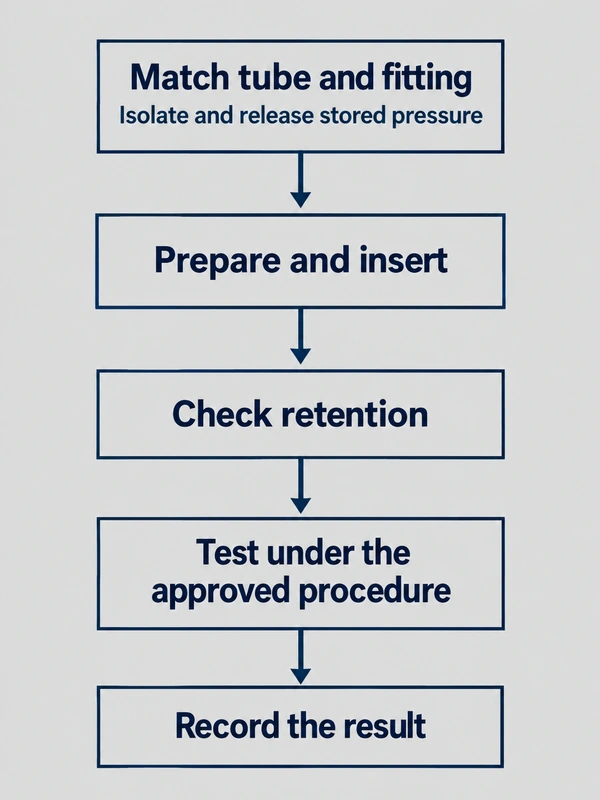
설치 금속 푸시인 이음쇠 완전한 접합부를 정확히 맞추고, 튜브를 준비하며, 규정된 삽입 방법을 준수하고, 통제된 조건하에서 완성된 조립 상태를 점검함으로써 이를 수행합니다. 금속 구조물은 손상된 튜브 표면이나 부적절한 밀봉을 보완하지 않습니다. 연결부는 유지력, 누설 여부 및 배관 경로가 모두 확인된 후에야 사용 가능 상태가 됩니다.
조립 전에 피팅을 튜브와 포트에 맞춰 주십시오.
어떤 것도 절단하기 전에 튜브 표시와 피팅 코드를 반드시 확인하십시오. 튜브의 외경, 단위, 재질 및 승인된 공차를 기록해 두십시오. 외경은 삽입형 피팅의 체결력과 밀봉 성능을 결정하며, 내경은 유체 흐름 통로에 영향을 미칩니다. 내경은 맞더라도 외경이 잘못된 튜브는 대체품으로 사용할 수 없습니다. 조립 중에는 미터법 규격과 인치법 규격 재고를 명확히 구분하여 보관하십시오.
포트를 독립적으로 식별하십시오. 수형 커넥터는 한쪽 끝에는 푸시인 방식의 소켓을, 다른 쪽 끝에는 나사식 연결부를 갖추고 있을 수 있으며, 이 두 끝은 서로 다른 명명 규칙을 사용합니다. 평행 나사와 테이퍼 나사는 각각 고유한 맞물림 및 밀봉 구조가 필요합니다. 손으로 나사를 돌려 시작할 수 있는 것은 심각한 손상을 감지하는 데 유용하지만, 그것만으로는 해당 나사 계열이 올바른지 확인할 수는 없습니다.
SMC의 KQ2 및 KQG2 카탈로그는 승인된 튜빙, 치수 표 및 나사 유형이 왜 각 개별 시리즈에 속하는지 보여줍니다. 이들의 설치 값은 식별되지 않은 피팅에 복사되어서는 안 됩니다. 기계 도면과 공급된 부품이 서로 다를 경우, 설치 전에 그 차이를 해결해야 합니다. 준비 및 라우팅을 포괄하는 더 광범위한 절차에 대해서는 다음을 참조하십시오. 공압 파이프 커넥터 설치 가이드.
| 인터페이스 | 확인 | 거부하거나 조사하다 |
|---|---|---|
| 튜브 | OD, 단위, 승인된 폴리머 및 상태 | 미상의 주식, 타원형 단면 또는 표면 스크래치 |
| 소켓 | 올바른 맞춤 코드 및 깔끔한 입력 | 손상된 칼라 또는 오염 |
| 스레드 | 포트 규격, 크기 및 씰 배치 | 바인딩, 크로스스레딩 또는 씰 누락 |
| 서비스 | 압력, 온도 및 매체 | 몸체 재질로부터만 추론된 한계 |
튜브를 밀어 넣기 전에 절단하고 검사하십시오.
장비를 격리하고, 저장된 압력을 방출한 뒤, 연결부를 분해하거나 조립하기 전에 작업 구역이 안전한지 확인하십시오. 공압 에너지를 저장하고 있을 수 있는 모든 갈라진 배관과 기계적 움직임도 포함하여 점검하십시오. 공급 밸브가 닫혀 있다고 해서 모든 구간의 압력이 완전히 제거된 것은 아닙니다. 라인을 배출하는 방법으로 릴리스 콜라를 사용하지 말고, 해당 기계의 에너지 제어 절차를 적용하십시오.
선택한 재질과 직경에 적합한 튜브 절단기를 사용하십시오. A 사각 튜브 절단 일관된 삽입 끝부분을 제공하는 반면, 찌그러지거나 각이 진 끝부분은 밀착에 방해가 될 수 있습니다. 원형도와 씰이 접촉하는 외벽을 점검하십시오. 조립품이 허용하지 않는 섬유, 오일 또는 세척 화학물질을 유입시키지 않도록 느슨한 이물질을 제거하십시오.
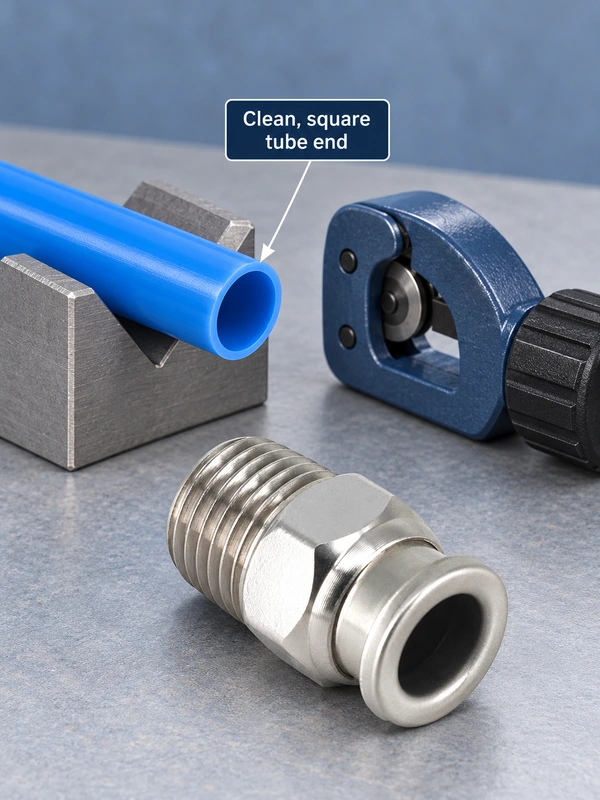
이전에 사용된 튜브는 특히 주의가 필요합니다. 그립 링이 자국을 남길 수 있으며, 열이나 장기간 사용에 노출된 튜브는 형태가 변할 수 있습니다. SMC의 KQG2 취급 주의사항에서는 사용 중 팽창한 튜빙의 제거 어려움에 대해 설명하고 있습니다. 손상된 동일한 구간을 다시 연결하는 것은 신뢰할 수 있는 수리 방법이 아닙니다. 남은 루트 길이와 지지력이 충분한 경우에만 양호한 부분까지 잘라내어 사용하십시오.
다른 연결 방식을 기준으로 준비 과정을 임의로 변경하지 마십시오. 페룰 피팅, 바브 호스 연결부 및 푸시인 튜브 피팅은 각각 다른 요구 사항을 갖습니다. 특정 제품에 대해 모따기, 윤활 처리 또는 지지 슬리브 장착이 필요할 수 있지만, 이를 모든 경우에 일반적으로 적용해서는 안 됩니다. 지침에 슬리브나 특정 삽입 깊이가 명시된 경우에는 정확히 호환되는 부품과 치수를 사용하십시오.
릴리스 링을 장착하지 않은 상태로 튜브를 완전히 삽입하십시오.
튜브를 소켓과 일직선으로 맞춘 상태에서 삽입을 제어할 수 있도록 끝부분에 충분히 가까이 잡으세요. 부드러운 폴리우레탄은 너무 멀리서 밀면 처짐이 생길 수 있습니다. KQG2 카탈로그에서는 무급유 구조로 인한 이러한 위험성을 명시하고, 사용자에게 천천히 그리고 확실하게 삽입하라고 안내합니다. 교훈은 모든 금속 커넥터가 동일한 삽입 저항을 갖는다고 가정하지 말고, 실제 시리즈의 지침을 따르라는 것입니다.
제조업체가 승인한 완전 삽입 표시를 사용하십시오. 깊이 표시가 규정된 경우, 해당 치수는 올바른 도면에서 측정하고 표시 재료는 튜브와 호환되도록 유지하십시오. 소켓의 가시적 깊이로부터 범용 삽입 길이를 임의로 설정하지 마십시오. 튜브가 의도된 밀봉 위치에 도달하기 전에는 제한된 느낌을 받을 수 있으므로, 조기 체결은 조립 완료의 증거가 아닙니다.
올바른 렌치 위치와 지정된 밀봉 방식을 사용하여 나사산 끝부분을 조립하십시오. 해제 링, 튜브 또는 가동식 엘보 본체에 토크가 전달되지 않도록 하십시오. 과도한 조임은 피팅이나 포트를 손상시킬 수 있으며, 충분히 체결되지 않으면 누출이 발생할 수 있습니다. 공장 도장, 액체 밀봉제 및 면밀봉재는 경화 또는 재사용 제한 사항을 포함하여 각각 다른 취급 지침을 따릅니다.
전체 기계 동작을 통해 경로를 지원합니다.
튜브 유지 이는 초기 당김 검사만으로는 판단할 수 없습니다. 짧은 튜브는 소켓에 지속적인 장력을 가할 수 있으며, 피팅 근처의 급격한 굽힘은 측면 하중을 추가합니다. 제품별 정확한 설치 지침에 따라 충분한 직선 입구와 적절히 지지된 배관 경로를 확보하십시오. 모든 폴리머와 벽 두께에 대해 일반적인 직경의 배수를 적용하지 말고, 튜브 제조사가 제공하는 최소 굽힘 반경을 확인하십시오.
Observe clearance through the complete machine travel before returning the equipment to production. Tubing that clears a guard at rest can rub against it during motion. Keep release collars clear of objects that could press them accidentally, and avoid cable ties tightened enough to distort the tube. Movement should occur in a suitable length of tubing, not by forcing an ordinary fitting to function as a rotary joint.
Material choice changes the tradeoffs but does not remove these requirements. Plastic, brass and stainless bodies differ in their intended environments and construction. A stainless exterior does not establish food suitability or resistance to every cleaner; a metal socket does not approve every rigid metal tube. Confirm the accepted tube material instead of interpreting the phrase metal tube connector literally.
| 관찰 | Likely checks | Required follow-up |
|---|---|---|
| Tube stops early | Cut, alignment, size and obstruction | Resolve the cause before force is increased |
| Leak at entry | Outside surface and complete seating | Repeat the approved leak check after repair |
| Tube moves during cycling | Retention, route tension and vibration | Inspect during the full movement range |
| Thread binds | Standard, damage and sealing method | Inspect both mating parts |
| Repeated failure after reuse | Tube damage, collar and seal condition | Replace parts that no longer meet instructions |
Prove retention and leak performance after assembly
Perform the prescribed retention check, then restore pressure in a controlled manner with people clear of potential tube movement. Use the site’s approved leakage test and observe the relevant operating conditions. DOE’s compressed-air guidance recommends tracking and verifying repairs; the same discipline is useful during commissioning. Record the fitting code, tube specification, method, conditions and outcome instead of simply writing tested on a checklist.
Separate a routine installation check from product qualification. A brief manual pull does not establish a certified pull-out load, and a successful bubble check at one condition does not prove lifetime performance. If the project requires a documented test standard, obtain the applicable procedure and acceptance criteria. Do not describe ordinary installation as certification or publish an unmeasured zero-leak claim.
Plan future access while the equipment is still easy to reach. The one-touch fitting reuse guide helps decide what to inspect during disassembly. For a new build, compare the required port and tubing with the stainless male straight connector documentation, then retain the approved variant information with the machine’s spare-parts list.
자주 묻는 질문
How do you install metal fittings without scratching the tube?
Prepare a clean, square end with an appropriate cutter and inspect the outside sealing surface. Insert the tube straight using the specified method, without gripping it with tools that score the wall. Replace or cut back damaged tube only where adequate routing length remains.
Can metal push-in fittings be reused during maintenance?
Reuse depends on the manufacturer’s instructions and the condition of the collar, gripping parts, seal and body. Inspect the previously inserted tube as well. A fitting that repeatedly leaks or fails retention checks should not be kept in service just because its metal exterior looks sound.
Which sealing method should the threaded side use?
Use the method specified for the thread and port: an approved thread sealant, pre-applied coating or the correct face seal as applicable. These methods are not interchangeable. Follow the product’s tightening and curing instructions rather than adding tape to every connection.
How do you measure a fitting before ordering a replacement?
Record the tube outside diameter and units, then identify the threaded port separately by standard and nominal size. Include shape, mounting clearance and service conditions. A product code or dimensioned drawing is more reliable than matching a photograph alone.
Why can a tube release when the machine vibrates?
Possible causes include incorrect tube size, incomplete insertion, damaged gripping parts and cyclic side load. Inspect the entire route and check that nothing presses the release collar. Correct the cause before testing again; more thread torque cannot fix a tube-retention problem.
Is plastic, brass or stainless steel the best fitting material?
The best choice depends on pressure, temperature, medium, external exposure and maintenance needs. Compare the complete assembly, including seals and approved tube materials. Stainless is not universally superior, and body material alone cannot establish cleanliness or chemical suitability.
참고문헌
- SMC: KQ2 one-touch fittings
- SMC: KQG2 tubing installation and fitting precautions
- U.S. DOE: Compressed-air leak identification and verification
요약
A push-in connection holds reliably when the tube, socket and port are correctly matched, the tube is fully seated and the installed route avoids damaging loads. Record the assembly checks so maintenance can reproduce them later. For Oulu metal fitting enquiries, send the tube specification, port drawing and working conditions before ordering; a documented match is more useful than choosing by metal appearance alone.



