
リーズでの仮想的な試運転作業において、組立技術者が金属製のプッシュイン継手を用いて新しい空気圧バルブを接続しました。手で軽く確認した際にはチューブはしっかり固定されているように見えましたが、機械が動作するとチューブが抜けてしまいました。原因は必ずしも金属製本体の強度不足ではありません。使用するチューブのサイズが混在していたり、挿入が不十分だったり、配管経路が接続部に引っ張りを加えるような形状になっている場合でも、同様の目に見える不具合が生じることがあります。.
インストール 金属製プッシュイン継手 完全な接続面を合わせ、チューブを準備し、規定の挿入方法に従い、制御された条件下で組み立て後の状態を確認することにより、確実な接続を実現します。金属製の構造部材は、損傷したチューブ表面や不適切なシールに対して補償作用を有しません。保持力、漏れおよび配管経路の確認がすべて完了して初めて、接続は使用可能となります。.
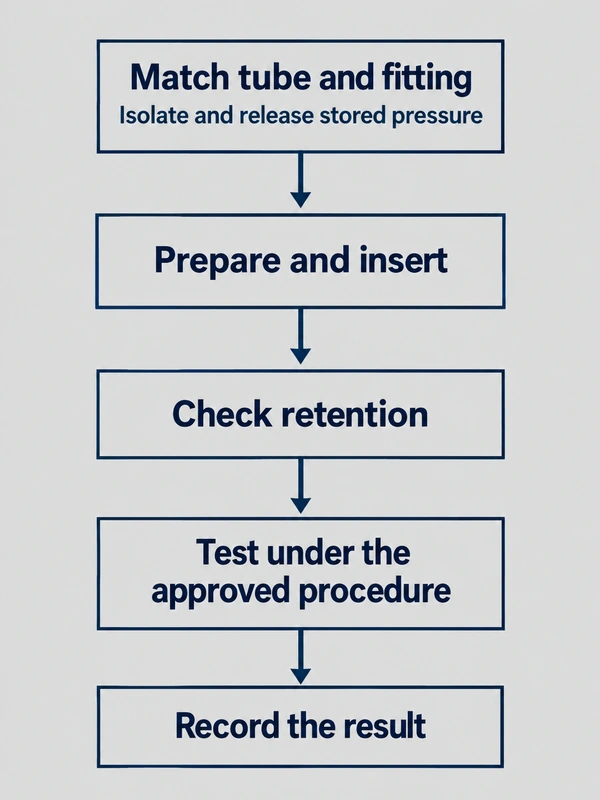
組み立てる前に、継手をチューブおよびポートに合わせてください。
切断作業を行う前に、チューブの表示および継手のコードを確認してください。チューブの外径、単位、材質、許容公差を記録してください。外径はプッシュイン継手の保持力とシール性能を決定し、内径は流路に影響します。内径が適切でも外径が異なるチューブは代替品とはなりません。組立中は、メートル法用とインチ法用の在庫を明確に区別して保管してください。.
ポートを個別に特定してください。オス型コネクタは、一方の端がプッシュイン式ソケット、もう一方の端がねじ込み接続になっている場合があり、それぞれ異なる命名規則が適用されます。平行ねじとテーパーねじでは、それぞれに対応する嵌合およびシール方法が必要です。手でねじを締め始められるかどうかは、明らかな損傷の有無を確認するのに役立ちますが、それが正しいねじ種類であることを証明するものではありません。.
SMCのKQ2およびKQG2カタログは、承認済みのチューブ、寸法表、ねじの種類が個々のシリーズに属する理由を示しています。これらの取り付け時の数値は、特定されていない継手には転記してはなりません。機械図面と供給された部品が一致しない場合は、取り付け前にその不一致を解消してください。準備および配管に関するより詳細な手順については、 空気圧配管コネクタ取付ガイド.
| インターフェース | 確認する | 拒否または調査 |
|---|---|---|
| チューブ | OD、単位、承認済みポリマーおよび条件 | 在庫不明、楕円断面または表面スコアリング |
| ソケット | 正しい適合コードとクリーンな入力 | 損傷したカラーや汚染 |
| スレッド | ポートの規格、サイズおよびシールの配置 | 結合不良、ねじ込み不良、またはシールの欠落 |
| サービス | 圧力、温度、および媒体 | ボディ材質からのみ推定される限界値 |
チューブを押し込む前に切断し、点検してください。
接続部を取り外したり組み立てたりする前に、機器を隔離し、蓄積された圧力を解放し、作業エリアが安全であることを確認してください。閉じ込められた配管や、蓄えられた空気圧エネルギーによって生じる機械的運動も含めてください。供給弁を閉じただけでは、すべての区画が減圧されているとは限りません。ラインの排気手段としてリリースカラーを使用するのではなく、機械のエネルギー制御手順に従ってください。.
選択した材質と直径に適したチューブカッターを使用してください。A 角パイプの切断 挿入時の端面が均一であることが重要であり、潰れたり傾いたりした端面は確実な据え付けを妨げます。シールが接触する部分の円筒度および外壁を確認してください。組み立て時に使用が許可されていない繊維、油分、洗浄用化学薬品などを付着させることなく、緩んだ異物を取り除いてください。.
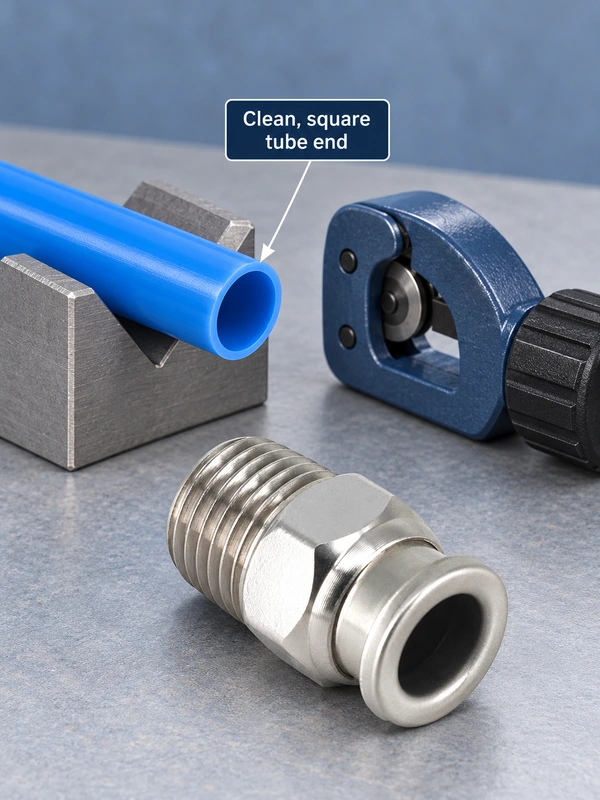
以前使用していたチューブには特に注意が必要です。グリッピングリングが跡を残す場合があり、熱や長期間の使用にさらされたチューブは形状が変化することがあります。SMCのKQG2取り扱い上の注意では、使用中に膨張したチューブの取り外しに関する困難について説明しています。同じ損傷箇所を再接続することは信頼性の高い修理とは言えません。残りの配管ルートに十分な長さと支持がある場合に限り、健全な部分まで切り戻してください。.
別の接続方式を基にした独自の取り付け手順を考案しないでください。フェルール継手、バーブホース接続、プッシュインチューブ継手にはそれぞれ異なる要件があります。面取り、潤滑、またはサポートスリーブの装着は、特定の製品に対して適切な場合がありますが、一律に適用すべきではありません。取扱説明書でスリーブや特定の挿入深さが指定されている場合は、正確に適合する部品と寸法を使用してください。.
リリースカラーを装着せずに、チューブを完全に挿入してください。
チューブをソケットと一直線に合わせ、挿入をコントロールできるよう端部に十分近づけて保持してください。軟質ポリウレタンは、遠くから押し込むとたわむことがあります。KQG2のカタログでは、グリースフリー構造であるためこのリスクが明示されており、ユーザーにはゆっくりと確実に挿入するよう指示されています。教訓は、すべての金属製コネクタが同じ挿入抵抗を持つと仮定せず、実際のシリーズの取扱説明書に従うことです。.
製造元が承認した完全挿入の目安を使用してください。深さの目印が規定されている場合は、正しい図面に基づいて測定し、マーキング材はチューブと互換性のあるものを使用してください。ソケットの見える深さから万能の挿入長を勝手に決めないでください。チューブが所定のシール位置に達する前は締め付け感がある場合がありますので、早期に固定されたからといって組み立てが完了したとは限りません。.
正しいレンチの位置と指定されたシール方法を用いて、ねじ部品を締め付けます。解放リング、チューブ、または可動式エルボ本体にトルクが伝わらないようにしてください。過度な締め付けは継手やポートを損傷する可能性があり、締め付け不足では漏れが生じるおそれがあります。工場塗装、液体シール剤、および面シールには、硬化時間や再使用に関する制限を含め、それぞれ異なる取り扱い指示があります。.
機械の全行程にわたる経路をサポートします
チューブ保持 初期の引張試験だけでは不十分です。短いチューブはソケットに継続的な張力をかける一方、継手のすぐ近くで急な曲げが生じると横方向の荷重が加わります。製品の取扱説明書に従い、十分な直管部と適切な支持による配管経路を確保してください。すべての樹脂材料および肉厚に対して直径の単純な倍数値を一律に用いるのではなく、チューブメーカーが提示する最小曲げ半径を必ず確認してください。.
機器を稼働状態に戻す前に、動作全行程にわたってクリアランスを確認してください。静止時にはガードと干渉しない配管でも、動作中に接触する可能性があります。リリースカラ―が誤って押さえられるおそれのある物体から離し、チューブを変形させるほど締め付けたケーブルタイは使用しないでください。移動部は適切な長さのチューブ内で行い、通常の継手を回転継手として無理に使用しないでください。.
素材の選択はトレードオフを変えるものの、これらの要件自体を排除するものではありません。プラスチック製、真鍮製、ステンレス製の本体は、それぞれ想定される使用環境や構造が異なります。ステンレス製の外装が食品への適合性やあらゆる洗浄剤に対する耐性を保証するわけではありませんし、金属製ソケットがすべての剛性金属チューブに対応することを示すわけでもありません。「金属チューブコネクタ」という表現を文字通りに解釈せず、許容されるチューブ材質を必ず確認してください。.
| 観察 | 可能性の高いチェック | 必須のフォローアップ |
|---|---|---|
| チューブが早期に停止する | 切断、位置合わせ、サイズ、および障害 | 力を増加させる前に原因を解消してください。 |
| Leak at entry | Outside surface and complete seating | Repeat the approved leak check after repair |
| Tube moves during cycling | Retention, route tension and vibration | Inspect during the full movement range |
| Thread binds | Standard, damage and sealing method | Inspect both mating parts |
| Repeated failure after reuse | Tube damage, collar and seal condition | Replace parts that no longer meet instructions |
Prove retention and leak performance after assembly
Perform the prescribed retention check, then restore pressure in a controlled manner with people clear of potential tube movement. Use the site’s approved leakage test and observe the relevant operating conditions. DOE’s compressed-air guidance recommends tracking and verifying repairs; the same discipline is useful during commissioning. Record the fitting code, tube specification, method, conditions and outcome instead of simply writing tested on a checklist.
Separate a routine installation check from product qualification. A brief manual pull does not establish a certified pull-out load, and a successful bubble check at one condition does not prove lifetime performance. If the project requires a documented test standard, obtain the applicable procedure and acceptance criteria. Do not describe ordinary installation as certification or publish an unmeasured zero-leak claim.
Plan future access while the equipment is still easy to reach. The one-touch fitting reuse guide helps decide what to inspect during disassembly. For a new build, compare the required port and tubing with the stainless male straight connector documentation, then retain the approved variant information with the machine’s spare-parts list.
よくある質問
How do you install metal fittings without scratching the tube?
Prepare a clean, square end with an appropriate cutter and inspect the outside sealing surface. Insert the tube straight using the specified method, without gripping it with tools that score the wall. Replace or cut back damaged tube only where adequate routing length remains.
Can metal push-in fittings be reused during maintenance?
Reuse depends on the manufacturer’s instructions and the condition of the collar, gripping parts, seal and body. Inspect the previously inserted tube as well. A fitting that repeatedly leaks or fails retention checks should not be kept in service just because its metal exterior looks sound.
Which sealing method should the threaded side use?
Use the method specified for the thread and port: an approved thread sealant, pre-applied coating or the correct face seal as applicable. These methods are not interchangeable. Follow the product’s tightening and curing instructions rather than adding tape to every connection.
How do you measure a fitting before ordering a replacement?
Record the tube outside diameter and units, then identify the threaded port separately by standard and nominal size. Include shape, mounting clearance and service conditions. A product code or dimensioned drawing is more reliable than matching a photograph alone.
Why can a tube release when the machine vibrates?
Possible causes include incorrect tube size, incomplete insertion, damaged gripping parts and cyclic side load. Inspect the entire route and check that nothing presses the release collar. Correct the cause before testing again; more thread torque cannot fix a tube-retention problem.
Is plastic, brass or stainless steel the best fitting material?
The best choice depends on pressure, temperature, medium, external exposure and maintenance needs. Compare the complete assembly, including seals and approved tube materials. Stainless is not universally superior, and body material alone cannot establish cleanliness or chemical suitability.
参考文献
- SMC: KQ2 one-touch fittings
- SMC: KQG2 tubing installation and fitting precautions
- U.S. DOE: Compressed-air leak identification and verification
要約
A push-in connection holds reliably when the tube, socket and port are correctly matched, the tube is fully seated and the installed route avoids damaging loads. Record the assembly checks so maintenance can reproduce them later. For Oulu metal fitting enquiries, send the tube specification, port drawing and working conditions before ordering; a documented match is more useful than choosing by metal appearance alone.



