When a project buyer in Oulu encountered mismatched steel connector packs during a warehouse release, the crew trial-fitted the first brackets and found that the hole pattern would not align with the approved steelwork. The visible failure looked like a supplier mix-up; the review showed that incomplete drawings, ambiguous coating language, and no incoming-검사 plan had allowed the wrong requirement to be purchased.
빠른 답변: Steel connectors should be procured as defined parts of a load path, not as interchangeable hardware. Match geometry, base material, corrosion environment, fastening method, and drawing revision before order release; then inspect identity and condition on receipt. ASTM A123/A123M addresses hot-dip galvanized coatings on fabricated iron and steel, while ASTM A153/A153M addresses galvanized coatings on hardware-a useful scope distinction, not product certification.
Related reading: connector selection overview.
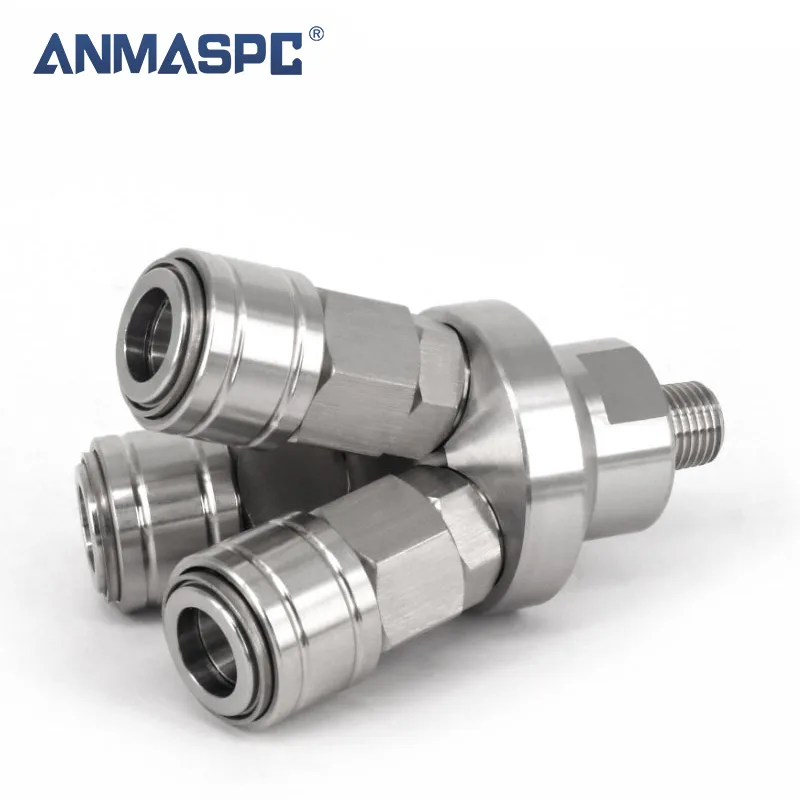
In construction procurement, “steel connector” can describe angles, plates, hangers, brackets, couplings, cleats, and proprietary joining assemblies. The name is less important than the intended function. A connector that locates cladding has different design information, exposure concerns, and acceptance evidence from one that transfers forces between structural members. The engineer of record and the approved project documents determine the applicable design basis.
Is this connector carrying load or just joining parts?
Ask what must be connected, restrained, aligned, or supported. Record the members, hole pattern, thickness, fastener interface, orientation, and access constraints. A nominal M12 fastener is not a complete specification: diameter says nothing about grade, coating, hole type, tightening method, or connection detail. AISC 360 establishes structural-steel building design requirements; it does not make a generic connector suitable for every project.
Separate catalogue items from project-specific fabrication. Custom plates or welded assemblies require controlled drawings and revision status. A visually similar substitute can cause fit-up rework and a documentation gap even when no defect is visible.
| Connector family | Typical construction role | Information to specify | Common procurement risk |
|---|---|---|---|
| Angles, plates, and cleats | Join or position steel members | Drawing revision, dimensions, holes, material, finish | Uncontrolled fabrication change |
| Bolted brackets or hangers | Support secondary items or services | Interface, fastener detail, access, exposure | Mismatch with the supporting member |
| Couplings and sleeves | Join compatible linear components | End geometry, medium, sealing or restraint requirement | Assuming all nominal sizes mate |
| Embedded or site-fixed items | Transfer a defined project action | Approved detail, placement control, inspection points | Late discovery after concrete or finishes |
Choose steel and coating for the site conditions
Base steel and finish should follow the project environment and design documents. Dry interiors, wet locations, coastal atmospheres, and process areas have different corrosion conditions. Describe the coating system, preparation, repair method, and touch-up limits; “galvanized” alone leaves room for interpretation.
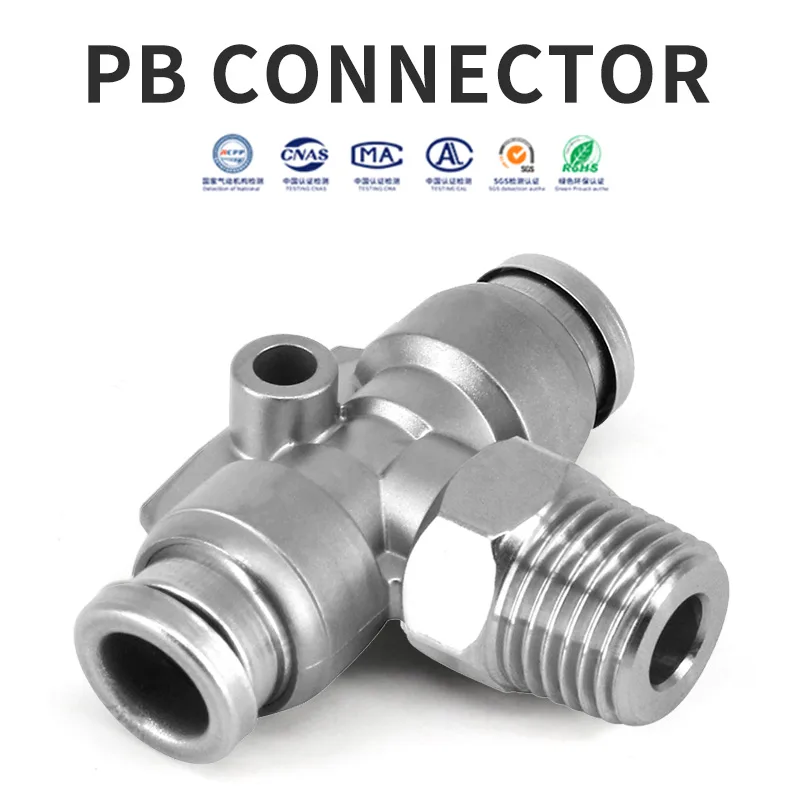
ASTM A123/A123M covers hot-dip zinc coatings on fabricated iron and steel; ASTM A153/A153M covers hot-dip zinc coatings on hardware. Their scopes guide the question, but neither replaces a project review of geometry, exposure, and installation damage. The design team should also address moisture traps, isolation, and dissimilar metals.
For utility, duct, or service-installation packages, connector selection also depends on the material being joined. The site’s overview of HDPE compression fittings is useful when a construction scope includes polyethylene routes; it should not be used to infer requirements for a steel structural connection.
| Requested item | 그것이 왜 중요한가 | Receiving check | Cost if absent |
|---|---|---|---|
| Approved drawing and revision | Controls form and interfaces | Match pack labels and dimensions to revision | Fit-up rework or rejected delivery |
| Material and finish statement | Defines ordered construction and exposure intent | Compare marking and documents with purchase order | Uncertain substitution decision |
| Fastener schedule | Links connector to installation detail | Check quantities, size, and package segregation | Site stoppage or mixed hardware |
| Inspection and packing list | Supports traceable receiving control | Count, photograph damage, quarantine discrepancies | Late shortage and claim disputes |
Check dimensions and coating before delivery
Inspect before parts are distributed. Verify the purchase-order line, drawing revision, quantity, visible distortion, corrosion, coating damage, burrs, and hole pattern. Measure features identified in the approved drawing with calibrated tools, and segregate questionable lots before they reach site.
ASTM F3125/F3125M covers high-strength structural bolts and assemblies; the project connection detail still governs the requirement. ISO 898-1 specifies mechanical properties for certain carbon and alloy steel fasteners, not blanket approval for every connector assembly. Request documents identifying what was supplied and have the responsible project party assess compliance with the contract documents.
Unit price rarely represents full commercial impact. Illustratively, a low-cost lot requiring remobilization, sorting, or field modification can cost more than a documented alternative. Compare complete scope-drawings, finish definition, pack separation, inspection support, lead-time reliability, and discrepancy resolution-not piece price alone.
Include drawings and inspection records in the order
- Issue the latest approved drawing, connection schedule, and bill of materials with the enquiry.
- State the member interfaces, material, finish, fastener requirements, intended environment, and any project hold points.
- Ask the supplier to identify exclusions, substitutions, minimum order constraints, and document availability before confirmation.
- Define packaging, labelling, delivery sequence, and the receiving-inspection process for each lot.
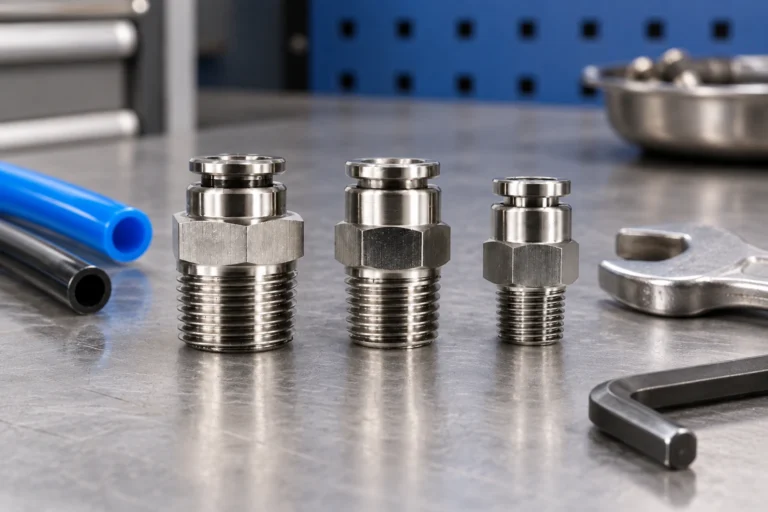
For conduit or air-service work, keep each connection family in context. These primers on stainless-steel joints and one-touch fittings help distinguish service-connection terminology from structural detailing. OULU can discuss products and documents; the approved project specification remains the selection basis.
Related reading: fitting interface explanation.
Do not treat all steel connectors as structural parts
The word “connector” covers several products: structural bolts and plates, pipe or tube couplings, cable supports, and general-purpose hardware. They cannot share one generic acceptance rule. Before requesting a quotation, state the load path, connection geometry, design standard, steel grade, coating, weld or bolt requirement, exposure and installer access. If the connector is not part of a structural calculation, say so; this prevents a catalogue item from being treated as a load-rated component.
| Procurement question | 요청할 증거 | Why it matters on site |
|---|---|---|
| What carries the load? | Drawing, design basis and specified grade | Prevents a general connector being substituted into a structural joint |
| What exposure is expected? | Coating system, galvanizing details or corrosion specification | Controls early rust and premature maintenance |
| How will fit be checked? | Dimensions, tolerances, thread or hole details | Reduces drilling, shimming and rework at installation |
| What follows the batch? | Mill, coating and inspection records tied to the order | Keeps receiving decisions traceable |
Use the applicable AISC specification or project standard for structural work, and treat ASTM coating documents as evidence for the stated coating scope, not as a universal approval for every environment.
How should buyers separate structural connectors from general joining hardware?
The first question is whether the connector transfers a designed structural load or simply joins, positions or protects parts. A structural application needs an engineer-defined load path, material grade, geometry, fastener or weld detail and the governing design standard. A catalogue description such as heavy-duty or construction connector is not a structural qualification. If the part is non-structural, state that boundary so a buyer does not apply a structural claim to it.
Coating evidence has a similarly narrow scope. ASTM A123/A123M and ASTM A153/A153M are relevant to different hot-dip galvanizing product categories, while ASTM F3125/F3125M addresses structural bolts and assemblies. The buyer must match the standard to the product, process and inspection record. A coating certificate does not prove load capacity, and a bolt certificate does not prove the connector body or installation is suitable. Keep the drawing, lot, coating thickness or visual acceptance method and delivery inspection together.
| Procurement boundary | 요청할 증거 | Claim that remains unproven |
|---|---|---|
| Load-bearing connector | Design basis, material, dimensions and installation method | Market-wide structural suitability |
| Corrosion protection | Applicable coating standard, lot and inspection record | Service life in every environment |
| General joining part | Fit, finish, material and intended use | Structural approval without engineering review |
자주 묻는 질문
What steel connectors are used in construction?
Construction uses steel angles, plates, brackets, cleats, hangers, couplings, sleeves, and bolted or welded assemblies. The correct category depends on whether the item supports, aligns, restrains, or joins specific components. Use the approved detail rather than a generic name as the purchasing reference.
How do I choose a steel connector for a structural project?
Start with the engineer-approved connection detail, member interfaces, fastener arrangement, material, and exposure conditions. Confirm that the supplier can provide the specified geometry and documentation. Do not select by visual similarity or assumed capacity.
What information should I request from a steel connector supplier?
Request the drawing revision, dimensions, material and finish description, fastener interface, quantity, packing plan, and any agreed inspection records. Ask suppliers to flag substitutions and limitations in writing. This makes technical review possible before shipment.
Are galvanized steel connectors suitable for outdoor use?
They may be appropriate when the selected coating system and connector detail match the exposure and project specification. Outdoor suitability depends on location, moisture retention, installation damage, adjacent materials, and maintenance expectations. Confirm the applicable standard’s scope instead of treating “galvanized” as a universal durability claim.
How do I inspect steel connectors before installation?
Check identity, quantity, drawing revision, visible condition, critical dimensions, hole pattern, finish condition, and package segregation against the purchase documents. Quarantine discrepancies and document them before release to site. Follow the project’s stated inspection and acceptance process.
What is the difference between a coupling and a connector?
A connector is a broad term for an item that joins, supports, or interfaces components. A coupling more specifically joins two compatible ends, often along the same line. The terms can overlap in catalogues, so drawings and functional descriptions should control the order.
Related reading: Oulu Connector company information.
참고문헌
- AISC 360 – specification scope for structural steel buildings.
- ASTM A123/A123M-24 – zinc coating on iron and steel products.
- ASTM A153/A153M-23 – zinc coating on hardware.
- ASTM F3125/F3125M-24 – structural bolts.
Summary
A steel connector purchase starts with the duty: load-bearing, alignment, joining, protection or another defined function. Only then should the team set the steel grade, geometry, coating, fastener details and inspection record. AISC and ASTM references are useful when their exact scope matches the product and design; a galvanizing or bolt document cannot certify the complete connection. Ask for the drawing revision, lot identity and acceptance method before delivery, and keep installation conditions with the file. Avoid treating a catalogue photograph or a broad construction label as structural evidence. Oulu can review a documented industrial connection requirement when the buyer provides the duty and environment.