
エアブロー式光ファイバーシステムでは、汎用のコネクタは使用しません。同径の接続部、サイズ変換部、空端キャップ、ケーブル引き込みシールは、それぞれ異なる敷設上の課題に対応します。これらを互換性のあるものとして扱うと、配管の位置合わせが不適切になったり、試験不能な端末ができたり、取り付けられたケーブルに適合しないシールが発生したりする可能性があります。.
機能、測定されたダクトの外径および内径、壁構造、ケーブルの状態、ルートの遷移に応じてABFコネクタを選択してください。IEC 60794-5-20は関連するマイクロダクト光ファイバーユニットの参照基準ですが、すべてのコネクタを認証しているわけではありません。使用する マイクロダクトコネクタ 記載された接合部に対して、保護する ABFシステム 経路を記録し、 エアブロー繊維 テスト条件。.
各ABFトランジションでどのコネクタが必要ですか?
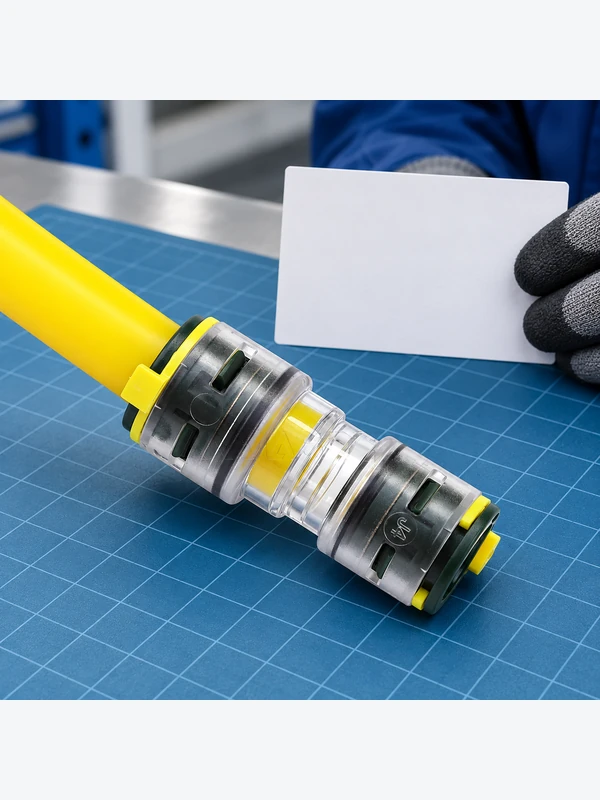
| ルートの状況 | コネクタの役割 | インストール前のチェック |
|---|---|---|
| 同サイズダクトの継続 | ストレートコネクタ | 両方のOD、スクエアカット、挿入深さ、および整列された通路 |
| 記録されたサイズ変更 | レジューサーコネクター | 各端部の外径/内径、肉厚、およびブローイングとの互換性 |
| 未使用のダクト | エンドキャップ | 閉鎖時の適合性、汚染管理および再開計画 |
| 取り付け済みのケーブル導入口 | ガスブロック | ケーブル外径、シール作動およびモデル固有の試験 |
なぜ外径、内径、壁厚のすべてが重要なのですか?
コネクタの保持性能は通常、ダクトの外径と公差を基準にします。内部通路は光ファイバーユニットが通過できる十分なスペースを確保する必要があり、また、肉厚の変化によって適合性が左右される場合があります。実際のダクトを測定し、真円度や損傷を確認するとともに、レデューサーの両端についてはサプライヤーの図面を必ず照合してください。公称サイズのラベルだけでは不十分です。.
交換用コネクタを承認する前に、ダクトの両端を確認してください。
継手の交換が必要な場合は、予備部品を選定する前に、両側のダクトを特定してください。刻印、外径寸法、壁構造、表面状態を元の部品の記録と比較してください。同じ外径が印字されていても、内部通路が異なるダクトがあります。両端を締結する継手を使用する場合でも、その組み合わせに対する確実なケーブル経路の記録と承認済みの施工方法が必要です。.
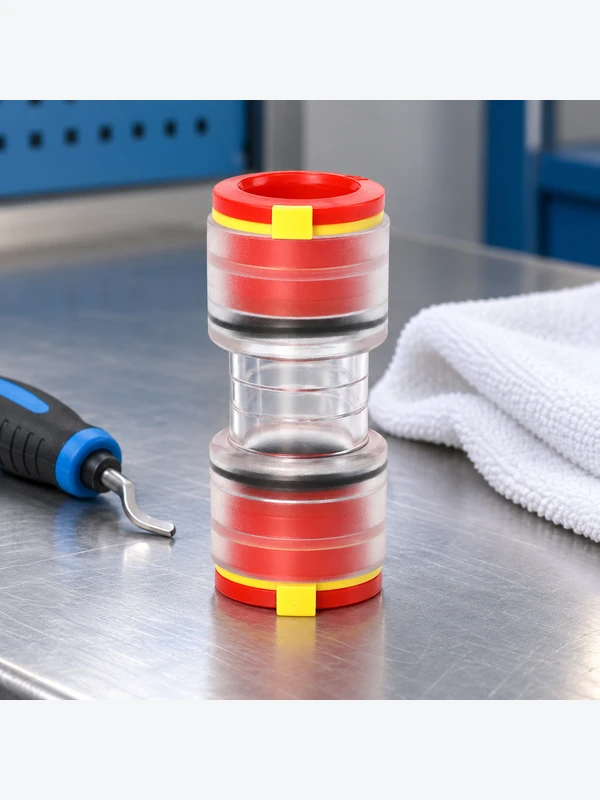
〜のために マイクロダクト用ストレートコネクタ, 許容されるダクト寸法および両側の取り付け位置を確認してください。組み立て前に、切断面にバリ、スクラッチ傷、楕円形状がないか点検してください。指示に従い、継手が一直線になるように整え、支持を保ってください。元の部品が特定できない場合は、供給業者がダクトの組み合わせを確認するまで、交換部品は未承認のままにしてください。外観のみでの代替は不十分です。.
A レデューサーコネクター また、内部の段差および計画された設置方向の確認も必要です。EN 50411-2-8 の公表済み NEN 要約では、減圧または増圧装置を吹き抜けることが不可能な場合があり、圧力勾配の段差のために手動供給が必要になる可能性があると警告しています。その警告を基に、実際の移行手順について確認してください。アクセス不能または加圧状態にある経路で手動供給を即興で行うことは許可されていません。.
ルートの資格認定は、コネクタの選択とどのように関連付けるべきですか?
ブローング前に、承認済みの連続性試験、清掃および健全性検査を完了してください。ケーブルが停止した場合は、屈曲、障害物、漏れ、フィードの位置合わせ、機械の設定に加え、最寄りの接続部も調査してください。. IEC 60794-5-20 標準的な文脈を提供しますが、実際の受入テストはプロジェクト仕様書および製品ドキュメントで定義されます。.
レビューを 空気吹込式ケーブルの敷設手順 選択したケーブル、ダクト、および機器の指示とともに。承認済みの経路条件と計画されたコネクタの接続変更を、同じワークパックに保持してください。.
ABFの移行時にコネクタの役割はどのように変化しますか?
エアブロー方式の光ファイバーラインには複数の接続部が含まれるため、各接続部についてそれぞれの証拠書類が必要です。ストレートコネクタは同一サイズのダクトを延長し、レデューサーは記録されたサイズ変更に対応します。エンドキャップは未使用の開口部を保護し、ガスブロックは設置済みのケーブル周囲を密閉します。これらの部品はカタログ上で見た目が似ている場合がありますが、密閉面、空気流経路、保持方法、将来のアクセス性はそれぞれ異なります。発注書では、「コネクタ」などの一般的な用語だけを使用するのではなく、ラインの状態を具体的に記載する必要があります。.
EN 50411-2-8は、空気吹込み式光ファイバ用マイクロダクトコネクタのカタログ番号です。製品ファミリーや適用範囲を定義するのに役立ちますが、設置には依然としてサプライヤーの図面とプロジェクトの試験方法が必要です。承認前に、両方のダクト外径、壁構造、挿入深さ、ケーブルの状態、および意図する吹込みまたは封止の状態を記録してください。.
| 移行に関する質問 | 確認すべき証拠 | 障害を防止しました |
|---|---|---|
| 両方のダクトは同じサイズですか? | 測定された外径、公差、およびアライメントされた穴 | 制限、保持性の低下、または空気漏れ |
| ルートのサイズは変更されますか? | 減速機図面と各側の互換性 | 誤った挿入、または送風を妨げるステップ |
| 終端は空いていますか? | 閉鎖性、汚染制御、およびアクセス | デブリ、水の侵入、または失われた予備容量 |
| ケーブルはすでに設置されていますか? | ケーブル外径、シール作動および試験証拠 | ガスブロックが必要な箇所にエンドキャップを装着する |
ダクトの準備、継手の組み立て、およびルート試験を記録する
まず、断面が四角くきれいなダクトカットから始め、測定した外径と部品番号を照合してください。各側を印字または指定された位置まで挿入し、コネクタが確実に支持されていることを確認し、接続部が横方向の荷重を受けないように保護してください。ブローングを行う前に、導通および清浄度を確認し、承認済みの健全性検査を実施してください。ケーブルが停止したり空気が漏れたりした場合は、まず最も近いトランジション部分を隔離し、その後、曲げ箇所、障害物、フィードの位置合わせ、機械の設定などを点検してください。この手順により、コネクタの不具合と経路の不具合を明確に区別できます。.
引き継ぎ時には、配管図面、接続部の写真、部品番号および改訂番号、設置日、試験条件および試験結果を保管してください。オウル社の減速コネクタ、ガスブロック、エンドキャップの各ページにはそれぞれ明確な役割が示されており、外観だけを基に互換性があると判断してはなりません。.
ケーブルを吹き抜く前に、レデューサーはどのように点検すべきですか?
レデューサーは、各ダクト外径に対する保持性能と内部遷移部の通過性という2つの別々の適合性チェックを実施します。前者をクリアしても、後者が保証されるわけではありません。ケーブル要素および配線経路の設計を、より小さなダクト内径と比較し、メーカーが計画した遷移構成を許可しているかどうかを確認してください。両端のダクトに装着可能なアダプターのみを根拠に、ブローイングの適性を推測しないでください。.
ランが遷移付近で停止した場合、部品を交換する前にルートと機械の設定を保持してください。中断がケーブル供給、屈曲、制限、または気流の低下に起因しているかどうかを確認してください。これは診断上の区別であり、コネクタが故障の原因であるという主張ではありません。 EN 50411-2-8 カタログ項目 コネクタ規格の適用範囲を特定し、組立固有の制限値は図面およびプロジェクト手順書に記載されています。.
Leave joints accessible and check protection before closing the route
Decide which connections must remain accessible for cable installation, branching, testing or maintenance. Record their locations with the chamber or closure identifier. Check the supplied enclosure and joint arrangement together, including room to release a connector where the instructions allow it. An accessible joint on the original drawing may become difficult to service after other cables or equipment are added.
Check environmental evidence for the exact part and installed arrangement. The NEN catalogue abstract describes the scope of EN 50411-2-8 for outside applications, including underground or aerial environments, and excludes direct sunlight. That statement describes the standard’s scope; the individual connector still needs evidence for its intended exposure. Request the relevant product information before specifying an exposed joint or burying a replacement.
Update the route record when an empty duct receives a cable. Remove or replace temporary end protection using the approved procedure, then install the specified gas-block cable seal where the design requires one. Record the cable diameter and final sealing state. This makes later inspection of the duct transition possible without assuming that an old empty-duct test also covers the occupied assembly.
よくある質問
What connector joins two equal-size ABF microducts?
Use a straight connector approved for the measured outside diameter and tolerance of both ducts. Also confirm that the internal passage suits the selected fiber unit rather than checking the retention dimension alone. Cut quality, insertion and joint support are part of the assembly evidence. A nominally correct connector cannot compensate for an oval or damaged duct end.
When is a reducing microduct connector appropriate?
A reducer is appropriate when the designed route intentionally changes duct size and the selected cable can negotiate the transition. Confirm the dimensions at both ends and the smaller internal passage before ordering. The transition direction, cable arrangement and blowing instructions matter alongside the connector drawing. Do not introduce a reducer simply because an available spare appears to fit the outside of the duct.
Why must an unused ABF microduct be capped?
An exposed end can admit contamination and leave the route status unclear for the next installation crew. Use a correctly sized closure and identify whether it is temporary or part of the accepted route. Keep the closure accessible where future extension is planned. An end cap protects a vacant duct; it does not establish sealing around a cable installed later.
When does an ABF route need a gas block?
Use a gas block where the design requires a seal around a cable in an occupied microduct. Selection depends on both duct and cable outside diameters and the documented seal activation sequence. Keep blowing-pressure and final sealing requirements separate. A straight connector or empty-duct cap should not be substituted for this duty based on a similar body shape.
Can connector selection be based on microduct ID alone?
No. Outside diameter and its tolerance normally determine the retention and external seal interface, while ID determines the available passage. Wall construction and deformation can therefore affect different aspects of the same joint. Record both dimensions when reviewing a transition. Measuring only the cable clearance leaves the duct-to-connector fit unresolved.
Can ABF microduct connectors be reused after disconnection?
Reuse depends on the selected product instructions and the condition of the duct, retention components and seals. egeplast identifies reusable components within its own accessory range; that does not establish a rule for every ABF connector. Inspect and document an allowed reuse rather than assuming that a part which releases is automatically reusable. Repeat the required route checks after any joint is reopened.
Can fibre always be blown through a reducing connector?
No. The internal transition, cable and installation direction need supplier approval. The NEN abstract for EN 50411-2-8 specifically warns that blowing through reducer or enlarger devices may not be possible. Obtain the procedure for the actual route instead of relying on outside-diameter fit.
Does a connector standard automatically cover direct sunlight?
No. Read the cited standard’s scope and the product’s own exposure information. The EN 50411-2-8 catalogue abstract excludes direct-sunlight use from its scope. Ask the supplier for evidence covering the selected connector and proposed location, and specify protection where the design requires it.
参考文献
- IEC 60794-5-20: microduct fibre-unit specification scope.
- NEN-EN 50411-2-8: microduct connectors for air-blown optical fibres.
- egeplast: connector, reducer and duct-closure accessory roles.
要約
List the connector function and dimensions at each transition in the ABF route schedule. Equal-size joints, reducers, empty-duct closures and occupied-cable seals have different duties and different evidence requirements. Start with the route state, measure both duct interfaces and confirm that the internal passage remains suitable for the fiber unit. Then check insertion, support and the exact product instructions before qualifying the route. A cable that stops during blowing does not, by itself, identify the nearest connector as the fault; investigate geometry, continuity and leakage separately. Oulu’s ABF infrastructure products can be reviewed against that schedule, with final approval tied to the documented dimensions and acceptance method.



