Air-Blown Fiber systems do not use one universal connector. An equal-size joint, a size transition, a vacant duct closure and a cable-entry seal each solve a different route problem. Treating them as interchangeable can create a poor bore alignment, an untestable end or a seal that does not match the installed cable.
The short answer is to select an ABF connector by function, measured duct OD and ID, wall construction, cable state and route transition. IEC 60794-5-20 is a relevant microduct fibre-unit reference, but it does not certify every connector. Use a اتصالدهنده میکروداکت for the documented joint, protect the ABF system pathway and record the air-blown fiber test condition.

Which connector is needed at each ABF transition?
| Route condition | Connector role | Checks before installation |
|---|---|---|
| Same-size duct continuation | رابط مستقیم | Both ODs, square cuts, insertion depth and aligned passage |
| Documented size change | رابط کاهنده | Each end’s OD/ID, wall and blowing compatibility |
| Unused duct | End cap | Closure fit, contamination control and reopening plan |
| Installed cable entry | بلوک گاز | Cable OD, seal activation and model-specific test |
Why do OD, ID and wall thickness all matter?
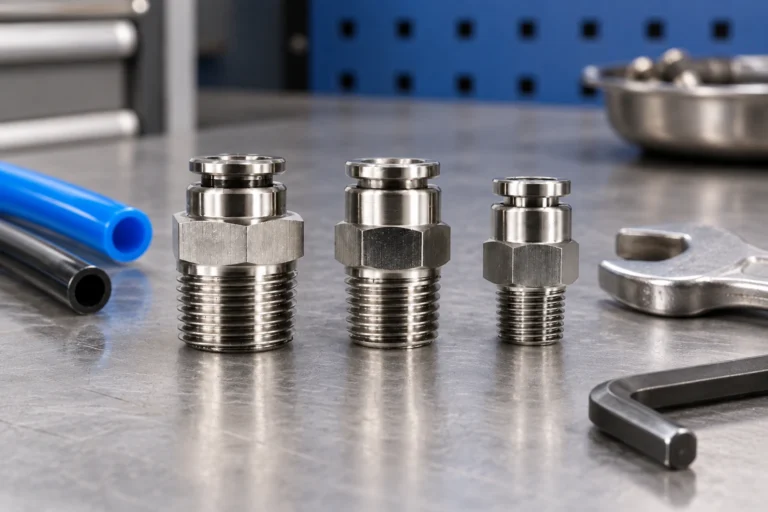
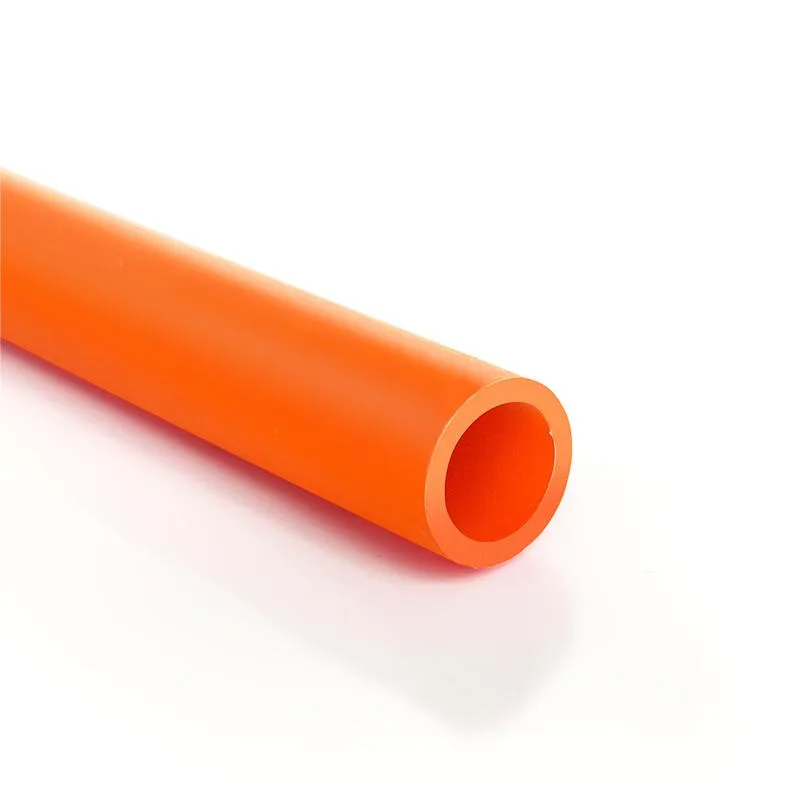
Connector retention normally references duct outside diameter and tolerance. The internal passage must also leave a suitable path for the fiber unit, while wall thickness can change the available fit. Measure the actual duct, inspect ovality and damage, and confirm the supplier drawing for both sides of a reducer. A nominal label alone is insufficient.
How should route qualification be tied to connector selection?
Before blowing, complete the approved continuity, cleaning and integrity checks. If a cable stops, investigate bends, obstruction, leakage, feed alignment and machine settings as well as the nearest joint. IEC 60794-5-20 provides standards context; the project specification and product documentation define the actual acceptance test.
For installation planning, use the air-blowing guidance and the documented HDPE microduct maintenance procedure.
How do connector roles change at an ABF transition?
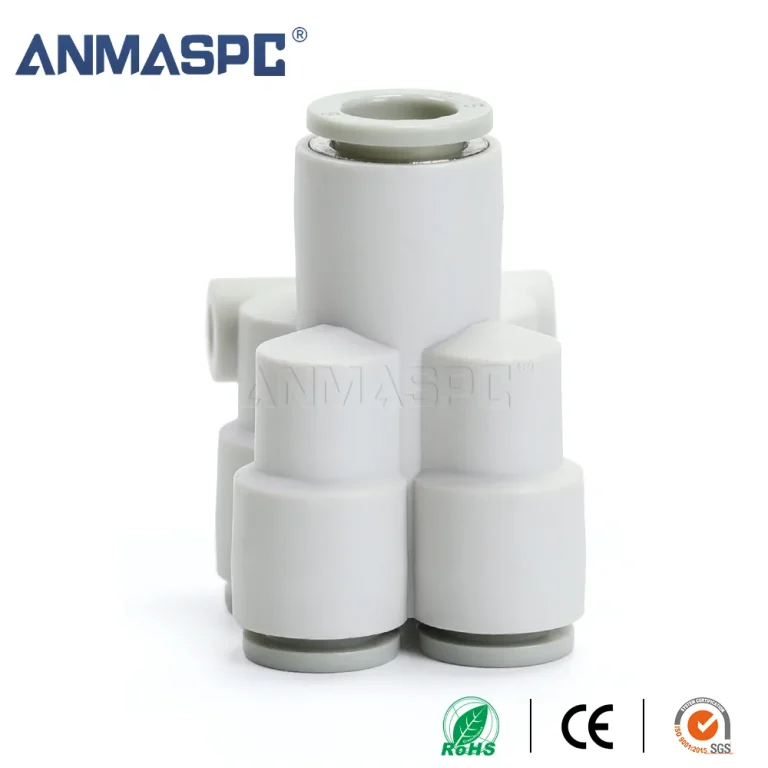
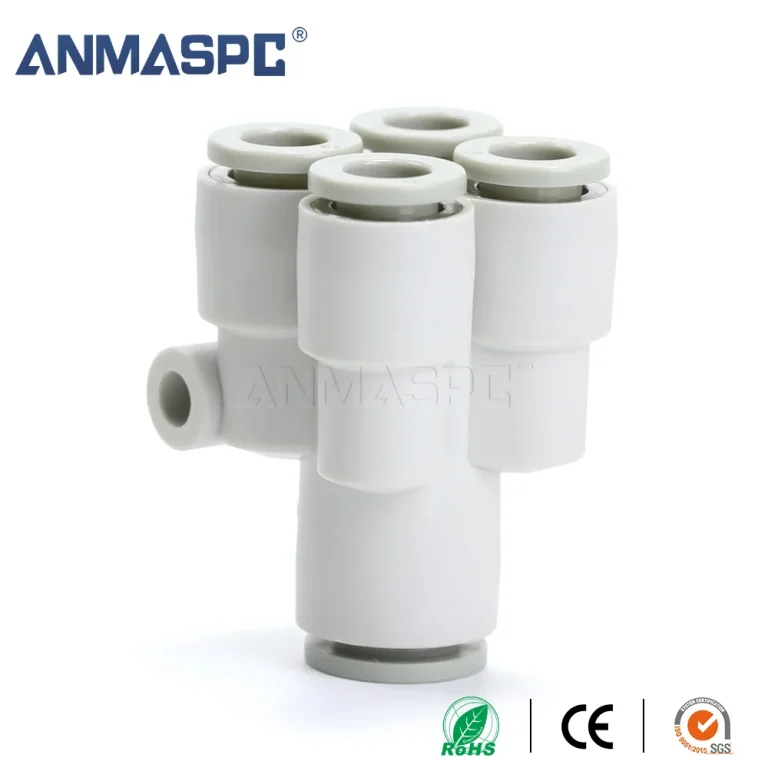
An air-blown fiber route can contain several transitions, and each transition needs its own evidence. A straight connector continues a same-size duct; a reducer manages a documented size change; an end cap protects an unused opening; and a gas block seals around an installed cable. These parts may look similar in a catalogue, but the sealing surface, airflow path, retention method and future access are different. The purchase order should describe the route state instead of using only a generic word such as connector.
EN 50411-2-8 is a catalogue reference for microduct connectors for air-blown optical fibers. It helps define the product family and scope, but the installation still requires the supplier drawing and project test method. Before approval, record both duct ODs, wall construction, insertion depth, cable condition and the intended blowing or sealing state.
| Transition question | Evidence to check | جلوگیری از شکست انجام شد |
|---|---|---|
| Are both ducts the same size? | Measured OD, tolerance and aligned bore | Restriction, poor retention or air leakage |
| Is the route changing size? | Reducer drawing and each-side compatibility | Wrong insertion or a step that harms blowing |
| Is the end vacant? | Closure fit, contamination control and access | Debris, water entry or lost spare capacity |
| Is a cable already installed? | Cable OD, seal activation and test evidence | Applying an end cap where a gas block is required |
What installation sequence gives the best troubleshooting evidence?
Start with square, clean duct cuts and verify the part number against the measured OD. Insert each side to the marked or specified position, confirm that the connector is supported and protect the joint from side load. Before blowing, prove continuity and cleanliness and run the approved integrity check. If the cable stops or air escapes, isolate the nearest transition first, then examine bends, obstruction, feed alignment and machine settings. This sequence keeps a connector fault separate from a route fault.
For a handover, retain the route drawing, joint photographs, part and revision numbers, installation date, test condition and result. Oulu’s reducer connector, gas block and end cap pages illustrate distinct roles; they should not be treated as interchangeable based on appearance alone.
How should a reducer be checked before a cable is blown?
A reducer creates two separate compatibility checks: retention on each duct outside diameter and passage through the internal transition. Passing the first does not establish the second. Compare the cable element and route design with the smaller duct bore, and confirm whether the manufacturer permits the planned transition arrangement. Do not infer blowing suitability solely from an adapter that can be pushed onto both duct ends.
If a run stops near a transition, preserve the route and machine settings before changing components. Check whether the interruption follows the cable feed, a bend, a restriction or a loss of airflow. This is a diagnostic distinction, not a claim that the connector caused the failure. The EN 50411-2-8 catalog entry identifies the connector standard’s scope; the drawing and project procedure supply the assembly-specific limits.
سوالات متداول
What connector joins two equal-size ABF microducts?
Use a straight connector approved for the measured outside diameter and tolerance of both ducts. Also confirm that the internal passage suits the selected fiber unit rather than checking the retention dimension alone. Cut quality, insertion and joint support are part of the assembly evidence. A nominally correct connector cannot compensate for an oval or damaged duct end.
When is a reducing microduct connector appropriate?
A reducer is appropriate when the designed route intentionally changes duct size and the selected cable can negotiate the transition. Confirm the dimensions at both ends and the smaller internal passage before ordering. The transition direction, cable arrangement and blowing instructions matter alongside the connector drawing. Do not introduce a reducer simply because an available spare appears to fit the outside of the duct.
Why must an unused ABF microduct be capped?
An exposed end can admit contamination and leave the route status unclear for the next installation crew. Use a correctly sized closure and identify whether it is temporary or part of the accepted route. Keep the closure accessible where future extension is planned. An end cap protects a vacant duct; it does not establish sealing around a cable installed later.
When does an ABF route need a gas block?
Use a gas block where the design requires a seal around a cable in an occupied microduct. Selection depends on both duct and cable outside diameters and the documented seal activation sequence. Keep blowing-pressure and final sealing requirements separate. A straight connector or empty-duct cap should not be substituted for this duty based on a similar body shape.
Can connector selection be based on microduct ID alone?
No. Outside diameter and its tolerance normally determine the retention and external seal interface, while ID determines the available passage. Wall construction and deformation can therefore affect different aspects of the same joint. Record both dimensions when reviewing a transition. Measuring only the cable clearance leaves the duct-to-connector fit unresolved.
Can ABF microduct connectors be reused after disconnection?
Reuse depends on the selected product instructions and the condition of the duct, retention components and seals. egeplast identifies reusable components within its own accessory range; that does not establish a rule for every ABF connector. Inspect and document an allowed reuse rather than assuming that a part which releases is automatically reusable. Repeat the required route checks after any joint is reopened.
مراجع
- IEC 60794-5-20: microduct fibre-unit specification scope.
- NEN-EN 50411-2-8: microduct connectors for air-blown optical fibres.
- egeplast: connector, reducer and duct-closure accessory roles.
Summary
An ABF connector schedule should describe what happens at each transition, not just list a generic connector size. Equal-size joints, reducers, empty-duct closures and occupied-cable seals have different duties and different evidence requirements. Start with the route state, measure both duct interfaces and confirm that the internal passage remains suitable for the fiber unit. Then check insertion, support and the exact product instructions before qualifying the route. A cable that stops during blowing does not, by itself, identify the nearest connector as the fault; investigate geometry, continuity and leakage separately. Oulu’s ABF infrastructure products can be reviewed against that schedule, with final approval tied to the documented dimensions and acceptance method.