
地下マイクロダクト工事は、ダクトが埋設されると完了と判断されることが多いですが、ルートの閉塞や開放端の保護不良が原因で、数週間後に光ファイバ敷設作業が中断することがあります。信頼性の高い手順としては、まずルートの確認・認定を行い、次に制御された位置決め、清浄な接続、開放端の保護、そしてケーブル吹込前の状態を示す記録の整備を行います。この一連の手順により、土木部門、光ファイバ部門、保守部門が共通の根拠に基づいて協力することができます。.
インストール HDPEマイクロダクト 調査済みのルートに沿って、価値ある光ファイバーが進入する前に、連続性、変形、清浄度および漏れを確認してください。IEC 60794-5-10は、ブローアウト工法で敷設される屋外用マイクロダクト光ファイバーケーブルおよび関連するマイクロダクトを対象としています。当該規格を適用する際には、プロジェクトの試験条件および提供された製品仕様書に従ってください。すべてを保護してください 光ファイバー 正しい接続詞を用いた経路を記録し、 インストール 結果。.
トレンチ掘削の前に何を計画しなければならないか?
ユーティリティとのクリアランス、ルートID、曲げ半径、チャンバー、進入点、予備容量、および承認済みの埋設または支持詳細を確認してください。ダクトの外径と壁構成を記録し、コネクターやシール部材は実寸に基づいて選定します。ルート図面と写真記録を保管しておき、後続の吹込作業チームが曲げや移行箇所の位置を推測する必要がないようにしてください。.
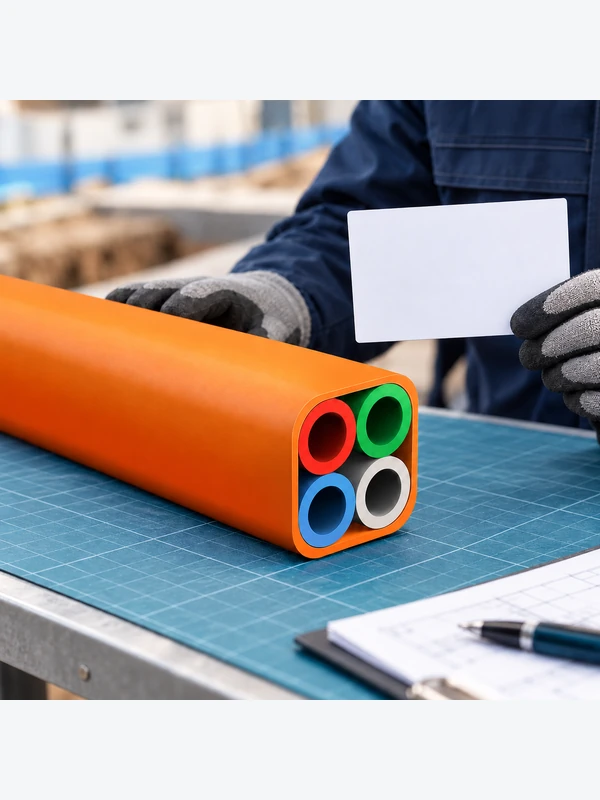
設置中にダクトリールおよび制御用曲げ部を保護してください。
納入されたケーブルリールは、設置に供する前に必ず点検してください。ダクトの表示を経路一覧表と照合し、輸送による損傷がないか確認するとともに、開放端が適切に保護されていることを確認してください。リールを屋外に保管する場合は特に、納入記録とともに供給業者の保管・取り扱いに関する指示書を保管しておいてください。損傷箇所については、該当するリールまたは線長ごとに記録し、複数の納入物が現場で混在した際に見落とされないようにしてください。.
リールからのケーブルの引き出し方法や、ダクトが曲がり部、チャンバー、支持物へどのように接続されるかを計画してください。実際の施工にあたっては、サプライヤーが許容する最小曲げ半径および取り扱い上の制限を必ず遵守してください。他のダクトや既設のケーブルの曲げ半径を参考にするだけでは不十分です。埋戻しや覆工によりアクセスが困難になる前に、敷設中に継手部分を確認してください。アクセス可能な端部にはダクト識別ラベルを常に見える状態に保ち、区間を短縮したり経路を変更した場合はラベルを更新してください。.
継手部では、ダクトがグリップおよびシーリング部において円形を保ち、損傷がないことを確認してください。 ストレートコネクタ 損傷した端部を切り取る前に、図面および挿入手順書をご確認ください。修理により経路の長さ、接続箇所、またはアクセス方式が変更される場合は、竣工図を更新してください。Hexatronic社のガイドラインでは、ダクトの健全性試験で検出することが想定されている損傷要因として、過度の引っ張り、伸縮、埋戻し時の影響などが挙げられています。合意済みの設置後検査には、該当する区間も含めてください。.
マイクロダクトルートはどのように認証されますか?
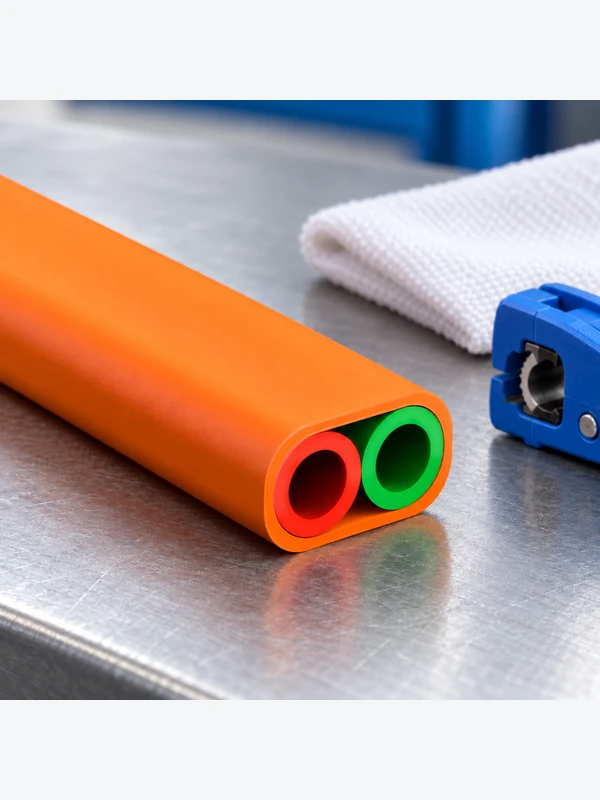
- 露出した端部、チャンバー、移行部および支持部を点検してください。.
- 切り傷、コネクタの嵌合状態、端部保護を確認してください。.
- 承認済みのスポンジ、ブラシ、マンドレル、またはペレット方式で経路を清掃してください。.
- 安定化後に、指定された連続性試験、圧力試験、または完全性試験を実施してください。.
- ルート区間、ダクトID、機器、媒体、期間、基準および結果を記録してください。.
| チェックポイント | 証拠 | なぜそれが重要なのか |
|---|---|---|
| ルートの幾何形状 | 調査、曲げおよびチャンバー記録 | ケーブルの経路が物理的に妥当であることを示します。 |
| ダクトの状態 | 清掃と継続性の成果 | ブローアウト前に閉塞を検出 |
| 継手および端部 | 部品番号、外径適合および閉塞記録 | 漏れと汚染を抑制します |
| Handover | Test sheet and as-built route ID | Supports future maintenance and re-entry |
Which standards should be cited?
IEC 60794-5-10 covers outdoor microduct optical fibre cables and associated microducts for installation by blowing. Its public scope describes the family of products; use the applicable project specification, exact product documentation and required test procedures for acceptance.
Compare the HDPE microduct specifications with the route dimensions and installation method before ordering. Keep the selected duct code with the test and maintenance records.
Which checks should be completed before fiber enters the duct?
Route qualification should be treated as a staged handover rather than one pressure reading. First confirm the route drawing, duct identity, accessible ends and connector locations. Then inspect for crushed sections, sharp cuts, contamination, water ingress and unacceptable bends. A mandrel, proving tool, air test or other method should be selected by the project specification and duct size. The result must identify the equipment, condition, hold period and acceptance criterion.
Hexatronic’s duct-integrity testing guidance describes pre-fiber testing across common microduct ranges and links the practice to lower cable waste. IEC 60794-5-10 covers outdoor microduct optical fibre cables and their associated microduct systems for installation by blowing. Use the product documentation and the owner’s route-specific test procedure to define the required checks and acceptance criteria.
| ステージ | 何を検証すべきか | Record for handover |
|---|---|---|
| Before connection | OD, cut quality, labels, caps and cleanliness | Route ID, duct ID, connector part and photos |
| After jointing | Insertion, alignment, retention and seal condition | Joint location, installer and assembly check |
| Before blowing | Continuity, obstruction, leakage and route readiness | Equipment, medium, pressure or proving result |
| After civil work | Damage, flooding, movement and changed access | Reinspection date, defect and corrective action |
How should maintenance records prevent repeated failures?
A maintenance record should make the next decision possible without relying on memory. Keep the duct and cable schedule, connector drawing, cut and insertion instructions, test method, result, repair history and closure status together. Mark whether an end is vacant, occupied or reserved for future work. When a blowing run fails, check the nearest joint as well as bends, obstruction, feed alignment and machine settings; replacing a connector without locating the actual boundary can move the failure rather than solve it.
Use a clean temporary closure whenever a duct is open, and replace damaged seals rather than masking them with tape or force. If the route has been flooded or disturbed by excavation, repeat the project-approved qualification before introducing fiber. The HDPE microduct product page and straight connector page can support the part review, while the acceptance decision remains tied to the measured route.
Restore a flooded or disturbed route before the next cable run
Begin with the affected section and the work that preceded the problem. Record whether the chamber flooded, excavation crossed the route, a joint was reopened or a previous cable attempt stopped. Inspect accessible ends and check their identifiers against the drawing. This helps the crew choose a repair and inspection area without treating every duct in the network as damaged.
Before duct integrity testing, identify the route’s status: vacant, occupied or containing a reserved cable. A procedure intended for an empty duct may not be suitable for a duct carrying live service. Confirm the permitted cleaning and proving equipment, secure the receiving end and follow the equipment supplier’s precautions. Do not increase air pressure or force a proving tool through a restriction to avoid investigating it.
Keep cleanliness, continuity and leakage results separate. Recover the cleaning or proving item as the procedure requires, record visible contamination or damage, and investigate an incomplete pass. Repair the identified defect, protect the ends again and repeat the affected acceptance checks. If the intended cable, route or equipment has changed, review the installation plan using the air-blown cable installation guide and the actual suppliers’ limits.
Release the route for cable work only when the responsible person has accepted the required checks. Record the repaired location, replaced parts, inspection date and current end protection. Keep earlier results as history, but identify which result applies to the repaired configuration. A later crew should be able to distinguish the original acceptance from a subsequent repair.
よくある質問
Should a microduct be tested before fiber blowing?
Yes, qualify the route before introducing valuable cable, using the approved duct-integrity and continuity methods. Hexatronic’s guidance describes checking for deformation, obstruction and leakage before fiber installation. A successful cleaning pass and an acceptable pressure result answer different questions. Keep both results associated with the same route section and duct identity.
Can every microduct use the same pressure test?
No. Duct construction, connector limits, test equipment and the project procedure determine the permitted condition. A pressure copied from another product is not a safe acceptance specification. Confirm the assembly’s limiting component and the required stabilization and hold periods. Isolate the test zone and use the equipment supplier’s operating precautions.
How should open microduct ends be protected?
Fit clean, dimensionally compatible closures and identify which ends are empty, reserved or occupied. A temporary closure prevents an exposed end from being treated as an acceptable final cable seal. Before reuse, inspect the closure and duct surface for contamination or damage. Record any change of end status so the blowing crew knows which route has actually been prepared.
When should a duct route be reinspected?
Reinspect after work that may change geometry, cleanliness, sealing or access, including excavation, chamber alterations and connector replacement. Flooding or an unsuccessful blowing attempt also warrants investigation before another cable is introduced. Identify the affected section rather than automatically repeating an unrelated test on the whole network. Retain the defect and corrective-action record with the new acceptance result.
What belongs in a duct-integrity handover record?
Include route and duct IDs, section endpoints, connector details, test equipment and its identification, medium, applied condition and the acceptance criterion. Record stabilization and hold periods where the procedure requires them, as well as defects and repairs. The record should show who accepted the route and when. A bare statement that the duct passed does not let another crew reproduce or interpret the test.
Does passing a pressure test prove that fiber will blow successfully?
No. Leakage control does not establish that every bend, bore restriction or feed arrangement is suitable for the selected cable. Review geometry and continuity alongside sealing, then check the cable and blowing-machine instructions. IEC 60794-5-10 covers outdoor microduct optical fibre cable systems; a route-specific installation assessment is still needed. Treat blowing readiness as a combination of checks rather than a single pressure reading.
Should an empty spare duct be retested after nearby excavation?
Review the affected section for changes to geometry, joints, contamination and access. Use the project procedure to decide which checks must be repeated. An earlier acceptance result describes the earlier condition; retain it as history and identify the inspection or test that releases the disturbed section for use.
Can the same proving procedure be used on an occupied duct?
Do not assume so. Confirm the cable and service status first, then obtain a procedure suitable for that configuration. Cleaning tools, test fittings and applied conditions must be compatible with the installed cable and any live services. Keep the operator’s permissions and isolation arrangements with the work instructions.
参考文献
- IEC 60794-5-10: outdoor microduct cabling specification scope.
- Hexatronic: pre-fiber duct-integrity tests.
要約
Hand over the duct route with readable identifiers, protected ends, as-built drawings and the required inspection and test results. Start with the surveyed geometry and duct schedule, select matching joints and closures, and protect open ends throughout the civil work. Before fiber blowing, qualify both the physical passage and the sealing condition using documented project procedures. A pressure result alone does not establish bend suitability or prove that a chosen cable will pass. Reinspect disturbed sections and preserve the findings with the as-built records so maintenance does not repeat the same investigation. Oulu’s microduct and connector products can be reviewed against that measured route; final selection still depends on the exact dimensions and installation conditions.



