When a maintenance engineer in Oulu replaced a straight connector on a packaging line, the new part appeared to seat correctly; within minutes, a faint hiss became a pressure drop that slowed a pneumatic cylinder. The visible failure looked like a bad fitting, but the reversal came when the team measured the tube outside diameter, checked the رشته مهر, and found that a nominally similar connector had been selected for the wrong interface.
Quick answer: A pneumatic straight fitting is reliable only when its tube or hose size, thread form, sealing method, material, medium, and working-pressure rating match the complete assembly. ISO 4414 addresses safety principles for pneumatic systems, while ISO 8573-1 classifies compressed-air contaminants rather than approving individual fittings. Specify the mating interfaces before ordering, then test a representative assembly under the intended conditions; this is the practical route to fewer leaks and more repeatable maintenance.
Related reading: air-hose fitting sourcing guide.
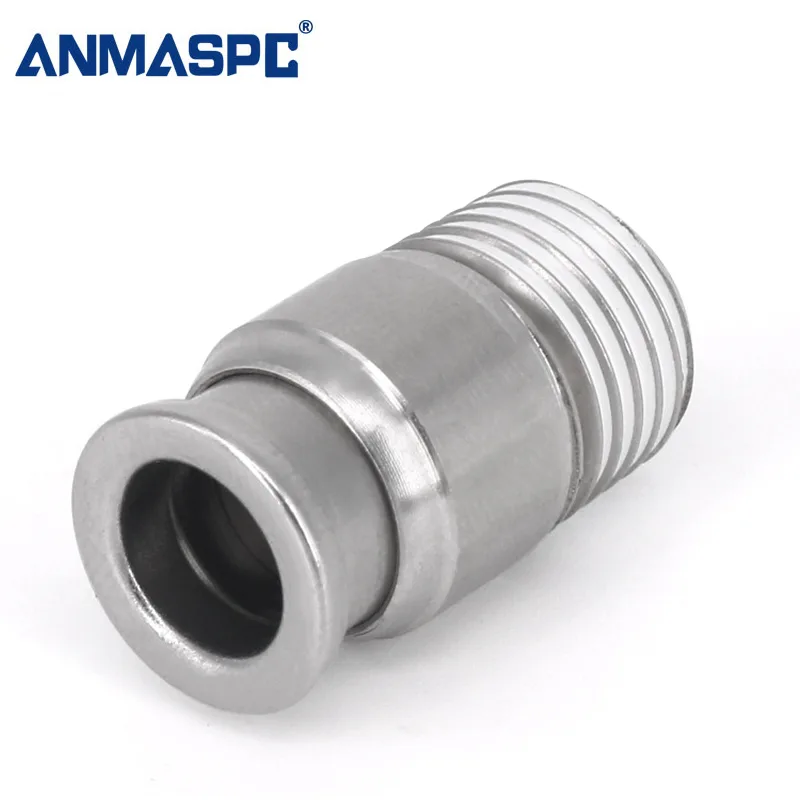
Straight fittings join two points in line: tube to port, tube to tube, or hose to equipment. Their simple form can hide a complex decision. A control circuit may require a compact push-to-connect body and accurately cut polymer tube; a compressor connection may instead need a threaded metal adapter with a separate seal. In both cases, the fitting is one element of a pressure boundary, not an interchangeable commodity.
Identify the connection type before choosing a straight fitting
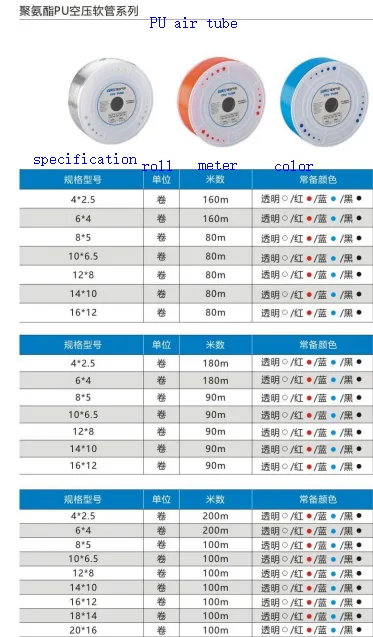
First identify the required straight connection. A push-to-connect fitting grips a specified tube outside diameter (OD) with a collet and seals on the tube surface. A threaded straight fitting joins a male or female port and may seal on the threads, on a bonded seal, or on a face. A hose-barb fitting is sized around hose inner diameter (ID) and depends on a suitable clamp or crimp system. These interfaces must not be substituted by appearance.
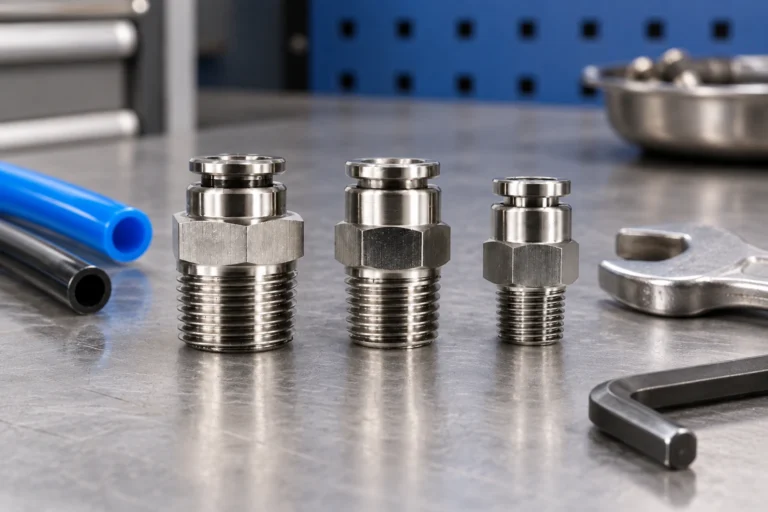
Record the full thread designation, not just a fractional label. BSPP/G, BSPT/R, NPT, and metric threads differ in form and sealing approach. ISO 7-1 concerns pressure-tight threaded joints, while ISO 228-1 covers threads that seal elsewhere; neither standard proves a finished assembly is suitable for every duty.
For tubing, confirm actual OD and make a clean, square cut. For uncertain legacy ports, use a thread gauge and equipment documentation rather than forcing a near match.
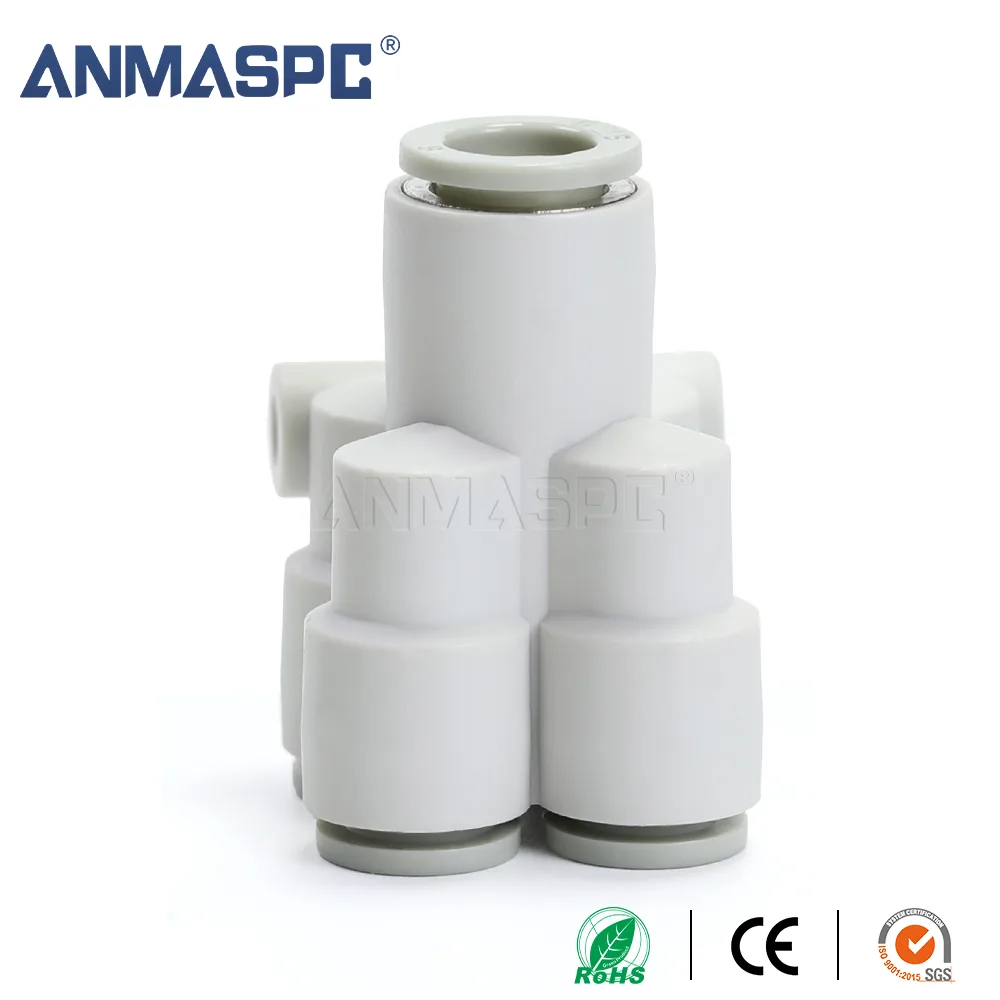
Compare straight fittings by application
| Design | کاربرد معمولی | Key compatibility check | Maintenance implication |
|---|---|---|---|
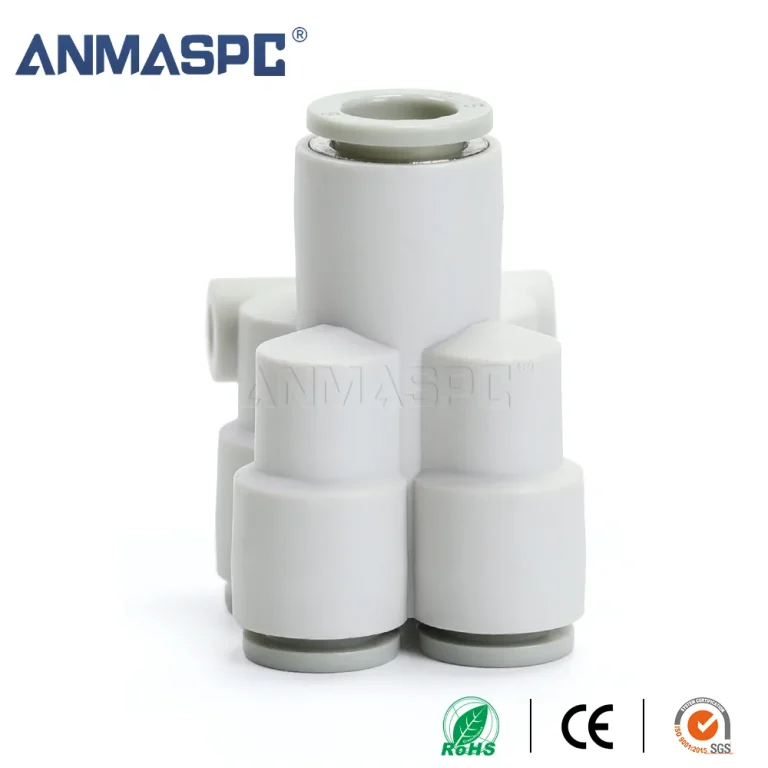
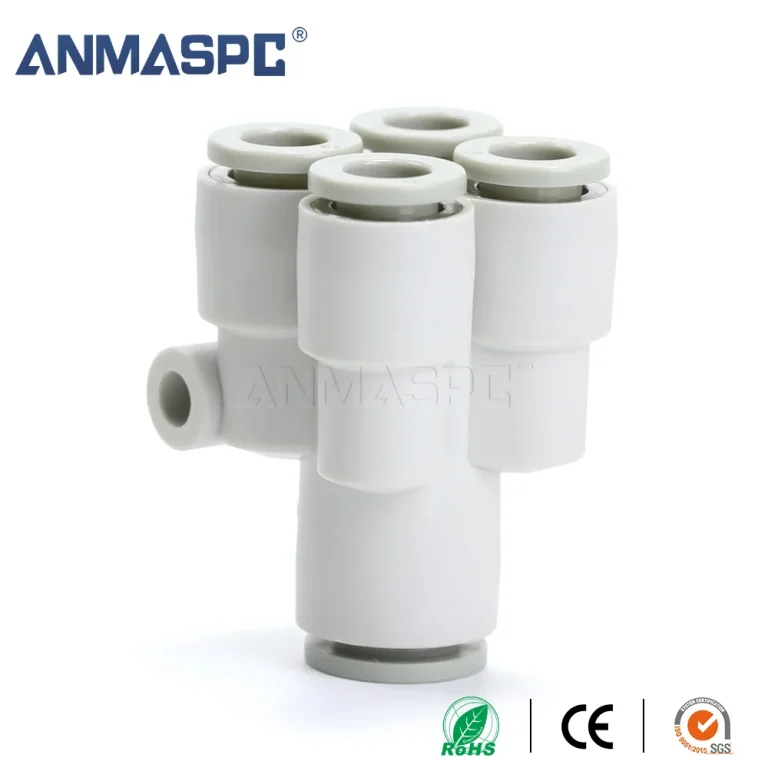
| Push-to-connect straight | Polymer-tube control lines | Tube OD, material, tolerance, and cut quality | Inspect collet, O-ring, and tube end before reassembly |
| Threaded straight adapter | Valves, manifolds, and equipment ports | Exact thread form and sealing geometry | Check for damaged threads, seal condition, and vibration loosening |
| Hose-barb straight fitting | Flexible air-hose assemblies | Hose ID, barb profile, and retention method | Inspect hose creep, clamp condition, and abrasion |
| Tube-to-tube union | In-line tube extension | Both tube ODs and materials | Keep the joint accessible for leakage checks |
Unit price is only one cost driver. An illustrative comparison should include diagnostic time, lost air, and the spare-stock burden of several similar thread families. Standardising approved sizes and connection series can reduce those hidden costs. For flexible lines, PU and PA air hose differences can affect the assembly choice.
Record the details that maintenance needs
| فیلد مشخصات | چه چیزی باید بیان شود | Decision it supports |
|---|---|---|
| Interface | Tube OD or hose ID; thread standard, gender, and sealing method | Correct mating and replacement control |
| Operating conditions | Normal pressure, possible transients, temperature, and duty cycle | Rating review for every component in the assembly |
| محیط و رسانه | Dry or lubricated air, moisture, cleaning agents, corrosion exposure | Body and elastomer suitability review |
| Flow requirement | Required tool or actuator flow, line length, and allowed pressure drop | Passage-size and performance check |
| طط اعتبارسنجی | Part number, drawing revision, assembly instruction, and leak-test method | Repeatable incoming and field inspection |
Set the assembly limit at the lowest-rated component: fitting, tube or hose, clamp, port, valve, and accessory all count. Ask the supplier for current product data stating the intended medium, working-pressure range, temperature range, material, and assembly instructions. A general statement such as “high pressure” is not enough without those conditions and the specific part number.
Body material follows service conditions. Brass, plated steel, stainless steel, and polymers each have viable uses; confirm the exact grade, coating, and seal material. This overview of stainless-steel joints and fittings provides useful terminology. Ordinary compressed-air use does not establish suitability for oxygen, breathing air, food contact, or hazardous gases.
Use safety and air-quality standards for the right purpose
ISO 4414:2010 provides safety requirements for pneumatic systems and components; it helps assess stored energy and isolation, but does not certify a fitting. ISO 8573-1 defines compressed-air contaminant classes; it can inform a process specification but is not a fitting-material certification.
In the United States, OSHA 29 CFR 1910.242(b) sets conditions for compressed-air cleaning, including pressure reduced to less than 30 psi, chip guarding, and personal protective equipment. This is not a universal design pressure. Local law, intended use, and equipment instructions remain controlling. Isolate and depressurise before disconnection.
Check the complete assembly before approval
- Map each fitting between the air preparation unit and point of use, including adapters and seal components.
- Approve one written specification for each tube size and thread family; include a photo only as a supporting identifier, never as the specification.
- Assemble and leak-test a representative sample under documented operating conditions before a multi-line rollout.
- Keep replacement parts by approved part number and train technicians to verify the interface before installation.
For actuator installations, confirm port information from the equipment drawing; this guide to pneumatic cylinders is useful context. Oulu can discuss fitting configurations when the buyer supplies tube, port, pressure, media, and environment details.
Related reading: high-pressure air-hose application guide.
Treat “straight” as a shape, not a rating
A straight fitting describes the path through the connection; it does not define the thread, material, pressure class or flow by itself. Current selection questions focus on push-in versus threaded or barbed forms, tube OD, pressure drop, vacuum use and access for maintenance. Freeze those variables before comparing catalogues.
| Form | Best starting point | Checks before approval |
|---|---|---|
| Push-in straight | Plastic-tube control circuits | Tube OD, cut, seal, bend support and release clearance |
| Threaded straight | Port transitions and rigid manifolds | BSP/NPT/metric form, seal and torque |
| Barbed straight | مجموعههای شلنگ انعطافپذیر | Hose ID, retention method and service movement |
| Bulkhead or union | Panel or line-through installations | Panel thickness, locknut access and alignment |
Cross-check a straight choice against one-touch operating limits, the fitting-family comparison و رنج قطعات پنوماتیک.
How should buyers compare flow data instead of fitting shape?
A straight body only describes the route geometry. Flow behavior depends on the effective passage, tube length, port transition, pressure ratio and the test method used by the supplier. ISO 6358-1 is a reference for determining flow-rate characteristics with compressible fluids; it does not turn every catalogue value into a directly comparable number. Ask whether the published result is for the complete fitting or only a test component, and retain the stated inlet pressure, downstream pressure and temperature.
For a maintenance standard, record both the interface and the operating observation. A fitting that passes a static leak check may still restrict an actuator during a high-demand stroke, while a fitting with a generous bore can still fail if the tube is undersized or side-loaded. Compare pressure at the supply and point of use under the same cycle, then identify whether the dominant loss is the fitting, tube, valve, filter or an air leak. This evidence is more useful than ranking fittings by outside shape.
| Evidence item | Question to ask | Decision use |
|---|---|---|
| Flow test | What pressure, temperature and medium were used? | Compare only results with compatible conditions |
| Interface | Which tube OD, thread and seal are approved? | Prevent a mechanically similar substitution |
| Field reading | Where does pressure fall during the cycle? | Separate a fitting restriction from a system loss |
سوالات متداول
What is a pneumatic straight fitting?
A pneumatic straight fitting makes an in-line connection between tubes, hoses, ports, or components in a compressed-air system. Its design may be push-to-connect, threaded, barbed, or tube-to-tube; suitability depends on the mating interface and operating conditions.
How do I select a pneumatic fitting for tubing?
Confirm the tubing’s OD, material, tolerance, and surface condition, then match the manufacturer’s stated range. Cut it squarely and test retention and leakage; do not select from nominal size alone.
What is the difference between push-to-connect and threaded fittings?
Push-to-connect fittings retain specified tubing with an internal collet and seal, enabling quick installation. Threaded fittings join ports or adapters and require the correct thread form, sealing method, and installation torque.
How do I stop air leaks at pneumatic fittings?
Depressurise safely, then inspect thread pairing, seals, tube ends, contamination, and hose retention. Replace damaged parts and follow the specified sealing method; excessive torque or sealant can damage threads and conceal the cause.
Can pneumatic fittings be used with vacuum?
Some can, but confirm vacuum service for the specific fitting, tube, seal, and pressure range. Vacuum can expose leakage paths or tube-collapse issues not evident under positive pressure, so request guidance and validate the assembly.
Which fitting material is best for compressed air?
There is no universal best material. Brass, steel, stainless steel, and engineered polymers can each suit pressure, temperature, corrosion, media, and mechanical demands; verify product data and elastomer compatibility.
Related reading: Oulu Connector company information.
مراجع
- ISO 4414:2010 – pneumatic system safety.
- ISO 6358-1 – flow-rate characteristics.
- ISO 7-1 – pressure-tight threaded joints.
- UK HSE INDG261 – pressure-system precautions.
Summary
A pneumatic straight fitting should be approved as part of a measured pressure boundary. First identify the tube or hose interface and thread form, then review effective passage, seal material, pressure, temperature and access for maintenance. ISO 4414 supplies system-safety context, and ISO 6358-1 supplies a flow-characteristics reference; neither is a universal product rating. Compare pressure at the point of use under the actual cycle, because a fitting can pass a static check and still restrict a demanding actuator. Keep the approved part number, drawing revision and test result with the spare. Oulu’s pneumatic parts range can be reviewed after those conditions are documented.