INDUSTRY INSIGHTS

News & Blog

Industry news, technical guides and practical project insights for microduct, fiber installation and pneumatic connection professionals.

Latest Articles

Articles

Microduct Straight Connector vs. Couplers: Which Option Fits Your Fiber Project?

Microduct Straight Connector vs. Couplers: Which Option Fits Your Fiber Project?

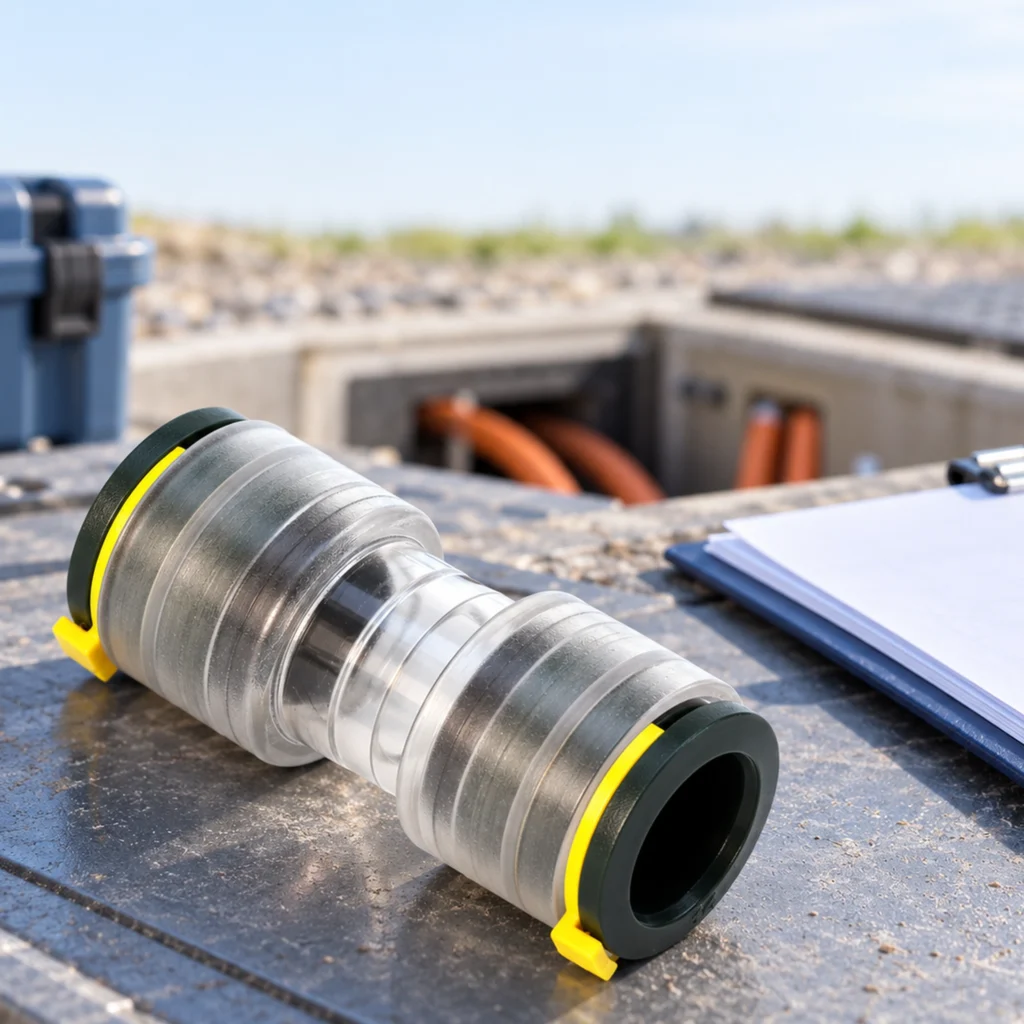
When a fiber-installation supervisor in Rotterdam joined two 12/10 mm ducts before an afternoon blowing run, the compressor gauge fell within minutes and the cable stalled short of the cabinet. The first reaction was to blame the connector; inspection showed a different cause—one duct had an uneven, un-deburred cut and neither end had reached the insertion stop. Re-cutting, cleaning, and using a correctly sized…

View Detail
Hdpe Microduct Connectors Installation: 7 Steps for a Reliable, Airtight Seal

Hdpe Microduct Connectors Installation: 7 Steps for a Reliable, Airtight Seal

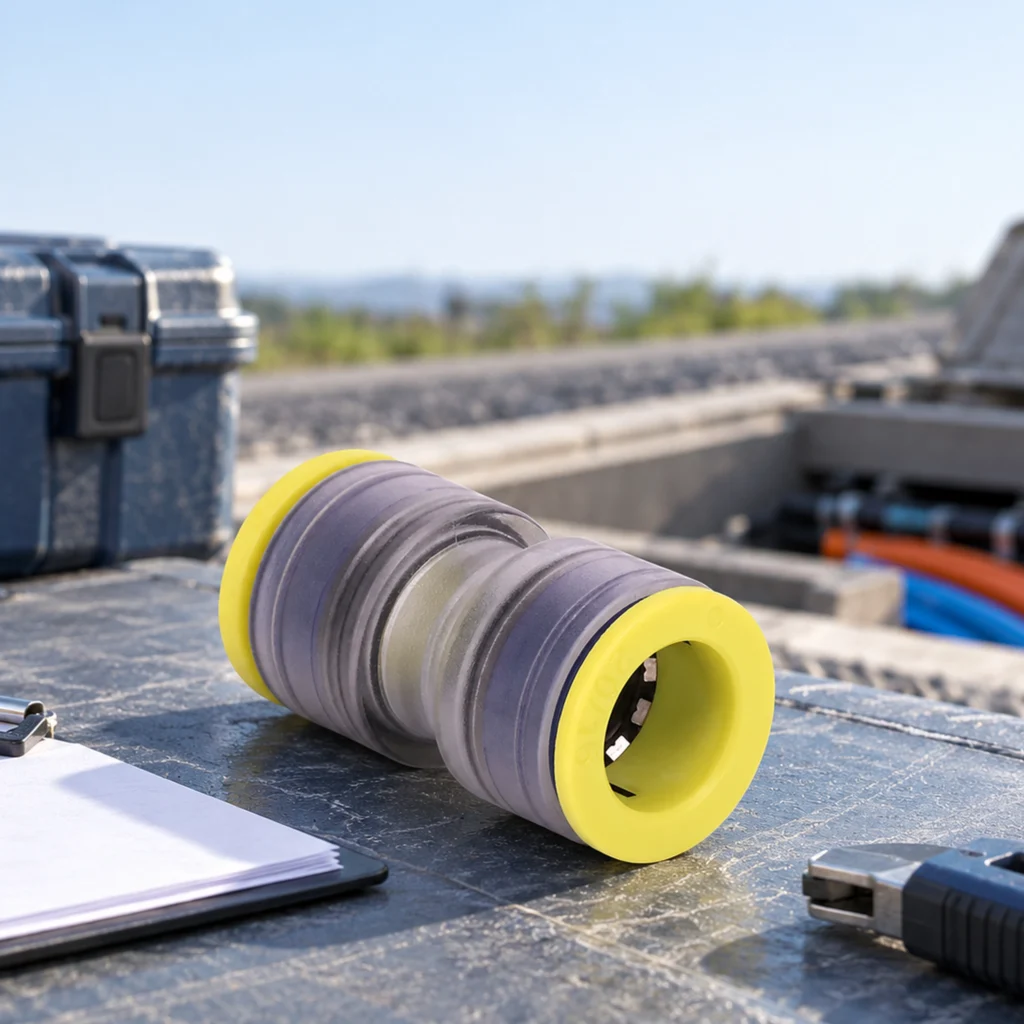
When a network supervisor in Manchester, UK, asked a crew to reconnect a 12 mm HDPE microduct before a night fiber-blowing window, the push-fit joint hissed within minutes and the cable stalled 180 metres downstream. A second connector from the same box performed perfectly after the team measured the duct outside diameter and found the first tube had a thin, ovalized wall. The root…

View Detail
HDPE Microduct Explained: A Practical Guide for Fiber Installers

HDPE Microduct Explained: A Practical Guide for Fiber Installers

When a fiber installation supervisor in Leeds connected a new 12 mm route before a blowing run, the gauge began falling almost immediately and the cable stalled before the first chamber. The crew had replaced the connector twice, yet the rapid failure remained. The reversal came when they measured the actual duct outside diameter, re-cut an oval end square and selected a reducer for…

View Detail
Microduct Connectors: How to Choose the Right Size and Stop Air Leaks

Microduct Connectors: How to Choose the Right Size and Stop Air Leaks

Installed microduct straight connector in an underground FTTH handhole. When a field supervisor in Manchester connected a 12 mm HDPE microduct to a nominally “12 mm” fitting, the pressure gauge fell within seconds and the fiber-blowing crew stopped. A closer inspection found that the duct’s measured outside diameter and wall tolerance did not match the connector’s gripping range; the product itself was not defective.…

View Detail
How Does FTTX Support the Next Generation of Access Networks?

How Does FTTX Support the Next Generation of Access Networks?

FTTX is not a single product or a promise that every customer receives the same fiber route. It is a family of access architectures in which the final destination of the fiber changes: home, building, curb or node. That distinction matters because the remaining copper or in-building segment, civil work, power and maintenance plan can determine the outcome as much as the optical cable.…

View Detail
What Are the Next FTTX Trends for Fiber Network Planning?

What Are the Next FTTX Trends for Fiber Network Planning?

"The future of FTTX" is often reduced to a promise of more bandwidth. Network planners face a more useful question: which parts of the access route must be built now, which capacity can be staged, and which evidence will keep the network maintainable? FTTX includes FTTH, FTTB, FTTC and FTTN, so a trend that helps a dense apartment building may not fit a rural…

View Detail
Main Types of Solenoid Valves and How to Choose Them

Main Types of Solenoid Valves and How to Choose Them

Illustrative scenario, not a reported customer case: when a controls engineer in Shenzhen replaced a valve that was slow to open, the new coil energized but the actuator still stalled. A quick pressure check showed that the selected pilot-operated design did not have the differential pressure its mechanism required. The visible failure looked like a bad valve; the root cause was classification and specification.…

View Detail
How to Choose the Right Microduct Connector

How to Choose the Right Microduct Connector

When an illustrative telecom site supervisor in Rotterdam cut a duct end square and pushed on a new connector, the visible failure appeared within minutes: the joint did not seat cleanly and the air path would not hold. A review of the job sheet reversed the first assumption. The connector was not automatically a bad product; the selected size did not match the measured…

View Detail
How Microduct Connectors Are Made: Production Procedure

How Microduct Connectors Are Made: Production Procedure

When a hypothetical telecom installer named Maya in Rotterdam trimmed a microduct and pushed it into a connector, the air test failed almost immediately. The visible problem looked like a defective fitting, but a second check found an out-of-square tube end and a connector selected without confirming the duct dimensions. This illustrative scene captures the practical lesson: manufacturing quality and installation discipline work together.…

View Detail