
Paslanmaz bir bağlantı parçası yıkama sonrasında temiz görünebilirken, boşaltma yuvası veya boru girişinin etrafında temizleyici kalıntıları kalmış olabilir. Metal gövde, contaya veya hortuma kıyasla maruziyete daha iyi dayanabilir ve üretim sırasında basınçlı hava tutan bir bağlantı, sıcak yıkama döngüsünden hemen sonra farklı davranabilir. Sadece gövde sınıfını seçmek bu sorulara cevap vermez. Satın alma şartnamesinde, bağlantının tamamı, yıkama süreci ve üretimin yeniden başlamasından önce yapılması gereken kontroller belirtilmelidir. Bu kılavuz, malzemeleri nasıl karşılaştıracağınızı, yıkama maruziyetini nasıl belgeleyeceğinizi ve paslanmaz çeliğin dış görünümünü korozyon direnci, hijyenik tasarım veya doğrudan gıda teması onayı kanıtı olarak değerlendirmeden monte edilmiş arayüzü nasıl inceleyeceğinizi açıklar.
Bir tane seçin paslanmaz çelik pres bağlantı Belgelenmiş gövde malzemesini, conta bileşenini ve boruyu hem çalışma ortamına hem de dış temizleme prosesine uygun şekilde eşleştirerek. Temizleyici kimyasalı, seyreltme oranını, sıcaklığı, temas süresini ve durulama işlemini tanımlayın, ardından tedarikçinin ilgili model için belirlediği kısıtlamaları kontrol edin. Boru dış çapını, diş tipini, mekanik desteği ve onaylanmış test yöntemini ayrı ayrı teyit edin. 316 gövdesi her temizlik kimyasalını onaylamaz, yıkanabilir dış yüzey gıda ile temas uygunluğunu garanti etmez ve doğrulanmamış basınç dayanımı, tekrarlanan yıkama döngülerinden sonra performansı belirtmez.
Yıkama özelliklerinin hangi bölümleri kontrol edilmelidir?
Devrenin içindeki sıvıyı, devrenin dışında kalan temizleyici maddeden ayırın. Sıkıştırılmış hava devresi, bir bağlantı parçasının dış yüzeyini; sıcak su, deterjan, dezenfektan ve kurutma koşullarına maruz bırakabilir; bu koşullar, bağlantının standart kullanım ortamı tanımında asla yer almaz. Yalnızca “su geçirmez” veya “yıkama uygundur” gibi ifadeler yazmak yerine, kullanılan gerçek temizlik ürününü ve onun çalışma seyreltmesini kaydedin. Planlanan bakım sürecinin makul bir parçasıysa, bakım sırasında meydana gelebilecek istem dışı maruziyetleri de dahil edin.
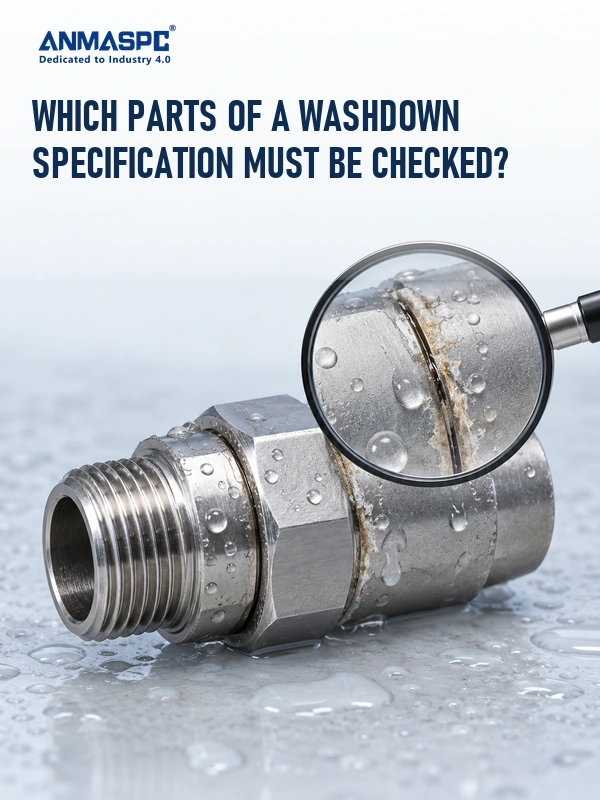
Gövdeyi, bileşenleri, tutma elemanlarını, contayı ve boruyu belirleyin. Paslanmaz çelikten yapılmış bir gövde, malzemeleri farklı olan parçalarla bir araya getirilebilir ve conta, metali değişmez bırakan bir temizleyiciye karşı hassas olabilir. Üreticinin uyumluluk rehberi, seçilen ürün için gerekli koşulları ve sınırlamaları belirtmelidir. Örneğin, SMC’nin KQG2 dokümantasyonu, paslanmaz çelik yapısını ve özel conta malzemesini ayırt eder; serisine özgü rehberi, ilgisiz bir Oulu tertibatına aktarılamaz.
| Belirtilecek maruziyet | Kanıta ihtiyaç var | Kabul edilmemesi gereken hata |
|---|---|---|
| Temizleyici ve seyreltme | Current product identity and supplier compatibility statement | Approving every detergent because one diluted solution is allowed |
| Temperature and duration | Actual cleaning and operating conditions, including transitions | Using a room-temperature chart as proof for a hot cycle |
| Rinse and drying | Documented method and access to external recesses | Assuming a clean-looking face means no retained chemical |
| Tube and seal | Exact materials and complete assembly limits | Assessing only the visible body |
| Mechanical exposure | Hose routing, support and cleaning access | Letting a cleaning tool or moving hose load the release collar |
When does 316 offer an advantage over 304?
The answer depends on the corrosive environment and the exact material specification. ASSDA’s general corrosion guidance explains the importance of the passive surface and the effects of exposure conditions. Temperature, concentration, impurities and crevices can change the result. A higher alloy designation is not permission to ignore chemical concentration or allow cleaning residues to remain indefinitely.
Specify a verified grade when the application requires it and request the agreed material documentation. Keep that requirement separate from evidence for seals, tubing and the assembled connection. A material certificate for a body does not establish a hygienic design, a complete chemical-compatibility claim or permission for direct contact with food. Compare the manufacturer’s description with the actual location: a dry cabinet beside a process and an exposed connection repeatedly washed are different duties.
Where only a supplier’s general marketing statement is available, ask for model-specific clarification before ordering. The site’s stainless union elbow illustrates a routing configuration to review; the photograph does not independently prove its grade, cleaning suitability or performance in the buyer’s process.
How should seals and tubing be reviewed with the metal body?
Use the complete operating envelope. Check internal medium, pressure, vacuum if required, temperature and the external cleaner. Review the tube’s OD, wall construction, dimensional tolerance and condition at the gripping area. An apparently compatible body does not correct an incompatible or damaged tube, and a softer tube may require particular care to achieve full insertion.
Do not merge the limits of different components into a new rating. If the body, seal and tube each have conditions attached to their data, the assembly must stay inside the applicable combination of those conditions. A compatibility chart for a material coupon also differs from evidence for a working connection under pressure and repeated cleaning. Request written confirmation when the service crosses a chart’s stated scope.
For related tube-selection questions, compare the differences between PU and PA pneumatic tubing. The material names provide a starting point; the exact tubing series and its documented exposure limits determine whether it belongs in the assembly.
How can thread damage be prevented during installation?
Identify the mating thread and its sealing method before applying a wrench. Tube size and nominal port size are different specifications. Check whether the joint uses a tapered thread seal, a parallel thread with a separate sealing face, or another documented arrangement. Select the approved sealant or seal and keep it away from unintended flow paths.
ASSDA describes thread galling as adhesive damage associated with disrupted surface films and loaded contact. Clean threads, suitable fit and controlled friction matter. Stop when engagement becomes abnormal rather than forcing the joint. Do not copy a stainless bolt torque table onto a pneumatic fitting; follow the fitting maker’s instructions for the particular size and construction. The BSP ve NPT diş uyum kılavuzu explains why similar appearance is not sufficient identification.
How should the fitting be tested after installation?
Write an acceptance procedure for the complete assembly before the first production trial. Identify the selected parts, the operating conditions, the approved cleaning cycle and the inspection points. Define the test instrument, leak method, stabilization conditions and pass criteria from the project and supplier instructions. Do not invent a universal pressure or soak duration to fill a blank inspection form.
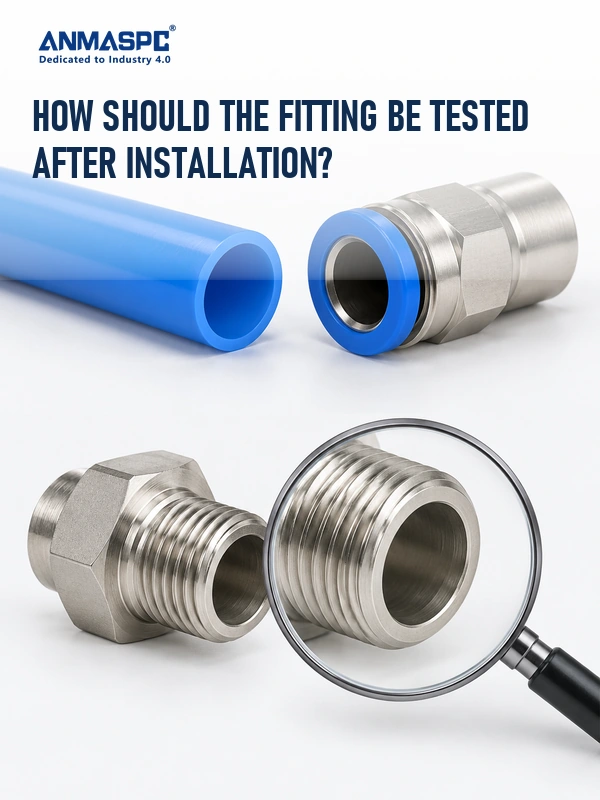
Observe the tube-side interface and equipment-port interface separately. Record whether leakage appears during ordinary operation, after cleaning or during the return to operating temperature. Inspect for residue, discoloration, pitting, damaged release parts and tube movement. A clean surface alone is not proof of sealing, and a leak test alone is not evidence that a connection meets every hygiene requirement.
| Gözlem | İncelenecek soru | Documented response |
|---|---|---|
| Residue at the collar | Can the approved rinse reach the recess? | Review access and method before repeating the cycle |
| Leak at the tube entry | Is the tube compatible, undamaged and fully seated? | Isolate, inspect and follow the approved replacement process |
| Leak at a threaded port | Are thread form, sealing face and tightening correct? | Correct the identified interface rather than tightening indiscriminately |
| Discoloration or pitting | Has chemical exposure or residue changed? | Review the material and cleaning specification |
| Restricted access | Can the fitting be inspected and serviced safely? | Revise the layout before approving routine use |
What should be included in the purchasing approval?
Record the full part reference, approved drawing, material requirements, tubing reference, sealing method and environmental duty. Attach the cleaner identity and use conditions, together with the agreed acceptance evidence. Specify notification before changes to materials or the approved configuration. Keep the sample approval linked to the later shipment rather than relying on a catalogue photograph.
Oulu’nun Pnömatik parçalar yelpazesi can be used to identify configurations for review. Confirm model-specific data with the supplier before release. Claims about certification, cleaning resistance or intended contact zones should be accepted only with documents that cover that exact product and use.
Sıkça sorulan sorular
Which stainless grade is suitable for corrosive or washdown areas?
Specify the grade from the actual environment, including cleaner chemistry, concentration, temperature and retained residues. Neither 304 nor 316 is universally suitable. Verify the material and the complete assembly, and distinguish an exposed wash area from a protected cabinet nearby.
How do you prevent galling when installing a stainless steel push-in fitting?
Confirm the mating threads, inspect clean undamaged surfaces, start engagement as instructed and control tightening at the designated tool surfaces. Use only approved sealing or lubrication methods. Stop if resistance is abnormal; changing to a longer wrench can worsen damage.
What pressure and temperature rating should the stainless steel push-in fitting have?
The selected model must cover the actual medium, pressure transients, temperature and required vacuum conditions together with the tubing. Include cleaning exposure in the review. A single maximum pressure taken from another product series is not a valid assembly specification.
Can the stainless steel push-in fitting be used with compressed air, water and chemicals?
Only for media expressly supported by the exact product and assembly documentation. Air approval does not automatically extend to water or chemicals. Check seals, gripping components and tubing as well as the body, using the real concentration and temperature.
How do you test the stainless steel push-in fitting after installation?
Follow the agreed leak and functional procedure for the assembled circuit, with identified test conditions and limits. Inspect the tube and port interfaces separately, then evaluate any required cleaning exposure and return-to-service checks. Record the parts and results so the trial is reproducible.
What causes leaks around the threads of the stainless steel push-in fitting?
Possible causes include a mismatched thread, damaged engagement, an unsuitable or missing sealing element and incorrect assembly. Locate the leak before intervention. A tube-entry leak will not be corrected simply by applying more torque to the port.
Kaynakça
- ASSDA, Technical FAQ 8: General corrosion resistance.
- ASSDA, Cleaning your indoor stainless steel; surface guidance, not assembly chemical approval.
- ASSDA, Galling and its control.
- SMC, KQG2 stainless steel one-touch fittings catalogue; manufacturer-specific construction and precautions.
Özet
A washdown-area connection must be selected for the complete exposure, including the cleaning process outside the circuit. Begin with cleaner identity, use conditions and access, then verify the body, seal compound, tube and both interfaces against that duty. Choose 304 or 316 from evidence for the environment rather than appearance, and keep material documentation separate from hygiene or contact-zone approval. Control thread assembly, inspect retained residues and test the actual connection under the agreed conditions before production release. Oulu’s available configurations can support the sourcing stage when the washdown specification, tubing details and required acceptance records are supplied for model-specific review.



