
Bir pirinç bağlantı parçası, bir bağlantı noktasına vidalanıp bir boruyu tutabilir; buna rağmen makine için hâlâ yanlış bileşen olabilir. Boru, metrik eşdeğerine benzeyen bir inç ölçüsünde olabilir, bağlantı noktası diş sızdırmazlığı yerine yüzey sızdırmazlığı gerektirebilir veya hortum sıcak bir motorun yanında basınç marjını kaybedebilir. Bu uyumsuzluklar ürün fotoğrafından tespit edilmesi zor olup sızıntıya, tekrarlanan bakım işlemlerine veya aktüatör akışının kısıtlanmasına yol açabilir. Bu nedenle alıcıların üç ayrı uyum sağlaması gerekir: boru bağlantısı, ekipman dişi ve çalışma koşulları. Bu kılavuz, her birini nasıl kontrol edeceğinizi ve bu kontrolleri açıklayıcı bir yedek parça veya satın alma spesifikasyonuna dönüştüreceğinizi anlatır.
Pratik cevap, şunu belirtmektir: pirinç pnömatik bağlantı parçaları Tam olarak belirtilen boru dış çapı ve onaylanmış boru malzemesi, port dişinin tam adlandırılması ve sızdırmazlık düzeni ile gerçek sıcaklıkta izin verilen basınç esas alınmalıdır. “Çeyrek inç pirinç bağlantı” gibi nominal bir tanımlama yetersizdir, çünkü bu ifade boruyu da, boru dişini de ifade edebilir. Seçilen üreticinin çizimlerini ve montaj talimatlarını kullanın; ardından, monte edilmiş bağlantıyı uygun bir sızdırmazlık testiyle doğrulayın. Sadece pirinç gövde, sızdırmazlıklarının ve salma parçalarının basınç dayanımını, kimyasal uyumluluğunu veya gıda ile temas için uygunluğunu garanti etmez.
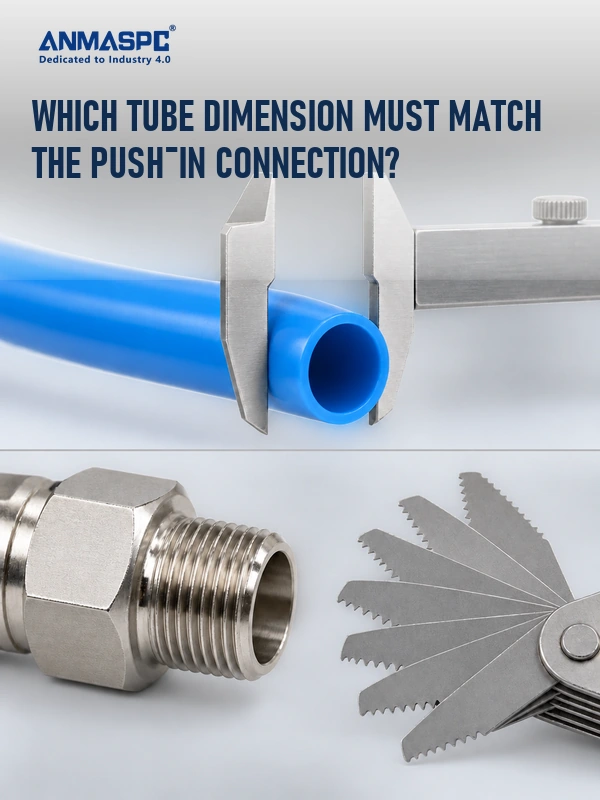
Hangi boru boyutu, itme bağlantı ile eşleşmelidir?
Sıkıştırma tipi konektörler genellikle borunun dış yüzeyinde konumlandırılır ve sızdırmazlık sağlar. Boru kodundan dış çapı, duvar kalınlığını veya iç çapı, malzemesini ve kabul edilen toleransı belirleyin. İç çap, akış kapasitesinin belirlenmesine yardımcı olur, ancak soket boyutunu tanımlamaz. Hasar görmemiş bir bölümü uygun bir cihazla ölçün ve sonucu üreticinin kabul ettiği toleransla karşılaştırın; yumuşak boruyu bir kumpasla sıkıştırmak bile ölçüm değerini bozabilir.
Metrik ve inç borular parça listesinde ayrı girişler olarak kalmalıdır. Örneğin, 1/4 inç 6.35 mm'ye eşittir, bu nedenle nominal 6 mm soket uygun olarak varsayılmamalıdır. Bu ayrım, aşağıdaki metrik ve inç seçimlerinde açıkça görülmektedir: SMC’nin TU/TIUB boru kataloğu. Bu ürün özel ölçüler, tanımlama yöntemini gösterir; başka bir tedarikçinin borcusunu değerlendirmek amacıyla kullanılmaz. Ayrıca sertliği ve borunun malzemesini de kontrol edin, çünkü görünüşte eşleşen dış çap bile tutma mekanizması üzerinde farklı davranabilir.
Boruyu, malzemesi için tasarlanmış keskin bir aletle dik açıyla kesin. Ezilmiş, çizikli veya ısıdan hasar görmüş uçları zorla soket içine itmek yerine reddedin. Deliğin içine partikül girmesine izin vermeyin, seçilen bağlantı elemanının gerektirdiği derinliğe kadar yerleştirin ve basınç kaldırıldıktan sonra üreticinin belirttiği tutma kontrolünü gerçekleştirin. İlgili düz kesim arıza giderme kılavuzu boru hasarını gerçek bir konektör arızasından ayırt etmeye yardımcı olur.
BSP, BSPT ve NPT sızdırmazlık üzerinde nasıl etkiler?
Konu tanımlaması standart, nominal boyut, vida adımı, koniklik ve erkek veya dişi formu gerektirir. “BSP” ifadesi satın alma açıklamalarında sıklıkla gevşek bir şekilde kullanılır. ISO 228 ile ilişkili paralel G dişini, ISO 7 basınç geçirmez bağlantılarıyla ilişkili R, Rc veya Rp tanımlamalarından ayırt edin. NPT farklı bir diş sistemi dir. Uyumluluğu üretim ülkesine, benzer dış çapa veya ilk birkaç dişin birbirine girmesine dayanarak karar vermeyin.
Bağlantının nerede sızdırmazlık sağlaması gerektiğini belirleyin. Paralel port bağlantısı, belirli bir pul, O-halka veya yüzey oturak bağımlılığı taşıyabilir. Konik bağlantı, onaylanmış önceden uygulanmış bir kaplama veya sızdırmazlık maddesi gerektirebilir. Bazı ISO 7 kombinasyonları, onaylanmış paralel dişi ile konik erkeği kullanır; bu nedenle “paralel mi, yoksa konik mi” tek başına da yeterli değildir. Eşleşen bileşenleri ve sızdırmazlık çizimini kontrol edin. Daha fazla bant eklemek, uyumsuz profili düzeltmez veya eksik olan yüzey sızdırmazlığı yüzeyini sağlamaz.
| Arayüz açıklaması | Kaydedilecek bilgiler | Yaygın satın alma hatası |
|---|---|---|
| Tüp soketi | OD, birimler, malzeme ve tolerans | Bağlantı elemanı boyutu olarak boru çapını kullanmak |
| Paralel dişli bağlantı noktası | Tam adlandırma ve belirtilen sızdırmazlık yüzeyi | Sadece dişlerin sızdırmazlık sağlaması gerektiğini varsayarak |
| ISO 7 dişli çift | R/Rc/Rp tanımlamaları ve onaylanmış uyumlu kombinasyonlar | Sadece “BSP” sipariş ediliyor” |
| NPT dişli çift | NPT nominal boyutu, vida adımı ve onaylanmış sızdırmazlık yöntemi | Benzer görünümlü bir BSP bileşenini zorlamak |
Kimlik belirlemesi kesin değilse, diş ölçer ve ekipman çizimini kullanın. Mevcut bağlantı yuvasının dişleri aşınmış, yırtılmış veya eksikse, yeni bir bağlantı elemanı takmak durumu düzeltemeyebilir. Yedek parçaları giderek sıkarak denemek yerine, değerlendirmek üzere ünitenin hizmetten çıkarılmasını sağlayın. Sitenin BSP ve NPT eşleştirme kılavuzu daha ayrıntılı bir tanımlama sırası sağlar.
Tamamlanmış montaj, hangi çalışma basıncını desteklemelidir?
İlgili değer şudur: sıcaklıkta çalışma basıncı, not a burst figure in a headline. Compare the tube, fitting, seal, equipment port and any adapter under the same operating conditions. Their approved operating ranges must overlap. A maximum for dry compressed air cannot automatically be transferred to liquid service, vacuum, a hot enclosure or a chemical cleaning cycle.
The SMC TU catalogue, for example, states a maximum operating pressure of 0.8 MPa at 20°C for the listed TU/TIUB tubing and provides temperature-dependent information. Its listed water temperature range is narrower than its air range. That is useful evidence that temperature and medium matter, not a specification for every PU hose or brass connector. Record the actual selected part’s curve and include transient pressure in the evaluation.
Distinguish operating pressure, proof pressure and burst pressure in supplier comparisons. Proof testing is a defined test condition; burst is a failure characteristic. Neither is permission to operate continuously at that value. Where the regulator sits some distance away, assess the pressure and temperature at the connection during the representative machine cycle, including simultaneous downstream demand and startup.
When is brass preferable to plastic or stainless steel?
Material selection should compare the complete designs against the actual environment. A brass connector may suit a conventional compressed-air cabinet when its documented limits cover the duty. A polymer-bodied connector may simplify a compact assembly, while stainless steel may warrant investigation for an exposed cleaning area. None of these material names determines seal compatibility, cleanliness or service life by itself.
| Selection condition | Ne karşılaştırılmalı | What the material name cannot prove |
|---|---|---|
| Routine compressed air | Tube approval, flow data and operating range | Every brass fitting accepts every plastic tube |
| Vibration or moving tubing | Support, dynamic-use approval and side load | A metal body makes unsupported motion acceptable |
| External washdown | Cleaner, exposure time, body and seal materials | Stainless appearance guarantees hygienic suitability |
| Restricted installation space | Tool access, tube bend and release clearance | A smaller external body has adequate airflow |
This comparison uses documented interfaces and operating conditions rather than a performance ranking; the source material was reviewed on 16 October 2026. SMC’s KQG2 catalogue is particularly useful as a stainless-steel comparison because it identifies seals and specific application limitations separately. Its specifications belong to that series. They cannot be copied onto a brass product or an unverified alternative.
How can an assembly hold pressure but still restrict airflow?
A static leak check does not measure performance under demand. An undersized tube ID, restrictive fitting passage, long route, unnecessary elbows or partially closed flow control can produce a pressure drop when the actuator moves. Check the supply and downstream pressure during the same operating event, using a safe approved measurement arrangement. Compare flow data at matching test conditions rather than choosing the connector with the largest thread alone.
Flow direction is design-specific. A plain union is different from a speed controller or non-return valve even if their bodies look similar. Follow the circuit diagram, manufacturer arrows and selected part’s flow function. Before buying from Oulu’s Pnömatik parçalar yelpazesi, identify whether the requirement is a simple connection, a metering function or a directional function; the product family is not interchangeable merely because the tube size matches.
What information should accompany the purchase order?
Kullanışlı pneumatic brass fitting specification records tube OD and material, full port designation, seal arrangement, medium, pressure range, local temperature, required flow and available space. Include whether tubing moves, how it is supported and whether the fitting must be removed regularly. Ask for the current drawing and installation instruction for the quoted variant, rather than relying on a photograph of a product family.

For sample approval, check receiving identification, tube insertion, tool access and leak performance after the intended duty cycle. Record the selected sealant and tightening method so production assembly and maintenance use the same process. Oulu lists a düz erkek dişli itme bağlantı parçası; confirm its exact quoted interfaces and operating limits before treating it as a replacement. A catalogue listing is a sourcing starting point, not evidence of suitability for an unspecified machine.
Sıkça sorulan sorular
What causes a tube to release from brass pneumatic fittings under vibration?
Possible causes include incorrect OD, incomplete insertion, a damaged retaining mechanism, excessive pressure or a route pulling on the tube. Isolate and depressurize before inspection. Correct the support and interface mismatch rather than adding an improvised clamp to the release ring.
Is plastic, brass or stainless steel better for the application?
Choose by the documented operating conditions, mechanical loads and exposure of the complete assembly. Compare seals and approved tubing as well as the body. A material upgrade cannot compensate for a wrong thread or unsupported tube.
How do you check flow direction and airflow loss through brass pneumatic fittings?
Identify whether the part includes a check or metering function, then follow its diagram. Evaluate pressure drop under representative demand using the supplier’s flow data and approved test points. A static pressure reading alone does not reveal a flow restriction.
What signs show that the collet or O-ring needs replacement?
Recurring leaks with correctly prepared approved tubing, damaged release parts or inadequate retention justify investigation. Internal seals are not necessarily field-serviceable. Replace the fitting unless its manufacturer authorizes a documented repair with the correct parts.
How do you match tube outside diameter to brass pneumatic fittings?
Read the tube code, confirm metric or inch units, and measure undamaged tubing. Match OD, tolerance and material to the connector drawing. Do not substitute 6 mm for 1/4 inch or use the tube’s inside diameter as the socket size.
How can you tell whether a brass pneumatic fitting uses BSP, BSPT or NPT threads?
Use the full marking, drawing and suitable thread gauges to establish standard, pitch and taper. Confirm the seal location and mating female designation. Several hand turns of engagement are not a compatibility test.
Kaynakça
- SMC: TU/TIUB polyurethane tubing catalogue — metric/inch dimensions and pressure-temperature conditions.
- SMC: KQ2 one-touch fittings catalogue — model-specific connection options and handling guidance.
- SMC: KQG2 stainless steel one-touch fittings catalogue — comparison context and limits of material-based selection.
Özet
A suitable brass pneumatic connection begins with three independent checks: the tube must match the socket, the thread must match the equipment port, and every component must cover the same operating conditions. Confirm the sealing method before selecting tape, coating or a face seal, and use the installation instruction for the exact part. Then check leakage and airflow under a representative duty rather than relying on appearance or a static gauge reading. If vibration or heat caused the original failure, correct that condition before approving a replacement. Oulu’s pneumatic range can support a specification-led enquiry when the tube code, port drawing and operating requirements accompany the request; those details are what make a repeat order reproducible.



