
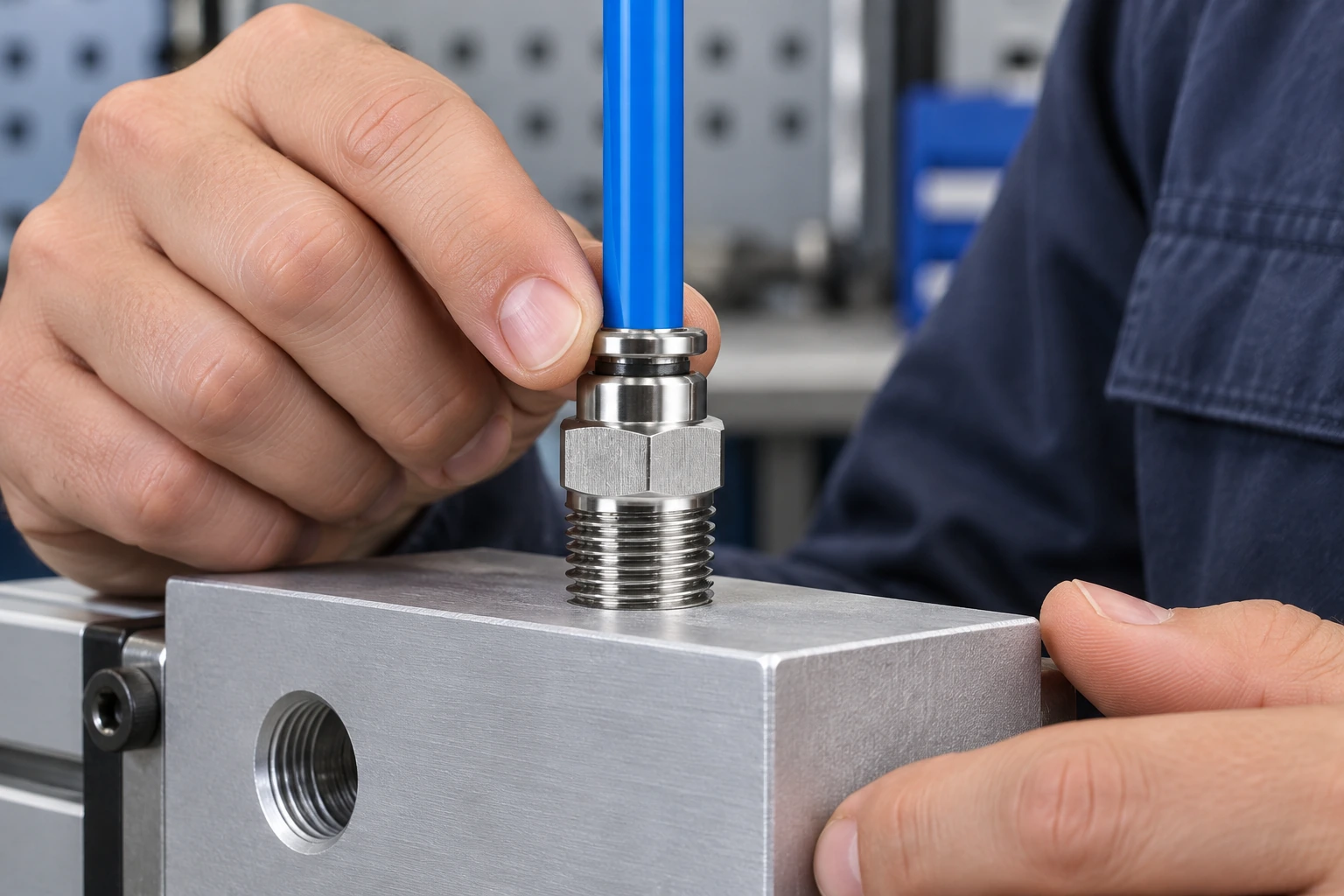
Инженеру по техническому обслуживанию может потребоваться отсоединить пневматический фитинг с быстрым соединением для замены клапана, переналадки трубопровода или доступа к узлу оборудования. Искушающим, но небезопасным решением может быть повторное введение той же трубки в тот же фитинг и ввод линии в эксплуатацию. Такой подход может быть оправдан, если состояние конца трубки, цангового зажима, уплотнения, резьбы и рабочие условия по‑прежнему находятся в пределах, указанных в технической документации производителя; однако это плохая практика, если хотя бы одно из этих условий неизвестно. Небольшая царапина на трубке или повреждение уплотнительного кольца могут привести к медленной утечке, которую трудно обнаружить и которая способна нарушить последовательность работы исполнительного механизма. Данное руководство предлагает воспроизводимый порядок проверки и повторного подключения для… пневматический фитинг с одним касанием без предположения, что каждая арматура является одноразовой или что каждая арматура пригодна для многократного использования.
Резюме: A пневматический фитинг с одним касанием Может быть повторно использовано для восстановления соединения при техническом обслуживании только после изоляции воздуха, правильного демонтажа трубки и успешного прохождения проверки уплотняющих и фиксирующих поверхностей. При наличии повреждений на старом вводном участке обрежьте трубку до чистого, ровного торца; замените цанговый зажим, уплотнительное кольцо, фитинг или трубку в случае обнаружения повреждений, загрязнений, несоответствия резьбы или люфта. Окончательное решение должно приниматься на основе таблиц давления и температуры, рекомендованных производителем фитинга, а также с учётом требуемых мер по управлению рисками. ИСО 4414. Запишите идентификатор детали, наружный диаметр трубки, профиль резьбы, результаты проверки и результаты испытания на герметичность перед выпуском оборудования.
Что означает “многократное использование” для фитинга с одним нажатием?
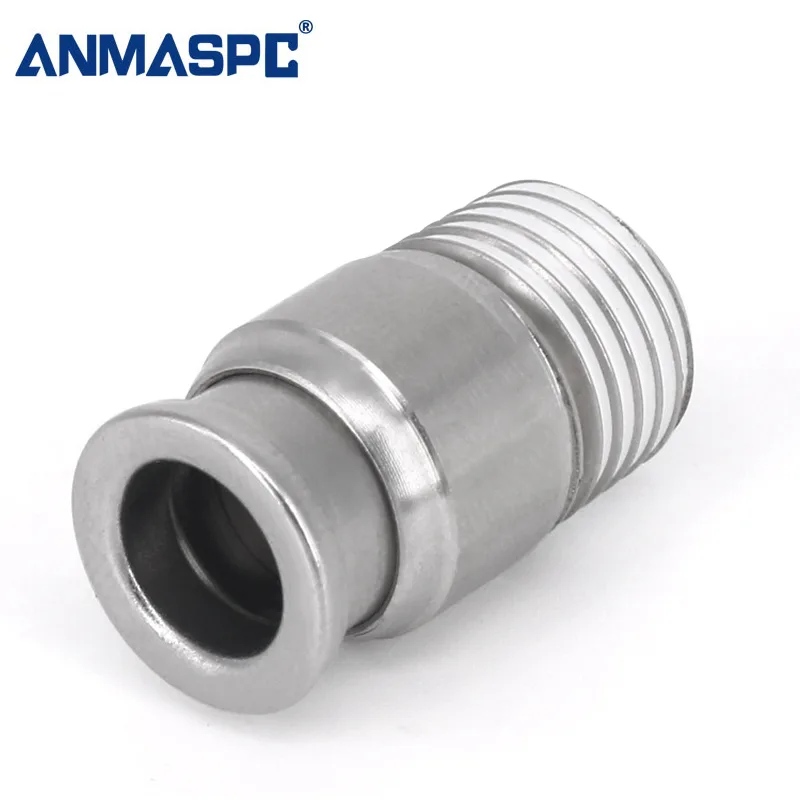
Повторное использование — это не просто вторичное вставление трубки в штуцер. Это означает, что тот же фитинг и пригодная для эксплуатации трубка повторно соединяются после контролируемого разбора, при этом удерживающие и уплотняющие элементы фитинга по‑прежнему способны выполнять свои функции. Фитинг с быстроразъёмным соединением обычно обеспечивает надёжную фиксацию трубки за счёт её полного упора в внутренний упор, тогда как цанговый зажим и уплотнение плотно обхватывают трубку. Резьбовая часть имеет отдельный уплотнительный контакт, поэтому исправное соединение со стороны трубки ещё не гарантирует исправности уплотнения со стороны резьбы.
Таким образом, вопрос о повторном использовании касается состояния и совместимости, а не универсального свойства всей линейки продуктов. Фитинг, который выглядит чистым, всё же может иметь повреждённое уплотнение, деформированный конец трубы, повреждённую резьбу или остатки герметика, препятствующие его полному посаду. Напротив, фитинг часто можно продолжать эксплуатировать, если труба была извлечена без повреждений, все поверхности чисты и производитель допускает повторное подключение при фактических значениях давления, температуры, рабочей среды и степени движения.
Какие детали необходимо проверить перед повторным подключением?
Начните с приведения машины в безопасное состояние. Отключите подачу воздуха, сбросьте накопленное давление и выполните локализационную процедуру, принятую на объекте, прежде чем прикасаться к соединению. Вытягивание работающей трубки из порта под давлением может привести к её неожиданному высвобождению и приведению в движение исполнительного механизма. После изоляции удалите внешнюю пыль, не загоняя мусор внутрь порта, затем осмотрите детали при достаточном освещении.
| Точка проверки | Принять для контролируемого повторного использования, когда | Заменить или передать по инстанции, когда |
|---|---|---|
| Конец трубы и наружный диаметр | Конец квадратный, круглый, ровный и без глубоких царапин; наружный диаметр соответствует спецификации фитинга. | The tube is oval, nicked, crushed, hardened, contaminated, or too short to reach the internal stop. |
| Collet and gripping teeth | The collet moves normally, returns to position, and shows no cracks or bent retaining features. | The collet sticks, is cracked, is missing, or cannot retain the tube during a gentle pull check. |
| O-ring or internal seal | The seal is present, clean, correctly seated, and free of cuts, flattening, or extrusion. | The seal is cut, swollen, hardened, contaminated, or disturbed during removal. |
| Fitting body and threads | The body is free of cracks and deformation; the thread form and port size match the mating component. | Threads are crossed, galled, damaged, mismatched, or sealed with residue that prevents full engagement. |
| Movement and environment | The tube is supported without side load, sharp bending, or repeated rubbing at the port. | Vibration, pull-out force, heat, chemicals, or routing changes exceed the documented application limits. |
A visual inspection is a screening step, not proof of performance. If the fitting is in a safety-related circuit, a hard-to-access location, or a line where a leak can cause an unsafe motion, follow the site’s replacement policy even when the part appears acceptable. ISO 12100 provides a risk-assessment framework for machinery; it does not turn a generic fitting into a certified safety component.
How should the tube be removed and seated again?
With pressure removed, press the release collar toward the fitting body while pulling the tube straight out. Do not twist the tube against the seal, lever it sideways, or pull on a curved section. Marking the old insertion depth before removal can help reveal whether the tube was fully seated, but the mark is only an aid; the tube must still be inspected and cut back when the marked section is damaged.
Use a sharp tube cutter to make a square cut. Avoid a utility-knife taper, a crushed edge, or burrs that can damage the seal. Remove chips and wipe the tube with a clean, compatible material. Insert the tube straight through the collet until it reaches the internal stop, then pull back lightly to confirm that the collet has gripped it. Do not use the release collar as a substitute for a retention test, and do not rotate the tube while the seal is being loaded.
After reconnection, route the tube so the fitting is not carrying bending or tension. Keep the bend radius and support spacing within the tubing maker’s instructions. A fitting that holds at rest may release under vibration if the tube is side-loaded or if the tube OD is outside the specified tolerance.
When is replacement safer than reuse?
Replacement is the better decision when inspection cannot establish a clean sealing and retention path. This is the central boundary for one-touch fitting reuse: replace the tube end or the complete tube when damage extends beyond the section that can be removed while preserving the required length. Replace a seal, collet, or fitting when the component is not available as an approved service part, when its identity is uncertain, or when damage is visible. Mixing an unverified seal material with a different air-line fluid or cleaning agent can create a compatibility problem even if the dimensions look right.
| Наблюдаемое состояние | Practical action | Reason to document it |
|---|---|---|
| Clean tube, undamaged collet and seal, verified matching part | Reconnect, perform a controlled leak and retention check, and record the result. | Shows that the reconnection was deliberate and traceable. |
| Tube has a short marked section or light surface scoring | Cut back to undamaged material if length and routing remain acceptable; otherwise install new tubing. | Prevents a known damaged section from sitting in the seal. |
| Seal, collet, or body shows damage or contamination | Replace with a documented compatible service part or replace the complete fitting. | Condition cannot be made reliable by additional tightening. |
| Thread form, port size, or pressure/temperature limit is uncertain | Pause the job and verify the drawing, catalogue, or supplier documentation before assembly. | Prevents a superficially similar part from becoming an incompatible connection. |
| Persistent leak or tube movement after correct seating | Depressurize, remove the connection, find the cause, and replace affected parts rather than repeatedly tightening. | Repeated adjustment can worsen seal or thread damage and hides the original failure mode. |
How do pressure, temperature, vibration, and flow affect the decision?
Use the fitting and tubing manufacturer’s published working-pressure and temperature limits for the exact material, size, and configuration. A catalogue value is not a blanket approval for every assembly: temperature, pulsation, vacuum, chemical exposure, and installation geometry can change the allowable range. Do not infer a pressure rating from the fitting’s appearance, thread size, or a similar model.
Vibration deserves a separate check. Support the tube near the fitting, prevent the tube from rubbing against an edge, and inspect for witness marks after the machine has completed its normal motion. In a circuit with frequent cycling, consider whether a new fitting and a fresh tube end provide a more controlled maintenance baseline than a marginal reconnection. Flow loss is also a system issue: a partially seated tube, a reduced bore, or debris in the port can restrict airflow even when no audible leak is present.
For broader procurement and component matching, the site’s пневматические детали category and каталог продуктов are useful starting points. The Руководство по обслуживанию пневматических фитингов provides related inspection context, while the article on solenoid valve types helps when the fitting is being replaced as part of a valve service job.
What should a maintenance record contain?
A short pneumatic fitting maintenance record makes the next service decision faster. Capture the fitting family or part number, tube material and outside diameter, thread form, reason for disconnection, condition of the tube end and sealing parts, and any replacement made. Note the pressure and temperature limits consulted, the leak-check method used, and whether the tube moved during the retention check. If the connection is part of a validated machine process, attach the relevant drawing or bill-of-materials reference rather than relying on a photograph alone.
Часто задаваемые вопросы
Why does the one touch pneumatic fitting leak even after the fitting has been tightened?
Tightening the threaded side cannot correct a scratched tube, damaged O-ring, incomplete insertion, wrong tube OD, or a mismatched thread. Depressurize the line, inspect both interfaces, cut back to clean tubing when appropriate, and verify the manufacturer’s assembly method. Replace the affected part if the sealing surface remains uncertain.
What working pressure and temperature should the one touch pneumatic fitting support?
Use the published limits for the exact fitting, tube, seal material, size, and configuration. The safe range can be narrower when temperature, pulsation, vacuum, chemicals, or dynamic loads are present. Do not substitute a rating from a visually similar model; record the source used for the maintenance decision.
How do you install the one touch pneumatic fitting without cutting or scratching the tube?
Isolate pressure, cut the tube square with a suitable cutter, remove burrs, and insert it straight to the internal stop. Avoid twisting, levering, or forcing a damaged end through the seal. Route the tube without side load, then perform a gentle retention check and a controlled leak check.
Can the one touch pneumatic fitting be disconnected and reused in a maintenance job?
It can be considered for reuse when the fitting, collet, seal, thread, and tube all pass inspection and the maker’s documentation permits the application. Reuse is not appropriate when any part is damaged, contaminated, unidentified, or outside its pressure, temperature, chemical, or motion limits. In a high-consequence circuit, follow the site’s replacement policy.
Which sealing method is best for the threaded side of a one touch pneumatic fitting?
Follow the fitting maker’s instructions for the specified thread form and sealant. Apply only a compatible sealant in the correct location and keep it out of the airflow path; excessive tape or compound can obstruct a port or prevent full thread engagement. Do not assume that a method suitable for one BSP, BSPT, or NPT configuration is suitable for another.
How do you measure the one touch pneumatic fitting before ordering replacement parts?
Identify the tube outside diameter, threaded port size and form, fitting geometry, body material, seal material, and any visible series or part marking. Compare those details with the manufacturer’s drawing or catalogue, not only with a photograph. Check the available length, orientation, pressure and temperature limits, and the mating component before ordering.
Ссылки
- ISO 4414:2010, Пневматические гидросистемы — Общие правила и требования безопасности к системам и их компонентам.
- ISO 12100:2010, Safety of machinery — General principles for design — Risk assessment and risk reduction.
- U.S. Department of Energy, Industrial Technologies Office, compressed-air systems resources.
Заключение
Reuse a one-touch pneumatic fitting only when its condition and application are documented, not merely because the parts can be pushed together again. First isolate and vent the circuit. Next confirm the tube OD, square-cut a clean end, inspect the collet, O-ring, body, and threads, and compare the assembly with the maker’s pressure, temperature, fluid, and motion limits. If a sealing surface, retention feature, or part identity is uncertain, replacement is the more controlled maintenance choice. Finish with a gentle retention check, a leak check at the intended operating condition, and a record that another technician can follow. Oulu / ANMASPC’s pneumatic product range can be reviewed alongside the required drawings and application data when a documented replacement is needed.



