
Представьте, что подрядчик планирует прокладку волоконно-оптической линии между двумя складами в Роттердаме. В двух коммерческих предложениях указан внутренний HDPE‑канал, однако один из них будет проложен внутри существующей трубы, а другой — предназначен для прямой укладки в грунт. Считая их взаимозаменяемыми, остаются без ответа важные вопросы: конструкция стенки, нагрузки при монтаже, воздействие солнечного света до засыпки и переход в каждое здание.
Выбрать Внутренний канал из ПНД путём сопоставления всего маршрута с документированной схемой прокладки труб и кабелей. Сравнивайте фактический наружный диаметр, минимально допустимый внутренний диаметр, конструкцию стенки и предполагаемый метод монтажа перед сравнением цены за метр. Руководство PPI по TN-50 различает стандарты, специфичные для трубопроводов, такие как ASTM F2160, от более старых спецификаций для водопроводных труб; описание материала из полиэтилена само по себе не является полной закупочной спецификацией.
Подберите внутренний кабельный канал из ПНД для прокладки в грунте, под воздействием солнечного света и для ввода в здание.
Начните с разделения трассы на экологические участки. Кабель, протягиваемый в существующий канал, поддерживается и защищается иначе, чем кабель, проложенный непосредственно в грунте. Открытые стояки, катушки для хранения, камеры и входы в здания создают условия, которых может не быть на основной подземной трассе. Определите эти участки до выбора одного типа продукции для всего проекта.
Попросите поставщика указать предполагаемое применение конкретной конструкции воздуховода, включая любую наружную оболочку или защитный пучок. Для прокладки непосредственно в грунте проект монтажа также должен предусматривать соответствующую подготовку грунта, укрытие, обратную засыпку и защиту в местах пересечений. Утверждение о высокой прочности полимера не подтверждает, как должна быть смонтирована вся трасса в конкретных условиях грунта или интенсивности движения.
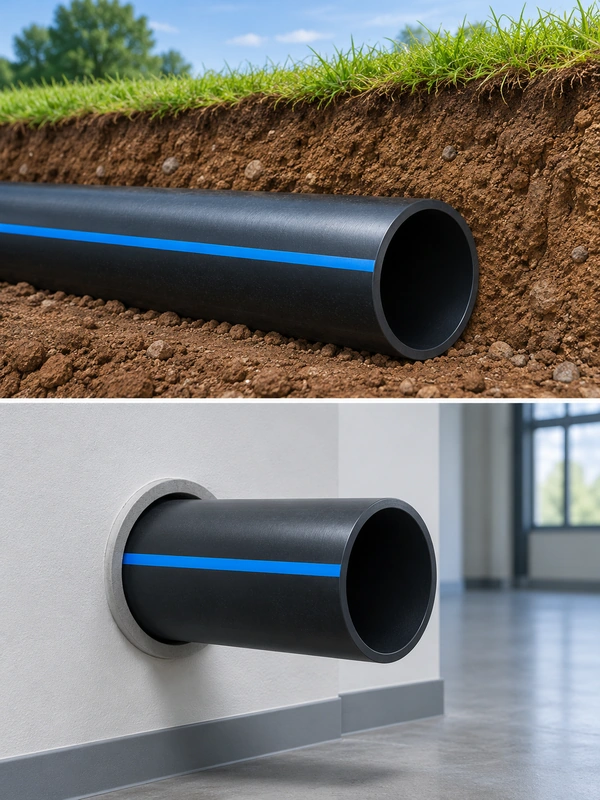
Воздействие солнечного света требует отдельной проверки. Сравните заявление производителя о внешнем воздействии с условиями эксплуатации и планом хранения. Катушка, оставленная на улице во время задержки проекта, может подвергаться иному времени воздействия, чем то, которое было заложено в коммерческом предложении. Не делайте вывод о неограниченной устойчивости к ультрафиолету только на основании чёрного цвета и не перенимайте нормы допустимого времени воздействия из характеристик другого изделия из ПЭНД.
При входе в здание оцените требуемую классификацию по пожарной безопасности и способы защиты проходов. Влагостойкость наружного воздуховода не гарантирует его пригодность для использования внутри помещений с точки зрения пожарной безопасности. Согласно рекомендациям FOA, конструкция кабеля должна соответствовать как внутренним, так и наружным требованиям; маршрут, фитинги и система проходов также требуют учета специфики каждого участка трассы. Документируйте места переходов и указывайте ответственного за их выполнение.
Сравните диаметр кабеля с минимальным допустимым отверстием.
Размеры внутреннего кабельного канала из волокна Расчёт начинается с максимального наружного диаметра выбранного кабеля и минимального доступного внутреннего диаметра канала. Номинальный размер, наружный диаметр и внутренний диаметр — это различные величины. Для идеальной круглой трубы со сплошными стенками внутренний диаметр равен наружному диаметру за вычетом удвоенной толщины стенки, однако необходимо учитывать также производственные допуски, внутренние рёбра жёсткости и деформацию.
Иллюстративная пара трубок с наружным диаметром 32 мм и толщиной стенок 2 мм и 3 мм будет иметь расчётные внутренние диаметры 28 мм и 26 мм. Это гипотетические значения, а не типоразмеры из каталога. Более толстая стенка уменьшает доступную площадь поперечного сечения примерно на 14 процентов в данном сравнении. Это объясняет, почему неизменный наружный размер всё же может влиять на свободное пространство для кабелей.
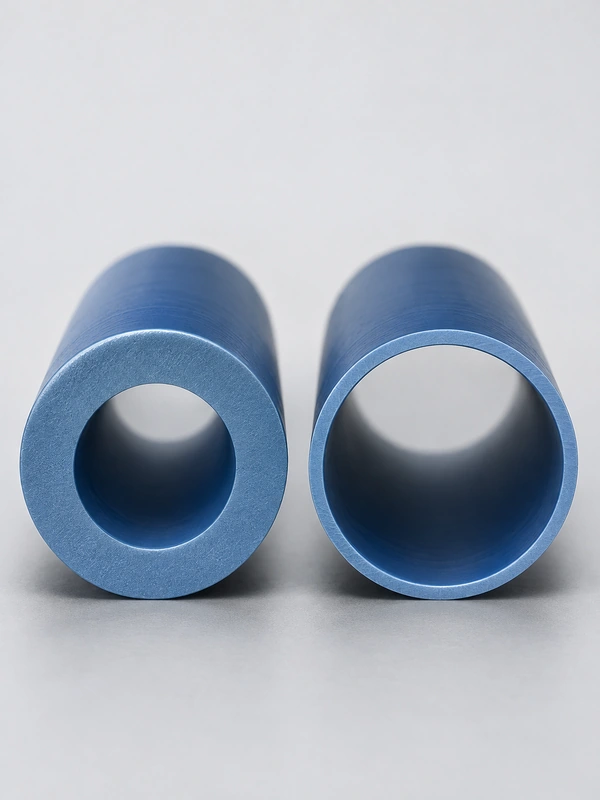
Наименьший проход может находиться не на прямом участке трубы, а в месте соединения, переходника или повреждённого отвода. При проверке зазоров учитывайте наличие ушков для протяжки и любых защитных приспособлений. При продувке кабеля используйте рекомендованное сочетание кабеля и трубы для выбранной системы, а не применяйте процент заполнения электротехнической трубы в качестве правила продувки.
Проверьте овальность и состояние спиральнонавитой трубы после монтажа. Номинально круглая труба может деформироваться при неправильном хранении или слишком узком трассировании. Приёмка должна проводиться в соответствии с указанным поставщиком методом контроля или испытаний, а также требованиями проектной документации. Успешная проверка на проходимость короткого образца не подтверждает, что готовая трасса является целостной и чистой.
| Элемент выбора | Вопрос поставщику | Последствие проекта |
|---|---|---|
| Наружный диаметр воздуховода и допуск | Какие размеры определяют посадку с натягом? | Неправильный захват или негерметичность соединений |
| Минимальный используемый идентификатор | Какой зазор остаётся после учёта толщины стены и допусков? | Кабель или тяговое приспособление может не проходить. |
| Конструкция стен и обшивки | Для какой установки предназначена эта конструкция? | Различные требования к обращению и захоронению |
| Ограничения кабеля | Каковы диаметр, радиус изгиба и усилие тяги? | Установка может повредить в остальном подходящий кабель. |
| Метод установки | Эта комбинация предназначена для всасывания или нагнетания? | Требования к оборудованию и соединениям меняются. |
Заказывайте муфты, уплотнения и затворы как часть маршрута.
Для непрерывного трассирования трубопровода одного только намотанного на катушки трубопровода недостаточно. Подсчитайте запланированные соединения, изменения диаметра трубопровода, запасные концы, места выводов кабелей и точки отводов. Определите, какие фитинги для внутренней трубы из волокна Просто соединяйте секции воздуховода, при этом они должны обеспечивать герметичность вокруг установленного кабеля. Газоизолирующий соединитель и заглушка для пустого воздуховода выполняют разные функции.
Review outdoor duct coupler selection alongside the duct specification. The accessory needs to match actual dimensions and the environment at its location. A connector sheltered inside a cabinet and one exposed in an underground chamber may require different supporting evidence, even if the duct diameter is identical.
For a blowing route, ask for the operating conditions of the complete assembly. A short-duration pressure test printed on one component is not automatically its continuous operating limit, nor does it raise the limit of another component. Establish the agreed installation conditions from the cable, duct, connection and equipment instructions together.
Keep spare parts specific. Record the approved part number and supported duct or cable ranges rather than listing a generic connector in the maintenance schedule. If a joint later leaks, use a structured fiber duct connector leak check to distinguish preparation problems, damaged tubing and an unsuitable component before replacing the whole route.
Inspect the route before pulling or blowing fiber
FOA’s installation guidance starts with route assessment and the cable manufacturer’s handling limits. Confirm that the installed pathway reaches the correct destination, has usable access at both ends and contains no undocumented change of size. Review the as-built route, not only the initial design drawing.
Inspect exposed ends and accessible joints for contamination, damage and alignment. Use the specified cleaning and proving procedure to assess the enclosed route. A passing obstruction check, a pressure check and an optical cable test answer different questions. Do not treat one result as a substitute for the others or improvise pressure values without the system instructions.
For a pull, verify rope or tape rating, cable attachment, compatible lubricant and tension control. FOA cautions against pulling by the jacket unless the cable design and approved grip allow it. For blowing, confirm equipment setup, cable handling and the condition of the air path. Record the applicable cable bend radius under installation tension separately from the relaxed storage limit.
Check the handoff between civil works and cable installation. The crew receiving the route needs duct identifiers, joint locations, test records and any unresolved defects. A route accepted as buried infrastructure may still need preparation before cable installation, especially if ends were left open or another contractor subsequently worked in the chambers.
Compare installed cost and supplier documents before placing the order
The lowest material price does not necessarily give the lowest installed cost. Include accessory quantities, reel handling, route preparation, installation equipment, proving and the cost of replacing a damaged section. Avoid assigning a universal savings percentage: labor access and the cost of reopening the route differ substantially between projects.
For a staged rollout, compare two explicit options: installing the final cable capacity immediately or reserving additional usable pathways for later cables. FOA’s air-blown fiber discussion notes that spare tubes have value only when sufficient routes are installed initially, and that the alternative of installing extra fibers at the outset also deserves consideration.
| Quotation section | Required detail | How to compare offers |
|---|---|---|
| Duct supply | Dimensional system, wall type, lengths and tolerances | Compare the same usable route, not just nominal size |
| Аксессуары | Exact couplings, caps, transitions and closures | Check whether every route endpoint is covered |
| Соответствие требованиям | Applicable standard edition, listing and product identification | Match evidence to the supplied item and intended use |
| Установка | Handling limits, proving method and equipment needs | Include labor and acceptance work in the estimate |
| Будущие дополнения | Spare paths, records and maintenance access | Assess realistic expansion work and cost |
PPI’s 2019 TN-50 edition is useful for understanding standards scope and dimensional terminology, but it is not a substitute for the current contract edition or local requirements. Request the current product drawing and applicable declarations. Do not combine a certificate for one construction with a quotation for another wall thickness or application.
ANMASPC’s published two-way 14/10 mm tube page illustrates another distinction: individual microduct size and the overall bundle envelope are separate dimensions. State both in a procurement request. The cable travels through an individual channel, while the bundle envelope determines installation space and handling clearances.
Часто задаваемые вопросы
What is HDPE innerduct used for in a fiber network?
It provides a protected, identifiable path for fiber cable and can reserve routes for expansion. It is often placed inside a larger conduit, although some products are intended for other installation methods. Confirm the intended use of the exact construction.
How do I choose fiber innerduct sizes?
Compare cable OD, duct minimum bore, pulling attachment size, route bends and the installation method. Check actual dimensions and tolerances rather than nominal size alone. Cable blowing requires a supported cable-and-duct pairing, not just visible clearance at the entrance.
Which fiber innerduct fittings are needed for a continuous route?
Typical requirements include compatible couplings, end caps and appropriate transitions or seals at cable exits. Branch routes may need a suitable closure. The exact list depends on the route and whether it must support cable blowing.
How does the installation environment affect innerduct selection?
Burial, sunlight, indoor fire classification and mechanical exposure change what must be verified. A protected duct inside another conduit is not in the same situation as an exposed riser. Evaluate each route segment before approving a product.
Can HDPE innerduct protect outdoor fiber cable?
Yes, when the duct and cable are both selected for the proposed outdoor installation. The duct does not make an indoor-only cable suitable for a wet underground environment. Confirm the complete route, joints and entry conditions.
What information should I give a fiber innerduct supplier for a quotation?
Provide the cable diameter and construction, required duct dimensions, route environment, length, installation method and accessories. Include required standards, spare capacity and delivery lengths. Ask the supplier to identify any assumptions that affect product selection.
What should be checked before pulling fiber through innerduct?
Check continuity, cleanliness, access, joint condition, pulling provision and the cable’s bend and tension limits. Confirm the correct destination and a documented pulling plan. Resolve obstructions before applying higher pulling force.
Ссылки
- Plastics Pipe Institute: Guide to Specifying HDPE Conduit, TN-50, 2019.
- Fiber Optic Association: Installing Fiber Optic Cable.
- Fiber Optic Association: Air Blown Fiber Installation.
- Fiber Optic Association: Fiber Optic Cable Construction.
Краткое содержание
A useful HDPE innerduct specification describes the whole cable route: environment, dimensions, accessories, installation limits and acceptance checks. Comparing those items makes differences between quotations visible and prevents nominal size from hiding a restricted bore or an unsuitable construction. Reserve expansion paths only where they can be identified, protected and reached later.
For a route requiring separate small fiber channels, review the two-way 14/10 mm HDPE microduct bundle and contact ANMASPC with your cable and route details to confirm the appropriate configuration.



