
ロッテルダムの2つの倉庫間で光ファイバー回線を計画している請負業者を想像してみてください。2つの見積書にはどちらもHDPEインナーダクトと記載されていますが、一方の製品は既存の導管内に敷設され、もう一方は直接埋設が提案されています。これらを互換性のあるものとして扱ってしまうと、重要な点が不明のままとなります。具体的には、管壁の設計、施工時の荷重、埋設前の太陽光曝露、および各建物への接続部の取り扱いなどです。.
選択する HDPEインナーダクト 完全なルートと文書化されたダクトおよびケーブルの配置を照合することで行います。価格をメートル単位で比較する前に、実際の外径、最小使用可能内径、壁構造、および想定される敷設方法を比較してください。PPIのTN-50ガイドでは、ASTM F2160などの導管固有の規格と、古い給水管の仕様とを区別しています。ポリエチレン素材の説明だけでは、完全な購買仕様とはなりません。.
HDPEインナーダクトを埋設、日光曝露、建物への引き込みに適合させる
まず、ルートを環境ごとのセグメントに分割してください。既存の導管内に引き入れるダクトと、直接埋設するダクトでは、支持および保護方法が異なります。露出した立上り部、保管用リール、チャンバー、建物への進入部などは、地下の主要区間には見られない条件を追加します。プロジェクト全体で単一の製品を選定する前に、これらのセグメントを特定してください。.
供給業者に対し、外被や保護用結束材を含む、具体的なダクト構造の想定用途を明記するよう求めましょう。直接埋設の場合、施工設計には適切な地盤整備、覆い、埋戻し、および交差部における保護措置も必要です。ポリマーが耐久性に優れているという主張だけでは、特定の土質や交通条件において、いかにして全ルートを施工すべきかは示されません。.
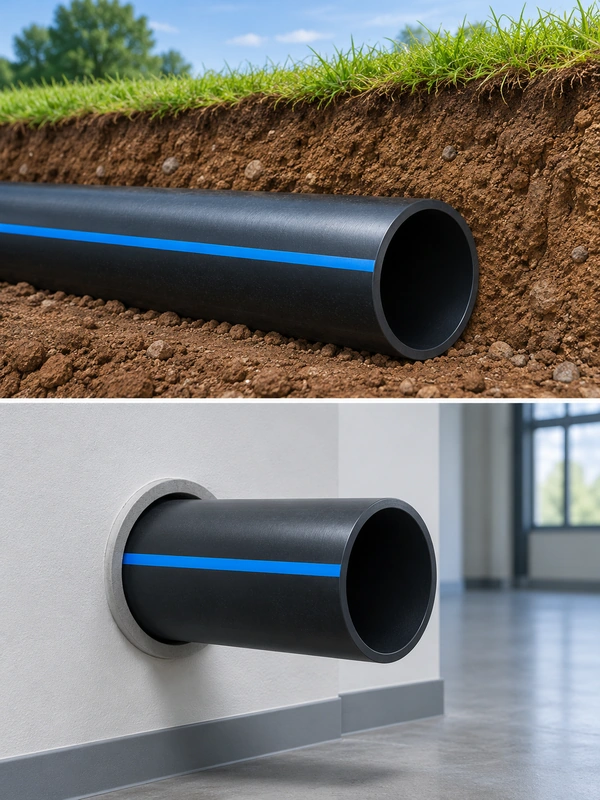
日光への曝露については、別途確認が必要です。製造元の屋外使用に関する記載を、運用環境および保管計画と照らし合わせてご確認ください。工事が遅延して屋外に放置されたコイルは、見積書で想定されていた曝露期間とは異なる場合があります。黒色であることをもって無期限の耐紫外線性を推測したり、他のHDPE製品の曝露限度値をそのまま転用したりしないでください。.
建物の出入口では、求められる防火等級および貫通部の処理を評価してください。屋外用ダクトの耐湿性は、屋内での防火適合性を保証するものではありません。FOAによれば、ケーブルの構造は屋内外の要件に応じて変更する必要があり、経路、継手、貫通システムについても、それぞれの用途に応じた適切な対応が求められます。移行箇所と、その供給責任者を明確に記録してください。.
ケーブルの直径を、使用可能な最小穴径と照らし合わせて確認してください。
ファイバーインナーダクトのサイズ選定 計算は、選択したケーブルの最大外径と、ダクトの最小利用可能内径から始まります。公称サイズ、外径、および内径はそれぞれ異なる値です。理想的な円形のソリッド壁管の場合、内径は外径から壁厚の2倍を引いた値に相当しますが、製造公差、内部リブ、および変形も考慮する必要があります。.
外径が32 mm、壁厚が2 mmと3 mmのダクトの一例では、計算上の内径はそれぞれ28 mmと26 mmとなります。これらは仮想的な値であり、カタログに記載されている寸法ではありません。比較すると、より厚い壁により利用可能な断面積は約14パーセント減少します。これが、外径を変えてもケーブルの通線スペースに影響を及ぼす理由です。.
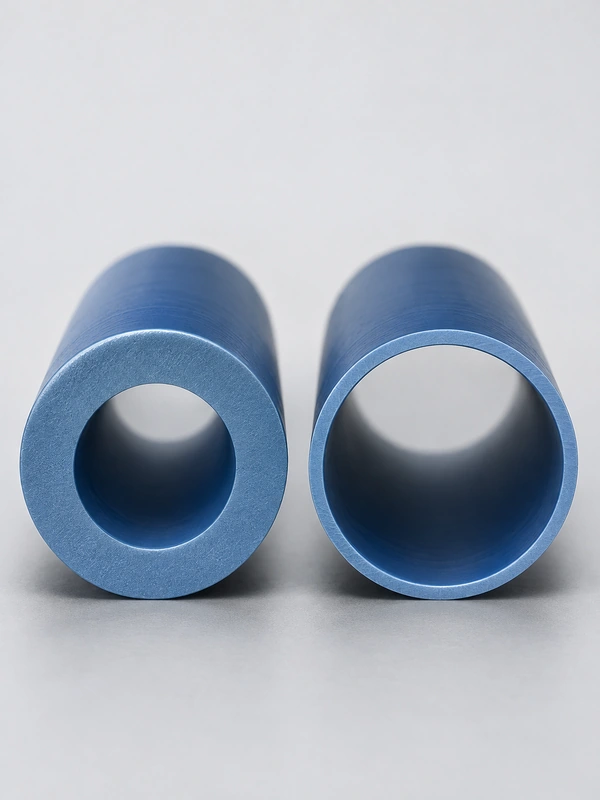
最も狭い部分は、直管部のサンプルではなく、継手、異径継手、または損傷した曲がり部にある可能性があります。クリアランスの検討には、引き出し用アイおよび保護用付属品も含めてください。ケーブル吹き込み作業では、電気用導管の充填率を吹き込みの基準とするのではなく、選定したケーブルとダクトシステムに推奨される組み合わせを使用してください。.
取り扱い後の管の真円度およびコイル状ダクトの状態を確認してください。公称円形の管であっても、不適切な保管や過度にタイトな配管経路により扁平化することがあります。受入検査は、供給業者が指定する検査または試験方法およびプロジェクト仕様に従う必要があります。短いサンプルでのクリアランス検査の合格だけでは、完成した配管経路が連続しており清浄であるとは断定できません。.
| 選択項目 | サプライヤーへの質問 | プロジェクトの結果 |
|---|---|---|
| ダクト外径および公差 | どの寸法がはめあいの適合を制御しますか? | 接合部での不適切な保持またはシーリング |
| 使用可能な最小ID | 壁厚および公差の余裕を差し引いた後のクリアランスはどれくらいですか? | ケーブルまたは引張用アタッチメントが通過しない可能性があります |
| 壁およびシースの構築 | この構築物はどのインストールを対象としていますか? | 異なる取り扱いおよび埋設要件 |
| ケーブルの制限 | 適用される直径、曲げ半径、および引張荷重はどれですか? | 設置作業により、本来は適切なケーブルが損傷する可能性があります。 |
| インストール方法 | この組み合わせは、吸引用ですか、それとも送風用ですか? | 機器および接合部の要件は変更されます |
ルートの一環として、継手、シール、および閉止具を注文してください。
連続したダクト経路には、チューブの巻き取りだけでは不十分です。計画されている接合部、ダクト径の変更箇所、予備端部、ケーブル引き出し口、分岐位置を数えましょう。また、次の項目を特定してください: ファイバーインナーダクト用継手 merely connect duct sections and which must seal around an installed cable. A gas-block connector and an empty-duct end cap serve different purposes.
Review outdoor duct coupler selection alongside the duct specification. The accessory needs to match actual dimensions and the environment at its location. A connector sheltered inside a cabinet and one exposed in an underground chamber may require different supporting evidence, even if the duct diameter is identical.
For a blowing route, ask for the operating conditions of the complete assembly. A short-duration pressure test printed on one component is not automatically its continuous operating limit, nor does it raise the limit of another component. Establish the agreed installation conditions from the cable, duct, connection and equipment instructions together.
Keep spare parts specific. Record the approved part number and supported duct or cable ranges rather than listing a generic connector in the maintenance schedule. If a joint later leaks, use a structured fiber duct connector leak check to distinguish preparation problems, damaged tubing and an unsuitable component before replacing the whole route.
Inspect the route before pulling or blowing fiber
FOA’s installation guidance starts with route assessment and the cable manufacturer’s handling limits. Confirm that the installed pathway reaches the correct destination, has usable access at both ends and contains no undocumented change of size. Review the as-built route, not only the initial design drawing.
Inspect exposed ends and accessible joints for contamination, damage and alignment. Use the specified cleaning and proving procedure to assess the enclosed route. A passing obstruction check, a pressure check and an optical cable test answer different questions. Do not treat one result as a substitute for the others or improvise pressure values without the system instructions.
For a pull, verify rope or tape rating, cable attachment, compatible lubricant and tension control. FOA cautions against pulling by the jacket unless the cable design and approved grip allow it. For blowing, confirm equipment setup, cable handling and the condition of the air path. Record the applicable cable bend radius under installation tension separately from the relaxed storage limit.
Check the handoff between civil works and cable installation. The crew receiving the route needs duct identifiers, joint locations, test records and any unresolved defects. A route accepted as buried infrastructure may still need preparation before cable installation, especially if ends were left open or another contractor subsequently worked in the chambers.
Compare installed cost and supplier documents before placing the order
The lowest material price does not necessarily give the lowest installed cost. Include accessory quantities, reel handling, route preparation, installation equipment, proving and the cost of replacing a damaged section. Avoid assigning a universal savings percentage: labor access and the cost of reopening the route differ substantially between projects.
For a staged rollout, compare two explicit options: installing the final cable capacity immediately or reserving additional usable pathways for later cables. FOA’s air-blown fiber discussion notes that spare tubes have value only when sufficient routes are installed initially, and that the alternative of installing extra fibers at the outset also deserves consideration.
| Quotation section | Required detail | How to compare offers |
|---|---|---|
| Duct supply | Dimensional system, wall type, lengths and tolerances | Compare the same usable route, not just nominal size |
| アクセサリー | Exact couplings, caps, transitions and closures | Check whether every route endpoint is covered |
| コンプライアンス | Applicable standard edition, listing and product identification | Match evidence to the supplied item and intended use |
| インストール | Handling limits, proving method and equipment needs | Include labor and acceptance work in the estimate |
| 今後の追加 | Spare paths, records and maintenance access | Assess realistic expansion work and cost |
PPI’s 2019 TN-50 edition is useful for understanding standards scope and dimensional terminology, but it is not a substitute for the current contract edition or local requirements. Request the current product drawing and applicable declarations. Do not combine a certificate for one construction with a quotation for another wall thickness or application.
ANMASPC’s published two-way 14/10 mm tube page illustrates another distinction: individual microduct size and the overall bundle envelope are separate dimensions. State both in a procurement request. The cable travels through an individual channel, while the bundle envelope determines installation space and handling clearances.
よくある質問
What is HDPE innerduct used for in a fiber network?
It provides a protected, identifiable path for fiber cable and can reserve routes for expansion. It is often placed inside a larger conduit, although some products are intended for other installation methods. Confirm the intended use of the exact construction.
How do I choose fiber innerduct sizes?
Compare cable OD, duct minimum bore, pulling attachment size, route bends and the installation method. Check actual dimensions and tolerances rather than nominal size alone. Cable blowing requires a supported cable-and-duct pairing, not just visible clearance at the entrance.
Which fiber innerduct fittings are needed for a continuous route?
Typical requirements include compatible couplings, end caps and appropriate transitions or seals at cable exits. Branch routes may need a suitable closure. The exact list depends on the route and whether it must support cable blowing.
How does the installation environment affect innerduct selection?
Burial, sunlight, indoor fire classification and mechanical exposure change what must be verified. A protected duct inside another conduit is not in the same situation as an exposed riser. Evaluate each route segment before approving a product.
Can HDPE innerduct protect outdoor fiber cable?
Yes, when the duct and cable are both selected for the proposed outdoor installation. The duct does not make an indoor-only cable suitable for a wet underground environment. Confirm the complete route, joints and entry conditions.
What information should I give a fiber innerduct supplier for a quotation?
Provide the cable diameter and construction, required duct dimensions, route environment, length, installation method and accessories. Include required standards, spare capacity and delivery lengths. Ask the supplier to identify any assumptions that affect product selection.
What should be checked before pulling fiber through innerduct?
Check continuity, cleanliness, access, joint condition, pulling provision and the cable’s bend and tension limits. Confirm the correct destination and a documented pulling plan. Resolve obstructions before applying higher pulling force.
参考文献
- Plastics Pipe Institute: Guide to Specifying HDPE Conduit, TN-50, 2019.
- 光ファイバー協会:光ファイバーケーブルの敷設.
- 光ファイバー協会:エアブロー方式の光ファイバー敷設.
- Fiber Optic Association: Fiber Optic Cable Construction.
要約
A useful HDPE innerduct specification describes the whole cable route: environment, dimensions, accessories, installation limits and acceptance checks. Comparing those items makes differences between quotations visible and prevents nominal size from hiding a restricted bore or an unsuitable construction. Reserve expansion paths only where they can be identified, protected and reached later.
For a route requiring separate small fiber channels, review the two-way 14/10 mm HDPE microduct bundle and contact ANMASPC with your cable and route details to confirm the appropriate configuration.



