
Em uma feira comercial, um catálogo bem elaborado e uma cotação baixa não comprovam que um fornecedor de conexões pneumáticas consegue manter as especificações de rosca, vedação ou material ao longo do processo de produção. A diligência prévia é uma sequência: definir a interface, revisar rastreabilidade, inspecione uma amostra, concorde com os ensaios e as alterações de controle antes de considerar a fábrica pronta para a produção.
Avalie um fornecedor chinês com base em desenho técnico, amostra e plano de aceitação. Verifique. conexões de mangueira de ar pelo diâmetro externo do tubo, rosca, fluido, temperatura e pressão; solicitar rastreabilidade dos materiais e dos lotes; e comparar qualidade do fornecedor evidências, em vez de alegações não comprovadas do mercado ou das fábricas.
O que deve ser solicitado antes da Feira de Cantão?
Envie uma RFQ contendo diâmetro externo do tubo, espessura da parede, padrão de rosca, vedação, meio, temperatura, pressão, quantidade, embalagem e destino. Solicite informações sobre o vendedor legal, o local de fabricação, a revisão do desenho, o escopo do processo e o contato para controle de mudanças. A ISO 4414 fornece o contexto de segurança do sistema pneumático; ela não certifica uma fábrica ou conexão individual.
| Portão | Evidência | Compra com risco reduzido |
|---|---|---|
| Identidade | Desenho, código do item e revisão | Evita que as amostras e a produção sejam diferentes |
| Material | Declaração e registros de lotes | Suporta a seleção de corpo e vedação |
| Processo | Lista de medidores e pontos de inspeção | Mostra como as dimensões e as roscas são controladas |
| Comercial | MOQ, prazo de entrega, embalagem e Incotermo | Exibe alterações ocultas e logística |
Como uma amostra deve ser inspecionada?
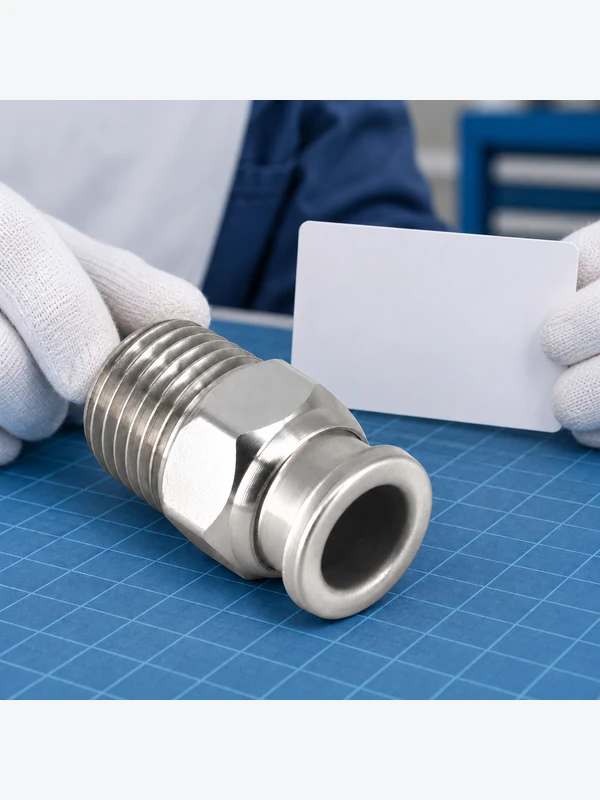
Verifique o número da peça e a revisão, meça as dimensões críticas com medidores calibrados, inspecione o acabamento e as vedações, monte as peças de acoplamento previstas e execute o teste de vazamento ou de pressão acordado. Registre o meio, a pressão, a duração, a temperatura, a identidade da amostra e o critério de aceitação. Uma amostra valida apenas as unidades e as condições testadas; a produção ainda requer um plano por lote.
Como as cotações podem ser comparadas de forma justa?
Compare fornecedores com base no mesmo desenho e Incoterm. Separe a pressão de trabalho, a pressão de prova e os dados de ruptura. Registre as suposições relativas à ferramentaria, ao revestimento, à marcação, à embalagem e ao MOQ. Uma declaração “100% testado” é incompleta sem o método, a identidade da amostra e o resultado.
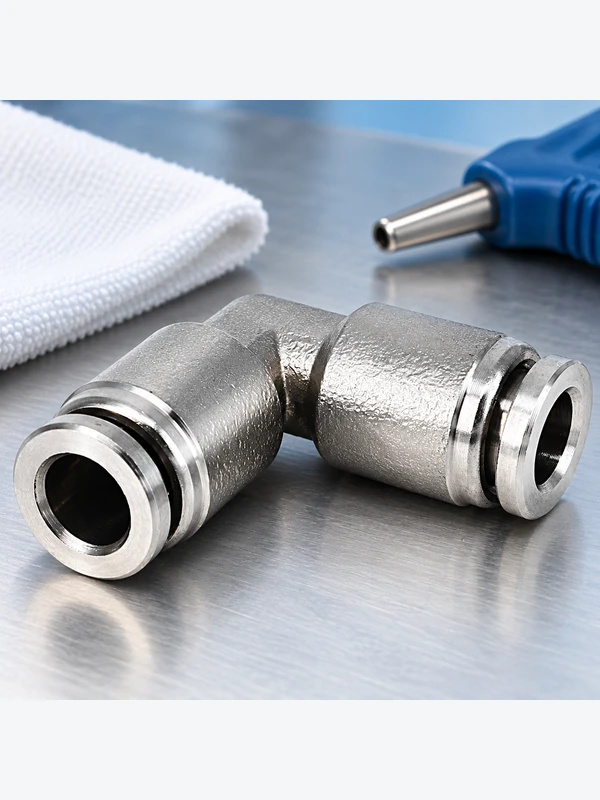
Use a categoria de peças pneumáticas, o gama de produtos e o página de contato apenas como pontos de partida para uma revisão documentada da interface.
Como um comprador pode auditar as evidências de produção?
Solicite ao fornecedor que relacione cada característica crítica a um medidor, a uma etapa de inspeção e a um registro. Para um encaixe de inserção, isso pode incluir o diâmetro interno do tubo, a geometria da garra, as dimensões da rosca, a presença do vedante e o resultado do teste de estanqueidade. Para um adaptador usinado, pode incluir o passo da rosca, a concentricidade e o estado da superfície. O objetivo não é exigir todos os documentos de fábrica; trata-se de garantir que as características que afetam o ajuste e a segurança sejam medidas e rastreáveis até o lote.
Verifique uma amostra retenida em relação ao desenho aprovado no início da produção e após qualquer alteração de material, ferramental, revestimento ou vedação. Pergunte como as peças não conformes são segregadas e como o comprador é notificado sobre uma mudança de engenharia. Se o fornecedor não conseguir explicar o controle de revisões, o risco comercial persiste, mesmo que as primeiras amostras sejam aprovadas.
| Pergunta de auditoria | Evidência útil | Sinal de aviso |
|---|---|---|
| As dimensões são controladas? | Lista de medidores, status de calibração e frequência de inspeção | Apenas uma verificação visual final |
| Os materiais são rastreáveis? | Registro do lote vinculado aos lotes da carcaça e da vedação | Declaração genérica de material sem link para lote |
| Os testes estão definidos? | Médio, pressão, tempo e critério de aceitação | “100% testado” sem método |
| Are changes controlled? | Revision history and notification process | Supplier substitutes parts without approval |
What should happen after a sample passes?
Approve a labelled reference sample, an inspection plan and a packaging specification. Define the production lot size, sampling level, leak-test frequency and nonconformance process before the order is released. For a high-consequence application, consider an independent inspection or audit proportionate to volume and risk. A supplier review is an ongoing control, not a one-time visit before a trade fair.
What should a supplier audit cover before a trade-fair quotation?
A catalogue review is only the first filter. Before treating a supplier as production-ready, send a controlled drawing and ask the factory to map each critical characteristic to a gauge, inspection step and record. For a push-in fitting, that may include tube bore, collet geometry, thread dimensions, seal presence and leak-test status. For a machined adapter, it may include thread pitch, concentricity and surface condition. The goal is to see whether the supplier can connect a requirement to repeatable evidence.
Request a labelled sample, revision history, material declaration, lot traceability, inspection plan, packaging specification and change-notification process. ISO 17025 is relevant when a laboratory’s competence and calibration traceability are part of the requested test evidence; it does not automatically certify the fitting. ISO 4414 and the applicable thread or compressed-air references help frame the duty, but the supplier must still identify the model and method.
| Audit step | Evidence to review | Red flag |
|---|---|---|
| Interface review | Approved drawing, thread standard, tube range and seal material | Quotation uses only a nominal size |
| Sample review | Measured dimensions, assembly and controlled leak test | Photos replace measurements |
| Production control | Gauge list, calibration status and lot records | Only a final visual check is described |
| Change control | Revision history and buyer notification route | Parts can be substituted without approval |
How should Canton Fair meetings become comparable decisions?
Use the official Canton Fair schedule and exhibitor directory to plan meetings, but compare every supplier against the same question set. Ask for tube OD and thread ranges, working-pressure definition, temperature and medium limits, MOQ, sample lead time, packaging, test frequency and engineering-change approval. Separate a sample commitment from a production MOQ, and record which claims were verified in a document rather than accepted from a booth conversation.
After the fair, score suppliers against the drawing, sample, evidence and commercial terms. Retain the approved sample and inspection plan before bulk release. ANMASPC/Oulu can be included in the same evidence-based comparison through its pneumatic parts range; the comparison should remain tied to the specified fitting and duty, not a general factory claim.
How should laboratory evidence and delivery terms be checked?
A test report should identify the item and revision, sample count, method, measured condition, result and laboratory. Check whether the lab’s accreditation scope covers the relevant test, rather than accepting an accreditation logo as evidence for every activity. The ISO/IEC 17025:2017 catalog entry identifies the laboratory-competence standard. It does not supply a pneumatic fitting pressure rating or confirm that an individual report represents the ordered production lot.
After the technical comparison, review who pays for tooling, replacement samples, inspection, packaging and rejected goods. Write the delivery basis and the point at which responsibility changes, and agree how a delayed or nonconforming lot is handled. These are purchasing controls, not evidence that one country or supplier category produces better fittings. Where a process is outsourced, identify who approves its output and notifies the buyer of a change.
The official schedule for the 140th Canton Fair in 2026 lists October 15-19, October 23-27 and October 31-November 4. Use the official Canton Fair site to confirm the relevant exhibition area, exhibitor and meeting arrangements before travel. An event date is not a guarantee that a particular fitting supplier attends every phase.
Perguntas frequentes
How can a buyer find a reliable air-fitting manufacturer in China?
Start with suppliers able to identify the exact seller, production location and responsibility for the specified part. Send the same drawing and duty to each candidate, then compare documented samples and production controls. A directory listing or fair booth establishes a contact, not manufacturing competence. Keep identity, technical acceptance and commercial terms as separate approval gates.
What should be asked at a Canton Fair supplier meeting?
Ask who manufactures the quoted item, which processes are subcontracted and who controls drawing revisions and material changes. Discuss tube and thread ranges, working limits, inspection records, sample lead time and production MOQ. Record document references rather than relying on booth claims. The fair’s official schedule and exhibitor information help arrange the meeting but do not qualify the product.
Does an ISO/IEC 17025 test report certify the fitting?
No. ISO/IEC 17025 concerns the competence of testing and calibration laboratories, not blanket approval of a component. Check the laboratory identity, accreditation scope and the method relevant to the reported result. Match the report to the actual model, sample and conditions. A report for another part or a method outside the relevant scope should not be substituted for the agreed acceptance evidence.
How can a buyer distinguish a manufacturer from a trading company?
Ask for the legal seller, actual production site, process responsibilities and the entity providing warranty and change notification. A trader can supply suitable parts, and a manufacturer can subcontract processes; the distinction alone is not a quality verdict. What matters is whether the buyer can trace the ordered part to its controlled production and inspection. Reflect those responsibilities in the purchase agreement.
Does a passing sample prove that the bulk order will be identical?
No. A sample demonstrates the condition of the tested units, not every future production lot. Approve a labelled reference sample together with the drawing revision, inspection plan and permitted change process. Specify how production lots will be identified and what happens if material, tooling or seals change. Retain incoming inspection evidence rather than treating the sample as a substitute for production control.
Is there a standard MOQ for air hose fittings?
There is no universal MOQ across machined adapters, molded bodies, seals, plating and custom packaging. Ask suppliers to separate sample quantity, initial production minimum and repeat-order terms. Compare quotations using the same drawing, packaging and delivery basis. A low unit price with a different revision, material or inspection obligation is not an equivalent offer.
Referências
- Canton Fair: official event and exhibitor information.
- ISO 4414:2010: escopo de segurança do sistema pneumático.
- ISO/IEC 17025:2017: testing and calibration laboratory competence.
Resumo
A supplier is ready for an air-fitting order when it can connect the requested interface to controlled production and traceable acceptance evidence. Start with the legal seller and actual manufacturing responsibility, then approve the drawing, representative sample and inspection method. Compare commercial offers on the same material, packaging and delivery basis rather than treating a low quotation as a technical result. Before bulk release, agree lot identification and how changes will be reviewed. A certificate logo, exhibition booth or passing sample cannot replace those controls. ANMASPC/Oulu can be considered through its pneumatic parts range, using the same model-specific evidence and approval sequence applied to every candidate supplier.



