
バーミンガムでメンテナンスエンジニアとして働くマヤさんが、継手の交換後に包装セルを再起動したところ、アクチュエーターが停止し、数分も経たないうちにマニホールドからヒューズ音が聞こえました。これは説明用の試運転シナリオであり、実際の顧客事例ではありません。最初の対応はコネクタを締め直すことでしたが、より有効だったのは逆の発想でした。つまり、必ずしも継手に不具合があったわけではなく、ポートが「1/4インチ」と指定されていたものの、それがBSP、BSPT、NPTのいずれであるかを確認しておらず、さらに交換用のチューブの外径(OD)も検査されていなかったのです。本ガイドでは、それらのインターフェースを適合させ、リーク経路を管理し、空気ラインに接続する前に空圧接続を文書化する方法を示します。.
短い答えは:確認する チューブ外径 そして、切断状態を確認し、図面または検証済みのゲージからねじの種類を特定したうえで、組み立て全体に対する継手の記録された耐圧および耐温度限界をチェックしてください。BSPP、BSPT、NPTは異なるねじ規格であり、公称サイズが同じだからといって互換性があるとは限りません。ISO 4414:2010では、コンポーネントの選定を安全な空気圧システム設計の一環として位置付けていますので、推奨される対応としては、設置前にチューブ、ねじ、使用条件、および受け入れ検査に関する情報を購入記録に記載することです。.
公称サイズが適切に見えるにもかかわらず、プッシュイン継手が機能しなくなるのはなぜですか?
プッシュイン継手には、別々に制御しなければならない2つの接続部があります。チューブはコレットとシール部分に挿入され、一方のねじ付き側は機械のポート、マニフォルド、またはバルブに接続されます。公称サイズとして「6 mm」、「1/4 inch」、または「G1/4」と記されたラベルは、その組み立ての片側のみを示している場合があります。チューブが座屈するには大きすぎたり、確実な保持には小さすぎたり、切断後に楕円形になったり、シールが接触する部分で傷が付いたりすることがあります。.
ねじ込み式の接続部は、異なる破損メカニズムを生じます。BSPP(しばしば「G」と表記)、BSPT(しばしば「R」と表記)、およびNPTは、それぞれ異なるねじ形状とシール方法を採用しています。寸法がほぼ一致していても、手締めではねじ山が噛み合わず、早期に底付きしたり、らせん状の漏れ経路が残ったりすることがあります。ポート図面、機器取扱い説明書、取り外した部品への印字、または確認済みのゲージによって、ねじの種類と公称サイズを特定する必要があります;外径の測定だけでは不十分です。.
流量の低下は、コネクタの不具合と誤診されることもあります。通路が狭いエルボ、汚れたフィルター、サイズの不足したバルブ、または長い配管路などが、アクチュエータの上流側で圧力損失を引き起こす可能性があります。継手、配管、レギュレータ、バルブを、ひとつの連続した空気経路として一括して確認してください。 空気圧部品のラインナップ コンポーネントの形式を比較するには有用な場ですが、最終的な選定には依然として機器メーカーのポートおよびサービスデータが必要です。.
エンジニアは、チューブの外径を継手にどのように合わせるべきですか?
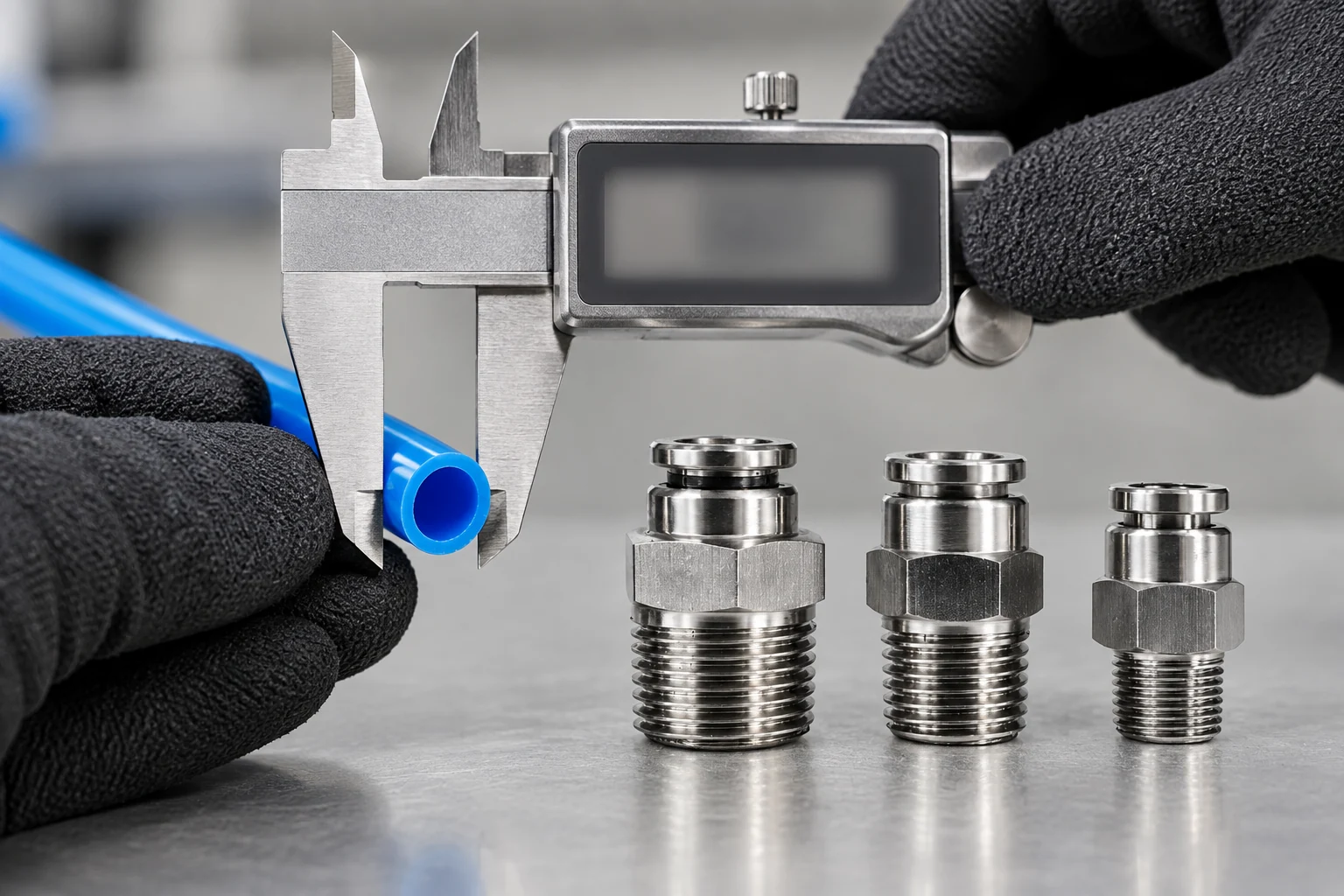
取り付け済みのチューブ仕様を基準とし、継手の包装箱ではなく、実際の外径、単位系、チューブ材質、管壁構造、およびメーカー公差を記録してください。交換用の場合は、チューブに記された表示または管理対象の部品表と、継手カタログの記載内容を照合してください。メートル法規格のチューブとインチ規格のチューブは、呼び寸法が近いように見えても互換性がないため、代替して使用しないでください。.
| チェックポイント | 記録すべき証拠 | なぜそれが重要なのか |
|---|---|---|
| チューブ外径 | 公称外径、単位、材質および供給業者の公差 | コレットとシールがチューブを保持できるかどうかを判定します。 |
| チューブ端 | スクエアカット、クリーンなエッジ、平面化や縦方向の傷なし | 均一なシール面と十分な挿入深さを確保します。 |
| ポートスレッド | BSPP/G、BSPT/R、またはNPT;公称サイズ;図面または取り外し部品の参照 | スレッドの交差を防ぎ、信頼性の低いねじ締結を防止します。 |
| 適合するジオメトリ | ストレート、エルボー、ティー、バルクヘッド、またはマニフォールド形状 | 曲げ半径、レンチのアクセス性、および意図された流路を保持します。 |
適切な工具を用いてチューブを直角に切断し、挿入前に円周を確認してください。チューブメーカーが明示的に許可している場合を除き、端部を過度に面取りしたり、くさび状の切り口を残したりしないでください。チューブを規定のストップ位置まで真っ直ぐ押し込み、その後、供給元が定める保持確認を行ってください。軽い引き検査で組み立て状態を確認できますが、プロジェクト仕様に定められた圧力試験や漏れ試験の代わりにはなりません。配管を動かした際にチューブが過度に回転したり、抜けたり、外れたりする場合は、無理に締め付けず、切断面、外径、およびコレットを点検してください。.
BSP、BSPT、NPTのねじをどのように見分けることができますか?
ねじの識別は、管理された情報源に基づいて行う必要があります。BSPPは平行ねじで、一般的に面密閉、接着ワッシャー、またはOリングを用います。BSPTはテーパー付き英国管用ねじであり、NPTは独自のプロファイルとゲージ基準を持つ、別系統のテーパー付き米国管用ねじ規格です。これらの公称サイズ表記は類似している場合がありますが、ピッチ、側面角、および密封方式は異なります。.
ポート図、適切なねじゲージ、または製造元の明記された識別情報を使用してください。写真や外径のみからねじを推測してはなりません。オスまたはメスの形式、公称サイズ、シール材、および締め付け手順を記録してください。ねじ用シール剤は変換手段ではありません。指定されたねじおよび媒体と互換性があり、エア経路に混入したり、継手の確実な嵌合を妨げたりしないものでなければなりません。.
| スレッドの注釈 | 基本インターフェース | 購入者認証 |
|---|---|---|
| BSPP / G | 指定された面または接着密閉構造を有する平行ねじ | ポート規格、ワッシャーまたはOリング、シート面および締め付け指示 |
| BSPT / R | 指定されたシーリング方式を用いたテーパーBSPねじ | 男性/女性の指定、シーラントのルール、噛み合いおよび利用可能深さ |
| NPT | 異なるプロファイルとゲージ基準を有するテーパー形状の米国管用ねじシステム | NPTサイズ、接続ポート、シーラントの適合性、および図面またはゲージによる証拠 |
| 未確認の「インチ」ラベル | スレッドシステムを用いない表記 | 注文を一時停止し、代替品を使用する前に適切な識別情報を取得してください。 |
「BSPかNPTか」という問いに対する率直な答えは、どちらが普遍的に優れているわけではないということです。正しい選択肢は、機器にすでに備わっているねじ山であり、マシンビルダーが文書化されたポートの変更を承認した場合を除きます。数回しか締め込めない、または異常に強い力が必要な継手は取り外し、再確認してください。無理に締めると、コネクタよりも修理費用の高いマニホールドを損傷する可能性があります。.
仕様書には、どの圧力・温度・流量の詳細を記載すべきですか?
圧力と温度は併せて評価しなければなりません。継手の公表された使用範囲、試験根拠、温度範囲、使用流体の制限、および本体・シール・チューブ・ねじの具体的な構成に応じた降下係数を必ず確認してください。破裂値や短時間の実験室での測定値、あるいは他サイズの定格をそのまま連続運転限界として扱わないでください。ISO 4414:2010は安全な空気圧流体動力システムに関するものであり、あらゆる市販継手に対する普遍的な耐圧定格を設定するものではありません。.
実際の空気品質および環境条件も記録してください:乾燥空気または潤滑空気、水分の混入、洗浄用化学薬品、屋外への暴露、アクチュエータ近傍の熱、そして繰り返し動作といった要因はすべて、本体やシールに影響を及ぼす可能性があります。カタログに流量または圧力損失のデータが記載されている場合は、メーカーが示す条件を必ず使用し、回路全体を比較検討してください。曲線図が提供されていない場合は、チューブの外径から流量値を推測するのではなく、必ず提供を依頼してください。.
移動式設置の場合、コネクタに曲げ応力がかからないようにチューブを配線してください。長距離の配管には支持を取り付け、指定された曲げ半径を維持し、保守時に解放リングを押下できるようアクセススペースを確保してください。 空気圧継手の保守ガイド それらのチェックを繰り返し実施可能な検査ルーチンへと変えるのに役立ちます。.

交換部品と互換性にはどのような変更がありますか?
交換互換性は、カタログ上の製品名が一致するだけでは十分ではありません。部品に要求される場合は、チューブ外径、ねじ形状、本体形状、シール面、ポート深さ、リリースアクセス、流路方向を比較してください。見た目が似ているエルボでも、内部流路やレンチアプローチの寸法が異なる場合があり、使用するシール材が異なると耐薬品性や耐温度範囲が変わることもあります。.
Keep the removed-part label, new-part datasheet and fit check together. If one field is unknown, quarantine the substitute until the equipment owner or component supplier confirms it. Record the installation date, circuit location and acceptance check so the next maintenance technician does not have to identify the thread from memory. The products directory can help locate a matching form factor, but the controlled drawing remains the approval document.
How do ISO 4414 and ISO 12100 affect procurement?
ISO 4414:2010 provides general rules and safety requirements for pneumatic fluid-power systems and their components. In procurement terms, the connector should be considered with isolation, stored energy, pressure control, routing and maintenance access. ISO 12100:2010 provides a machinery risk-assessment and risk-reduction framework; it helps the machine builder address unexpected movement, hose release and maintenance hazards. Neither standard should be presented as a product certification unless relevant conformity evidence exists.
The U.S. Department of Energy’s industrial compressed-air resources also treat leakage and pressure management as system issues. The commercial consequence is practical: require the thread designation, tube data, material information, pressure-temperature basis and installation instructions before approving a substitute. Tie those records to the technical file so future replacement decisions remain auditable.
What is a practical selection and installation checklist?
- Identify the interfaces: record tube OD, material, cut condition, thread family, nominal size and fitting geometry.
- Match the service: state normal and transient pressure, temperature, medium, vibration, chemicals and air quality.
- Check the flow path: compare the internal passage and geometry with the valve, regulator, actuator and tube run.
- Control installation: isolate stored energy, cut square, insert to the stop, confirm retention and support the route.
- Document acceptance: perform the approved leak or pressure check and retain the result by circuit location.
Oulu / ANMASPC (Zhejiang Oulu Automatic Equipment Co., Ltd.) supplies pneumatic push-in fittings, tubing, valves, cylinders and related parts for B2B sourcing. Treat that range as a starting point for a documented proposal: send the tube OD, port thread, service conditions, geometry and replacement requirement so the supplier can confirm a configuration rather than offer a visually similar connector. For a machine with multiple control functions, the ソレノイドバルブの種類ガイド can help keep valve and fitting decisions aligned.
What the latest thread-matching questions reveal
Google’s related questions continue to separate three decisions that are often mixed together: tube outside diameter, thread form and working limits. BSPP, BSPT and NPT should be identified from controlled drawings or datasheets; visual similarity is not proof of interchangeability. ISO 4414 and ISO 12100 help set the system-safety discipline, while the fitting datasheet remains the source for the exact pressure, temperature, media and flow limits.
For a replacement project, send the old fitting code or drawing, tube OD, thread callout, machine zone, service medium and operating conditions. The 空気圧部品のラインナップ そして メンテナンスガイド provide the internal path for matching the part without relying on a photo alone.
よくある質問
How do you check flow direction and airflow loss through the Push In Fittings?
Trace the air path from the regulator through the fitting, tube, valve and actuator, then compare the supplier’s passage or pressure-drop data at the actual service conditions. A directional component or restrictive elbow may need orientation shown on the assembly drawing. If no measured curve is available, record that limitation and ask the supplier rather than assigning a flow value from nominal size alone.
What signs show that the collet or O-ring in the Push In Fittings needs replacement?
A tube that backs out, rotates excessively, leaks after a clean square cut or shows damage at the sealing zone warrants inspection of the collet and O-ring. Depressurize and isolate the circuit, then compare the parts with the manufacturer’s service instructions. Replace components that are worn, contaminated, cut or no longer provide documented retention.
How do you match tube outside diameter to the Push In Fittings?
Use the tube marking, controlled specification or an approved measurement method to confirm the actual OD, units, material and tolerance. Compare those details with the fitting drawing, and inspect the end for ovality, scratches or contamination before insertion. A nominal label or a tube that “almost fits” is not sufficient evidence of compatibility.
How can you tell whether a Push In Fittings uses BSP, BSPT or NPT threads?
Use the equipment or fitting drawing, a verified thread gauge or written manufacturer identification. BSPP/G is parallel, BSPT/R is tapered and NPT is a separate tapered system; the nominal size alone cannot distinguish them reliably. Confirm the mating port, sealing method and tightening instruction before ordering.
Why does the Push In Fittings leak even after the fitting has been tightened?
Tightening the threaded side cannot correct a wrong thread form, undersized tube, damaged tube end, incomplete insertion, worn collet or unsuitable seal. Isolate the line, inspect both interfaces and replace any component outside the documented condition. Finish with the project’s approved leak or pressure check rather than relying on the absence of an audible hiss.
What working pressure and temperature should the Push In Fittings support?
The fitting, tube and seal should support the highest documented pressure and temperature of the complete circuit, including start-up, shutdown and cycling. Use the supplier’s value for the exact configuration, medium and installation method; do not transfer a rating from another size or material. Record the rating basis and any derating or environmental limits with the purchase documentation.
Does the same nominal thread size make BSP and NPT interchangeable?
No. Thread form, pitch, taper and sealing method can differ. Confirm the standard from the drawing or datasheet and use the approved adapter or fitting rather than forcing a visually similar thread.
What should be written on a push-in fitting replacement request?
State tube OD and material, port thread and standard, medium, pressure and temperature, motion or vibration, required orientation, quantity and the existing fitting code or drawing. Those fields let a supplier check the complete interface.
参考文献
- ISO 4414: Pneumatic fluid power – general rules and safety requirementsOfficial ISO standard page; system-safety boundary.
- ISO 12100:機械の安全性―リスクアセスメントおよびリスク低減Official ISO standard page; machinery-risk reference.
- ASME B1.20.1: Pipe Threads, General Purpose (Inch)Official ASME standard page; controlled thread identification reference.
結論
A dependable Push In Fittings connection starts with identification, not tightening force. Confirm the tube OD and cut condition, identify BSPP, BSPT or NPT from controlled information, and compare the exact pressure and temperature duty with the supplier’s documented limits. Then check the flow path, geometry, vibration support and replacement interfaces as one connected decision. ISO 4414 and ISO 12100 provide useful system discipline, but neither replaces a fitting datasheet or a controlled commissioning check. Oulu / ANMASPC can help B2B buyers compare pneumatic fittings, tubing and related parts when the request includes port, tube and service data. The principle is simple: match evidence to every interface, document the choice, and only then pressurize the machine.
For a project-specific recommendation, review the 空気圧部品のラインナップ and contact the supplier with your tube OD, thread, pressure, temperature and application details.



