Consider a hypothetical repair at a factory in Sheffield. A technician receives the requested steel elbow, but discovers that its connection type differs from the removed part and its release collar cannot be reached behind the machine frame. The replacement looks strong and its nominal size seems familiar, yet the machine remains stopped. The missing information was interface and access, not simply material quality.
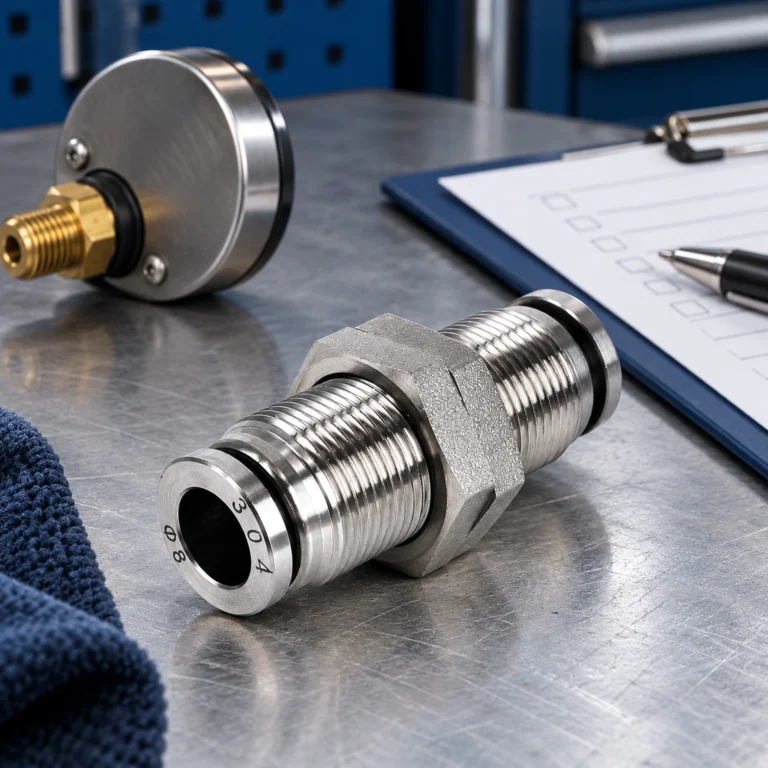
Sélectionner steel pipe fittings for pneumatic maintenance by identifying the complete connection, checking the operating duty and planning how the part will be serviced. The term can describe rigid pipe joints, threaded adapters or all-metal push-in tube fittings. Those families are not interchangeable. A reliable spare-parts list states which one is required and includes the details needed to install it correctly.
Separate rigid pipe joints from push-in tube connections
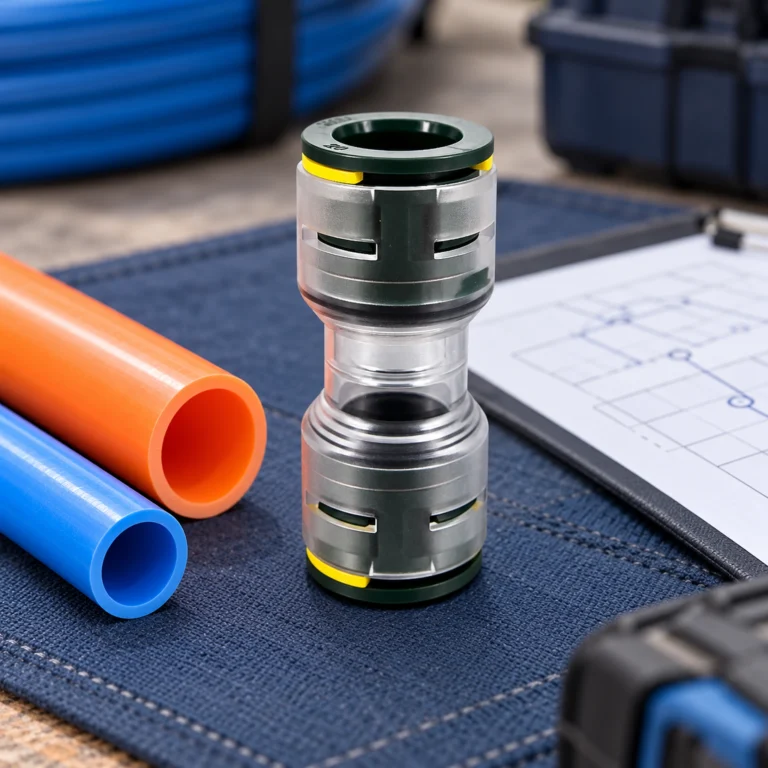
A rigid pipe coupling and a pneumatic push-in union may both connect an air line, but their installation methods differ. A push-in socket is selected around approved tube outside diameter and material. A threaded pipe joint is selected around its thread standard, nominal size and sealing arrangement. A ferrule connection has its own tube and assembly requirements. Start by identifying the family before comparing prices or body materials.
Also distinguish carbon steel, stainless steel and plated construction. The word steel does not identify the corrosion behaviour or every wetted material. Seals, collars and gripping components may impose limits different from the body. For a mixed installation, record the exact part code and its approved duty rather than treating all metallic connectors in the machine as equivalent stock.
SMC’s KQG2 catalogue is a useful example of series-specific documentation: it separates body and seal materials, tube requirements and mounting precautions. Those values describe that series, not an unspecified steel fitting. Request comparable information from the supplier of the actual part. Where long service is the concern, the stainless tube fitting service-life guide explains the operating factors that deserve attention.
| Family | Primary matching information | Maintenance implication |
|---|---|---|
| Push-in tube fitting | Tube OD, material and series approval | Access to release collar and sound tube surface |
| Threaded pipe adapter | Thread form, size and seal arrangement | Wrench clearance and port condition |
| Ferrule tube fitting | Approved tube and fitting system | System-specific assembly and reuse instructions |
| Bulkhead connector | Both fluid ends plus panel mounting | Separate mounting and pressure-interface checks |
Make room to inspect, release and replace the fitting
Maintenance access should be assessed in the installed position. Can the technician see the connection, reach the release collar, place the correct wrench and withdraw the tube without removing unrelated equipment? A compact elbow may save space initially but add substantial downtime if it becomes buried behind a frame or cable bundle. Review the whole replacement operation before approving the layout.
Allow enough tube length for a supported route and future removal without creating a loose loop that rubs moving equipment. A tight bend immediately outside the socket can load the seal and gripping mechanism sideways. Check the tube manufacturer’s bend requirement and any straight-entry guidance from the fitting supplier. Do not assume a stronger body makes this loading acceptable.
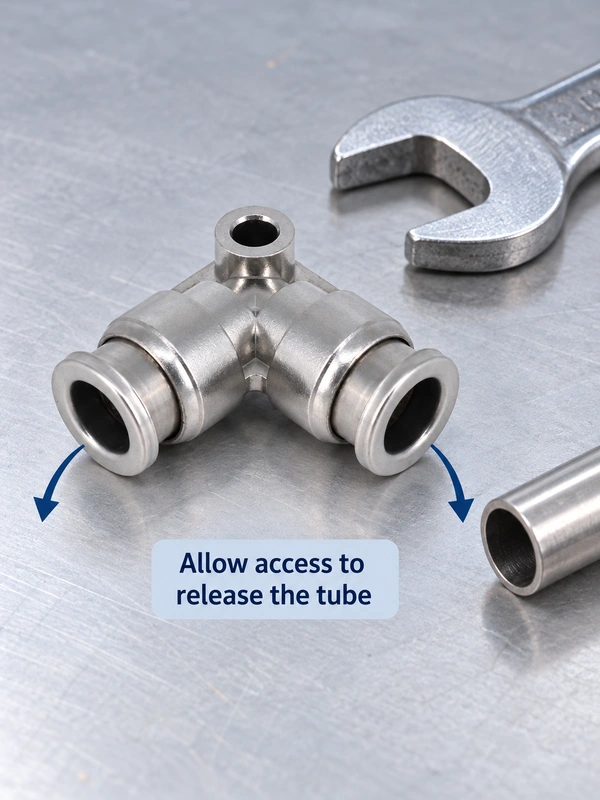
Machine vibration and movement deserve separate observation. A connection may be stable with the machine idle yet pulled during a stroke or pressed by a moving guard. Check that nearby objects cannot operate the release collar accidentally. A body that can be repositioned during installation is not necessarily a continuous swivel; use a component specifically approved for rotation where that function is needed.
Document access with the machine’s maintenance instructions. Identify the isolation point, any trapped-pressure sections and the order in which guards must be removed. The stainless air fitting maintenance guide provides a broader checklist for cleaning and inspection. Good access helps technicians follow the procedure rather than improvise around an inaccessible joint.
Keep corrosion, seals and operating limits in the same review
Check the external environment as well as the compressed air. A sheltered cabinet differs from a washdown area, a humid enclosure or a machine exposed to process chemicals. ASSDA explains that stainless corrosion depends on concentration, temperature, contaminants and crevices. Upgrading a body to stainless can therefore be useful without providing universal protection against every cleaner or chloride exposure.
Compare the exact seal material with the actual medium and cleaning exposure. A metal body can remain visually sound while a seal becomes unsuitable. Pressure and temperature must also be reviewed together, including the connected tube and foreseeable surges. Do not use proof pressure as the working limit or transfer a broad catalogue temperature range to a complete plastic-tube assembly.
Surface appearance does not prove certification. If the project requires material traceability, cleaning documentation or a defined test, specify the document and the delivered variant it must cover. A company certificate, an alloy statement and an assembly test report answer different questions. Requiring the correct evidence avoids paying for paperwork that does not resolve the actual maintenance risk.
Check airflow before adding adapters to make a spare fit
Stacking reducers and elbows can make a spare connect physically while introducing additional interfaces and a more restrictive route. Review the smallest passages, tube bore and total path length. A nominally larger outside body does not establish better airflow. Use comparable manufacturer flow information where available and observe pressure during the machine’s demand cycle when troubleshooting performance.
Distinguish ordinary passage fittings from components that contain check valves or flow-control functions. Do not assign flow direction from shape alone. Read the actual marking and documentation. An elbow that merely changes routing should not be described as a one-way valve, and a metering component should not be replaced with a plain union simply because the end sizes match.
DOE’s compressed-air guidance supports tracking leakage and verifying repairs. Apply that principle after any fitting substitution: check the joint and the machine’s operating behaviour, then record the result. Raising supply pressure to compensate for a new restriction can increase leakage elsewhere and should not replace diagnosis of the changed flow path.
Build the spare-parts list around complete interfaces
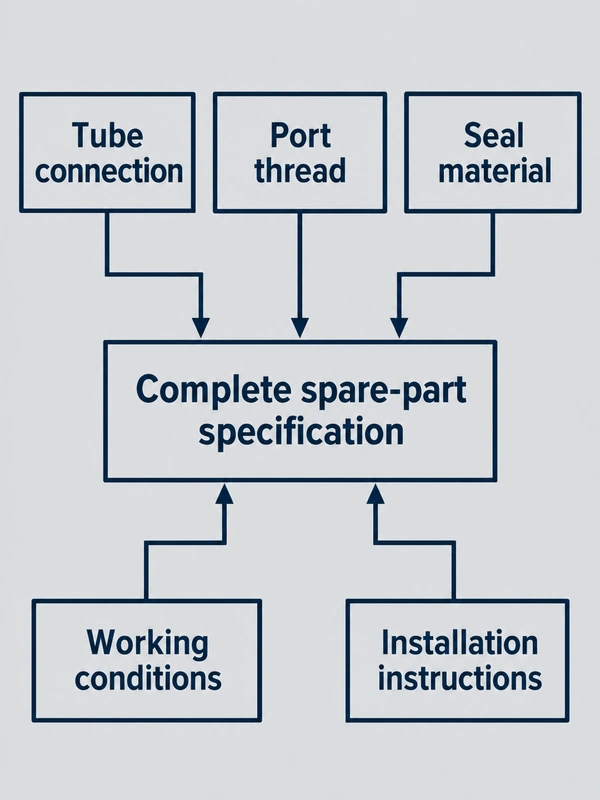
Un outil utile spare-part specification includes every mating connection, body and seal identity, approved tubing, operating duty and installation instructions. Include shape and clearance where access is limited. If a substitute is proposed, compare the complete set rather than only the nominal size. Record the approved substitution so the next repair does not repeat the investigation.
| Champ | Que faut-il enregistrer | What it prevents |
|---|---|---|
| Interface à tube | OD, units, polymer and tolerance | Leaks or pull-out from mismatched stock |
| Interface de port | Thread family, nominal size and seal | Incorrect engagement and repeated sealing work |
| Enveloppe opérationnelle | Pressure, temperature, medium and exposure | Unsupported material substitutions |
| Access | Tool space, release space and tube route | Unnecessary dismantling during repair |
| Acceptance | Inspection and approved test procedure | Returning an unverified repair to service |
For example, the Oulu Coude à union inoxydable listing identifies a change-of-direction product. Its photograph helps establish the visible form, but it does not justify inventing a third flow port from a mounting feature or assigning an unconfirmed assembly rating. Request the drawing and current limits for the exact ordered variant before approving it as a machine spare.
Compare total maintenance cost using actual work requirements. Include identifying the part, gaining access, isolating the branch, replacing damaged tube, installing the fitting and verifying the result. A lower unit price may be offset by repeated downtime; an expensive material may add no value in a protected duty. The practical aim is a documented, accessible replacement that solves the observed failure.
Foire aux questions
Why can tubing release from a steel fitting under vibration?
Possible causes include incorrect tube size, incomplete insertion, damaged gripping parts and changing side loads. Inspect the route throughout machine movement and check for accidental collar contact. The strength of the body does not compensate for an unsuitable tube or faulty installation.
Is plastic, brass or stainless steel better for maintenance?
Select according to the complete duty and the approved assembly, including seals and tubing. Stainless may suit some exposures, while other materials may be appropriate in protected service. Compare access, documentation and replacement consistency rather than ranking materials universally.
How do you check flow direction and airflow loss?
First determine whether the part is a plain passage fitting or includes a directional or metering function. Use its documentation and markings. Assess pressure under a repeatable load across the relevant section; static pressure alone cannot reveal every flow restriction.
What indicates that the collet or seal needs replacement?
Persistent leakage after correct tube preparation, unreliable retention, visible damage or abnormal collar operation warrants investigation. Replace internal parts only if the manufacturer supplies an approved service procedure and compatible components. Otherwise replace the complete fitting rather than rebuilding an unknown assembly.
How do you match tube outside diameter?
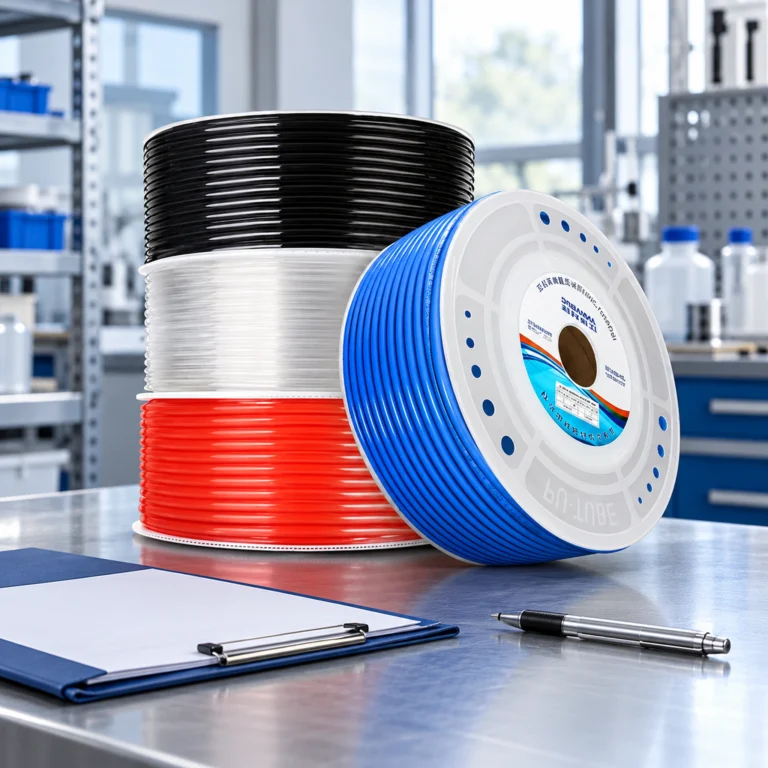
Use the tube marking and verified specification, checking units, material and tolerance as well as nominal OD. Inspect for distortion before measuring a used sample. A matching inside diameter or an approximate visual fit does not establish push-in compatibility.
How can you identify BSP, BSPT or NPT threads?
Use the part code, port drawing or suitable thread gauges to determine standard, nominal size and taper. Confirm the required sealing arrangement separately. Similar diameter and partial engagement are not sufficient proof that two threaded parts belong together.
Références
- SMC: KQG2 stainless fitting construction and precautions
- ASSDA: General Corrosion Resistance
- U.S. DOE: Minimize Compressed Air Leaks
Résumé
Reliable pneumatic maintenance starts with correctly identified interfaces and enough room to service them. Check material exposure, airflow and the complete operating envelope, then keep the approved replacement and test information with the machine. For Oulu steel elbow fitting enquiries, provide the tube and port details alongside a layout or clearance requirement so the selected part works for the next repair as well as the first installation.