
وقتی مایا، ناظر نصب فیبر در یک سناریوی نمایشی در روتردام، با یک اتصال نشتکننده مواجه شد، لوله HDPE را دوباره برش داد و آن را به داخل یک اتصال مشخصشده برای کار فرو کرد. با این حال، سنج فشار همچنان ظرف یک دقیقه کاهش یافت. بررسی با پیچهگونی نتیجه را معکوس کرد: اتصال بهطور خودکار “ناکارآمد” نبود؛ بلکه در پرونده خرید از اصطلاحات مختلفی برای قطر اسمی لوله استفاده شده بود – از جمله اندازهگیری قطر بیرونی – و نوع اتصال نیز اشتباه بود.
خلاصه: انتخاب کنید اتصالدهنده میکرودکت 12.7mm Dura-Line بر اساس ابعاد تاییدشده کانال، نه بر اساس یک برچسب “به اندازه کافی نزدیک”. Dura-Line کاپلر مستقیم 12.7 میلیمتری خود را برای میکروکانال با قطر داخلی 12.7 میلیمتر و OD/10 میلیمتر فهرست کرده و حد استفاده 232 psi/16 بار را برای دامنه کاپلر منتشر کرده است.[1][2] قطر بیرونی لوله را اندازهگیری کنید، طراحی دقیق قطعه را تأیید کنید، یک انتهای مربع و بدون خسارت آماده کنید، و مسیر مونتاژ شده را با استفاده از روش پروژهای تأییدشده و بر اساس زمان تعیینشده تحت فشار آزمایش دهید.
نکته نشان تجاری: دورا-لاین یک برند سوم است. این راهنمای انتخاب مستقل هیچگونه ادعا دربارهٔ وابستگی، تأیید، ساخت مشابه، قابل عوض کردن بودن، معادل بودن یا جایگزین بودن برای محصولات هیچکدام از تأمینکنندگان دیگر ندارد.
چرا برچسب 12.7 mm سازگاری را تأیید نمیکند
فهرست رسمی Dura-Line قطعه 20001832 را به عنوان یک اتصال مستقیم با قطر خارجی/داخلی 12.7/10 میلیمتر شناسایی میکند و اتصالات انتقالی جداگانهای را برای قطرهای نامساوی فهرست میکند.[1][2] این مهم است زیرا 12 میلیمتر، 12.7 میلیمتر و 14 میلیمتر رابطهای متفاوتی هستند، حتی اگر خدمه به طور غیررسمی آنها را “کانال نیم اینچی” صدا کنند.
The لوله کوچک متعلق به یک سیستم فویش است. ITU-T L.108 ویژگیها و آزمایشات مربوط به واحدهای فیبری و کابلهای میکروکانال فویش شده را پوشش میدهد، در حالی که IEC 60794-5-20:2014 واحدهای میکروکانال بیرونی، میکروکانالها و میکروکانالهای محافظت شده را پوشش میدهد.[3][4] هیچکدام از این استانداردها، یک اتصالدهنده نامشخص را بهعنوان یک اتصالدهنده مطابق با استاندارد تأیید نمیکند. این راهنمای اندازهگیری و نشت هوایی مکانیسم شکست گستردهتر را توضيح ميدهد.
از قطر بیرونی برای هماهنگ کردن اتصال و از قطر داخلی برای بررسی مسیر هوایی استفاده کنید.
قطر خارجی واقعی را با یک کالیپر کالیبرهشده در چندین نقطه و جهت مختلف اندازهگیری کنید. در لیست Dura-Line، 12.7 میلیمتر قطر خارجی است که بر اتصال حاکم است؛ 10 میلیمتر نیز سوراخ داخلی است.[1] فقط بر اساس شناسه انتخاب نکنید یا بدون داشتن نقشه کنترلشده، برچسب انچ را تبدیل نکنید.
بیضوی بودن، آسیب سطحی، تolerance دیواره و اینکه جوش مستقیم یا انتقالی است را ثبت کنید. ITU-T L.108 همچنین بر کنترل ابعاد و سطوح داخلی با اصطکاک پایین برای فرایند باد کردن تأکید میکند.[3] بنابراین، تأیید نیازمند هم گرفتن صحیح از بیرون و هم یک سوراخ متحد صاف است.
پیش از نصب کاپلر، انتهایهای HDPE را آماده کنید.
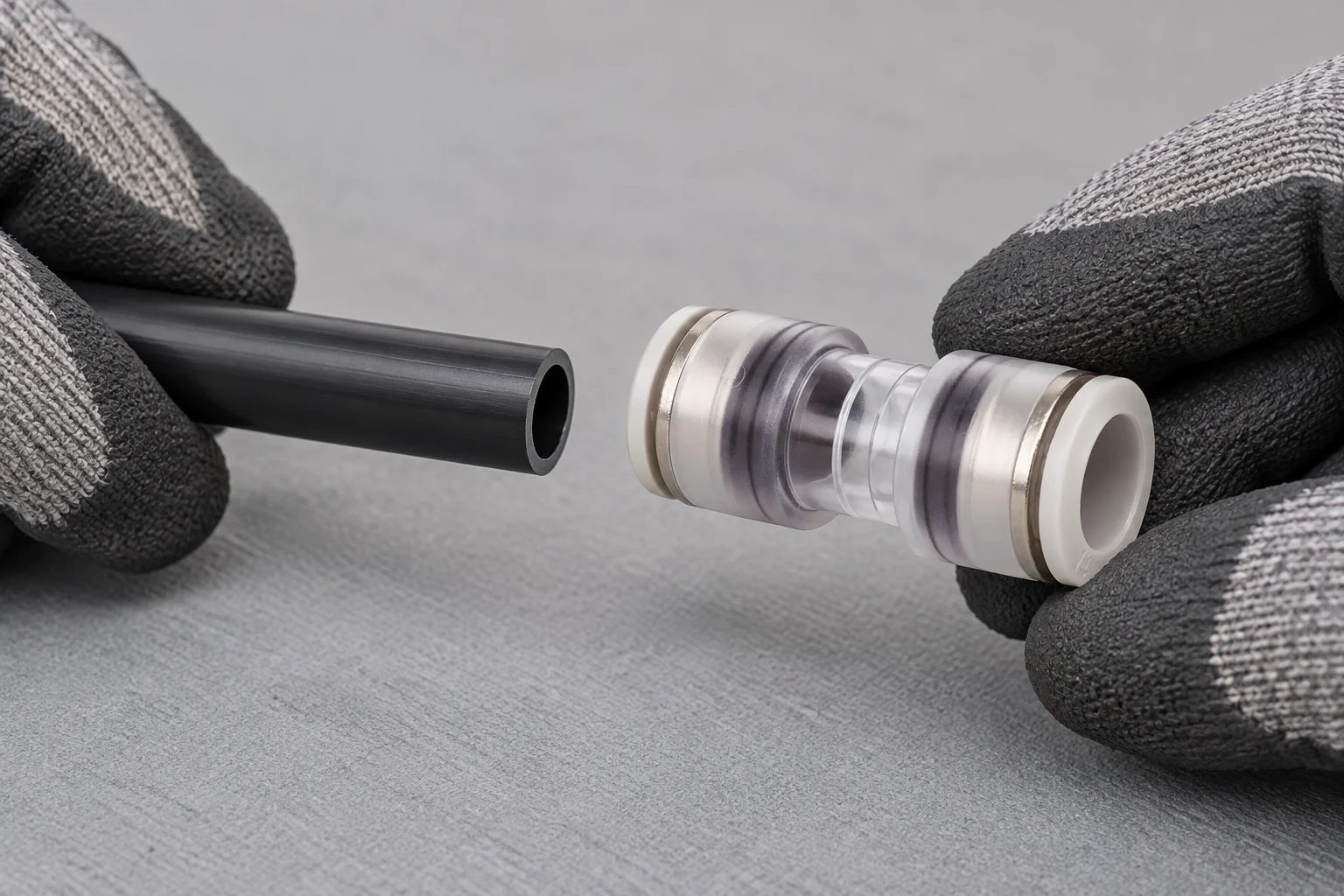
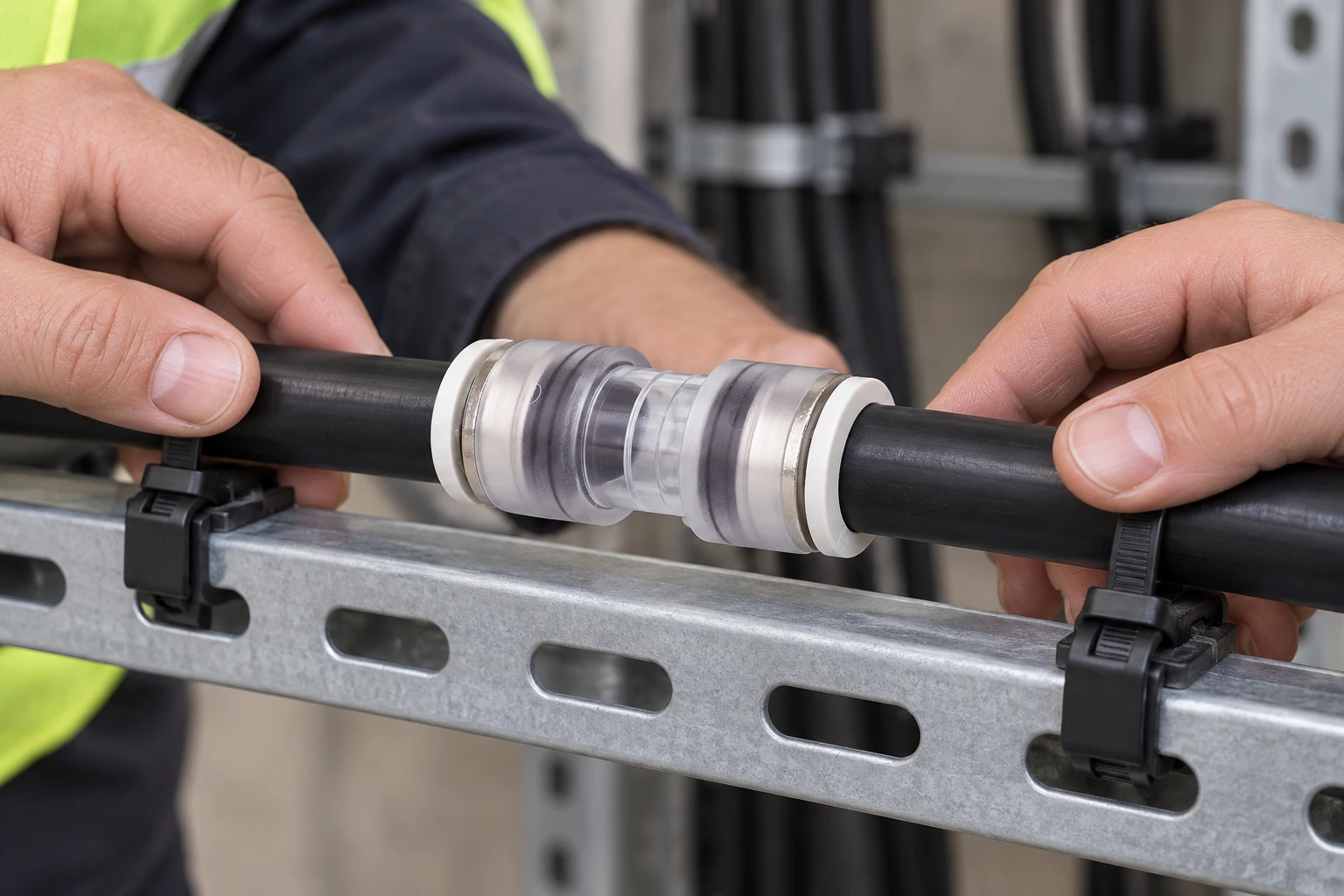
سر هر دو انتهای HDPE را به صورت مربع ببرید؛ خراشها، آب، باقیماندهها و لبههای تیز را حذف کنید؛ و گردی و جوشکاری را بررسی کنید. هر دو انتهای را تا حد متوقف مشخص شده وارد کنید و هر نوع قفل مورد نیاز را نصب کنید. Dura-Line نحوه مونتاژ/تفکیک بدون ابزار را توضیح میدهد، اما این موضوع عمق ورود یکسانی را برای همه ایجاد نمیکند.[1][2] یک جسم شفاف میتواند موقعیت را تأیید کند، نه اینکه محکم بسته باشد.
مگر اینکه تولیدکننده اجازه دهد، هرگز یک حلقه O را خراش ندهید، کش ندهید یا روغنکاری نکنید. بدنه، دسته و مهره را برای آسیب یا آلودگی بازرسی کنید. دوباره برش دهید لوله میکرو وقتی یک نشانه قبلی گرفتن یا آسیب به منطقه مهر و موم رسیده باشد.
قبل از تعویض کاپلر، منبع از دست رفتن هوا را پیدا کنید.
یک نشت فشار را قبل از اینکه هوای مفید به کابل برسد آزاد میکند، که باعث کاهش مسافت فویلینگ یا توقفهای مکرر میشود. ITU-T L.108 زمینه سیستم را فراهم میکند، نه تأیید کننده.[3] این را ببینید شرح کلی نصب فیبر مایکرو با هوا سوزانده شده.
Dura-Line 232 psi/16 را برای محدوده میکرو-کوپلر خود منتشر میکند.[1][2] این یک محدوده تولیدکننده است، نه فشار آزمایش میدانی خودکار؛ پایینترین اجزای رتبهبندیشده مسیر کنترل میشوند. هزینه نمایشی: شش اتصال در 20 دقیقههای عزل و بازکاری دو ساعت کار را میگیرد، بدون در نظر گرفتن بازتوزیع. بنابراین، اندازهگیری و آزمایش مستند شده میتواند بر صرفهجویی جزئی در قیمت واحد غلبه کند.
اثبات UV و دما را برای استفاده در فضای باز بررسی کنید
قابلیت استفاده در فضای باز نمیتواند از رنگ یا شفافیت استنباط شود. IEC 60794-5-20:2014 عناصر سیستم میکروکانالی در فضای باز را پوشش میدهد، و ITU-T L.108 آزمونهای زیستمحیطی از جمله روشهای مربوط به دما و اشعه UV را در بر میگیرد.[3][4] اینها هر اتصال را معتبر نمیکنند. صفحات Dura-Line ذکر شده، هیچ دامنه دما یا نتیجه UV خاص به میلیمتر 12.7 را مشخص نمیکنند، بنابراین درخواست گزارش جدید و اختصاصی برای قطعه با روش، شرایط و معیارهای پذیرش کنید.
مقایسه اتصالدهندهها بر اساس اندازه، عملکرد و شواهد حمایتی
| گزینه | زمانی که باید آن را در نظر گرفت | شواهد تأیید | تبعات TCO |
|---|---|---|---|
| 12.7/10 متر اتصال مستقیم Dura-Line | هر دو سر با OD ثبتشده مطابقت دارند. | طرح فعلی، دادههای قطعه و محدودیتهای پروژه | میتواند عدم قطعیت در تأیید و بازکاری را کاهش دهد |
| پیوست مستقیم میلیمتری 12.7 سوم ثبتشده توسط طرف سوم | خریدار به صورت مستقل از مناسب بودن و محیط تأیید میکند. | دادههای طراحی، تنیدگی، فشار، مواد، اشعه فرابنفش و دمایی | آزمایش، رد و زمان توقف را در نظر بگیرید |
| اتصالکننده انتقالی مستند شده | قطرهای خارجی تأییدشده لولهها متفاوت است. | هر دو ابعاد انتهایی و گذاره سوراخ | اگر تأیید شود، میتوان از تعویض لولهکشی جلوگیری کرد. |
| اتصال گنریک نامشخص | هیچ پروندهای بدون داده معتبر نیست. | قبل از استفاده، مدارک گمشده را حل کنید. | هزینه پایین ممکن است با نیاز به بازکاری جبران شود. |
ستونها دستهبندیهای خرید هستند، نه اعلام معادل بودن. یک کانکتور سومجانبه باید بر اساس مستندات و نتایج نمونه خود ارزیابی شود؛ تنها یک اندازه اسمی مطابق، به تنهایی قابلیت تعویضپذیری آن را با Dura-Line ثابت نمیکند.
از آزمایشهای نشتی و جلوگیری از حرکت برای هدایت نگهداری استفاده کنید.
| سیگنال مشاهدهشده | احتمالاً مشکلی در مورد مشخصات یا فرآیند است | چک کنترل شده بعدی | پیامد تجاری در صورت نادیده گرفتن |
|---|---|---|---|
| فشار بلافاصله کاهش مییابد | OD نادرست، ورود ناقص، مهر و موم آسیبدیده یا نقطه باز دیگری | بخشها را جدا کنید؛ شماره قطعه، قطر خارجی، ورودی، شیرها و کلاهکهای انتهایی را بررسی کنید. | تلاشهای متعدد برای باد کردن و تأخیر خدمه |
| کانال بیرون کشیده میشود | دامنه گرفت، سطح لوله، گام قفلشدن یا نیاز به بار محوری حل نشده است. | آزمایش را متوقف کنید و مونتاژ را با طرح و روش تأییدشده مقایسه کنید. | شکست مسیر، بازکاری و احتمال آسیب به کابل |
| شکاف قابل مشاهده از طریق بدنه شفاف | پایان کاملاً وارد نشده یا برش زاویهدار است | فشار را کاهش دهید، به درستی آزاد کنید، دوباره ببرید، تمیز کنید و مجدداً نصب کنید. | عدم موفقیت در بازرسی و تحقیق درباره نشتی |
| نشت تنها در شرایط سرد یا گرم ظاهر میشود. | دامنه دما یا سازگاری مواد اثبات نشده است. | برای شرایط مقصد، مدارک سوارکاری مخصوص قطعه را درخواست کنید. | Seasonal callouts and warranty disputes |
| Outdoor body degrades | UV exposure class or installation protection was not specified | Review test method, duration, acceptance criteria, and enclosure/shielding plan | Premature replacement and schedule risk |
Match Each Standard to the Claim It Supports
- Dura-Line documentation: the official micro-coupler page and December 2025 specification sheet identify the 12.7/10 mm straight coupler, state 232 psi/16 bar approved use, and state testing to meet or exceed CENELEC EN 50411-2-8:2009.[1][2] These are manufacturer statements; buyers should obtain current documents for the ordered part and destination.
- EN 50411-2-8: Dura-Line describes this as the standard for microduct connectors used with air-blown optical fibers.[1] Quote the edition and tested configuration rather than saying “EN approved” without a report.
- ITU-T L.108: this recommendation covers use, characteristics, and tests for microduct fiber units and microduct cables installed by blowing.[3] It informs system design and testing but is not, by itself, a connector product certificate.
- IEC 60794-5-20:2014: this family specification covers outdoor microduct fiber units, microducts, and protected microducts for blowing installation.[4] Its presence in a project specification does not prove a coupler’s pressure, UV, or temperature performance.
Unsupported compatibility, certification, UV, or temperature claims can lead to a rejected submittal, failed incoming inspection, field rework, or a warranty dispute. Applicability depends on the destination market, route environment, intended use, contract language, and the exact claims placed on the product or packaging.
Write the Purchase Specification Before Requesting Samples
- Send the controlled duct drawing, nominal OD/ID, OD tolerance, ovality limit, material, and representative production samples.
- Define the route: indoor, ducted outdoor, direct buried, aerial/lashed, chamber, or exposed cabinet; include the actual temperature and UV conditions.
- Set the test plan from the lowest-rated route component. Name the gauge accuracy, stabilization period, pressure, hold time, allowable loss, sample size, and safe depressurization sequence.
- Request part-specific drawings and evidence for pressure, pull-out, water sealing, materials, temperature, UV exposure, and any claimed standard. Check that the report revision and model scope match the purchase order.
- Define maintenance and reuse rules. Specify how gripping parts and O-rings are inspected, when seals or the full connector must be discarded, and which cleaning agents or lubricants are permitted.
For buyers assessing configurable sourcing options, Oulu / ANMASPC can review buyer-supplied drawings and requirements against its micro duct block connector و transparent-inspection straight connector product families. This is an invitation to compare specifications and evidence; it is not a claim that those products are Dura-Line products, approved replacements, interchangeable, or equivalent.
سوالات متداول
Where can installers use the Dura-Line Microduct 12.7mm Connector in fiber and telecom networks?
Use it only where the route design, duct dimensions, environment, and approved bill of materials identify the applicable 12.7/10 mm straight coupler. Potential locations may include protected telecom duct routes and access chambers, but outdoor exposure, burial, aerial use, or enclosure installation must be supported by current manufacturer and project documentation.
How do you choose the correct duct diameter for the Dura-Line Microduct 12.7mm Connector?
Match the measured duct outside diameter and its tolerance to the exact connector drawing; Dura-Line lists part 20001832 for 12.7 mm OD/10 mm ID microduct.[1][2] Confirm ID separately for cable clearance and blowing design, and use a documented transition connector when the two duct ODs differ.
How do you install the Dura-Line Microduct 12.7mm Connector without causing an air leak?
Depressurize the route, cut each HDPE end square, remove contamination and burrs, verify roundness, and insert each end to the manufacturer’s stop before applying the specified lock. Inspect positioning where the body permits it, then test the isolated assembly under the approved project procedure.
What pressure and time should be used to test the Dura-Line Microduct 12.7mm Connector?
Use the pressure and hold time in the approved project method, never a value inferred solely from the connector maximum. Dura-Line publishes 232 psi/16 bar for its micro-coupler range, but the cited pages do not provide a universal field hold time; the lowest-rated component and safe working procedure control.[1][2]
Can the Dura-Line Microduct 12.7mm Connector be reused after the duct is disconnected?
Do not assume unrestricted reuse. Dura-Line states that its micro-couplers allow assembly and disassembly without tools, but disassembly is not blanket authorization to reuse a connector after every service condition.[1][2] Follow the current instructions, inspect the body, grip, and seal, prepare a fresh duct end, and replace any questionable component.
Which material and UV rating are best for outdoor Dura-Line Microduct 12.7mm Connector applications?
There is no universal “best” material or UV rating without the exposure, service temperature, chemicals, and design life. The cited Dura-Line sources do not state a numeric temperature range or a 12.7 mm-specific UV result, so request part-specific material and test evidence and compare it with the route conditions and applicable outdoor-system requirements.
Key Checks for a 12.7 mm Microduct Coupler
The 12.7/10 mm designation is useful only after the duct drawing, measured tolerances and route conditions are checked against the exact coupler. Keep Dura-Line’s published 16 bar figure tied to its own product evidence, distinguish a straight coupler from a transition model, and request separate documentation for temperature, UV exposure, maintenance and reuse. The 12 mm specification guide shows the same dimension-first discipline, while the air-blown installation sequence explains how preparation and testing carry that decision into the field.
مراجع
- Dura-Line, “Micro Couplers” product page.
- Dura-Line, “MicroTechnology Accessories: Straight Couplers and Transition Couplers,” specification sheet, 12.25.
- ITU-T Recommendation L.108, “Optical fibre cable elements for microduct blowing-installation application”.
- IEC 60794-5-20:2014, “Optical fibre cables – Part 5-20: Family specification – Outdoor microduct fibre units, microducts and protected microducts for installation by blowing”.
The decision comes down to four checks: confirm the 12.7/10 mm interface, keep Dura-Line’s published figures tied to Dura-Line evidence, distinguish a straight coupler from a transition coupler, and require current documentation for the route environment and test method. A similarly sized connector should be treated as a separate product until its own drawing and records support the proposed use. That discipline is what prevents a nominal match from becoming an air-loss problem in the field.



