
وقتی یک پیمانکار شبکه در اولو داشت یک بخش فیبر نوری با فشردهسازی هوا را برای تحویل آماده میکرد، تیم کارگری دو لوله را به هم وصل کرد، شروع به بررسی فشار کرد و دید که سنج فشار تقریباً بلافاصله کاهش مییابد. اتصالدهنده از روی برچسب نامی لوله انتخاب شده بود، در حالی که قطرهای خارجی واقعی و کیفیت برش لولهها مورد بررسی قرار نگرفته بودند. درس این موضوع فقط جایگزینی اتصالدهنده نبود: وقتی تیم اندازهگیری وصلههای لولهها را انجام داد، انتهای لولهها را عمودی آماده کرد و از یک برنامه آزمون مستند پیروی کرد، آن بخش برای نصب آماده شد.
پاسخ سریع: بهترین اتصالات میکروداکت با توجه به عملکرد، قطر خارجی واقعی لوله (OD)، شرایط مسیر و یک آزمون پذیرش تعیینشده انتخاب میشوند - نه بر اساس ظاهر یا برچسب کلی “میکرولوله”. قطر خارجی لوله، رابط اتصال را تعیین میکند؛ قطر داخلی لوله (ID) نیز به تعیین فضای قابل عبور برای کابل کمک میکند. IEC 60794-5-20 شامل سیمکشی میکرولوله است که قرار است با روش بادکنیک نصب شود، در حالی که ادعاهای مربوط به کانکتورها همچنان باید با مستندات مخصوص هر مدل تأیید شوند. هر پورت را مشخص کنید، هر اتصال را بررسی کنید و قبل از بادکنیک فیبر، بخش تمامشده را آزمایش کنید.
مطالعات مرتبط: راهنمای نصب انتهای خط.
چگونه نصب نادرست باعث افزایش کار دوباره در مسیر فیبر نوری میشود؟
لوازم میکروکانال، اتصالاتی در مسیر نصب تحت فشار هستند. اتصالهای مستقیم، مسیر با قطر یکسان را ادامه میدهند؛ کاهندهها، تغییرات طراحی شده در قطر را مدیریت میکنند؛ لوازم شاخهای، توزیع را سازمان میدهند؛ و پلاگها، کلاهکهای انتهایی یا اجزای گازبند، بخشهایی را که بر اساس طراحی نیاز به بسته شدن یا عایقبندی دارند، میبندند. عدم هماهنگی میتواند باعث نگهداری هوای داخل مسیر شود، مانعی ایجاد کند، یا محل خطای بعد از اتمام عملیات عمرانی را تشخیص دادن دشوار کند.
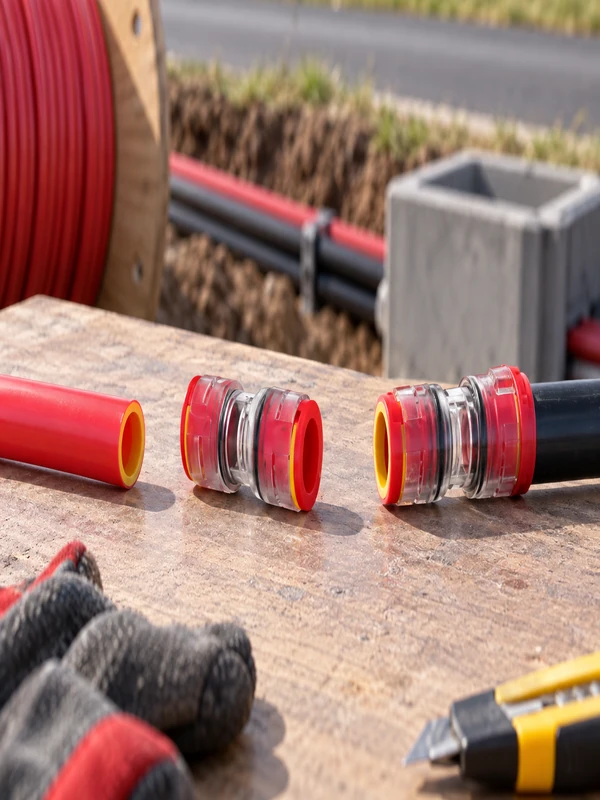
خرید باید هزینه کلی نصب را در نظر بگیرد، نه فقط هزینه واحد. یک قطعه با مشخصات نادرست میتواند منجر به بازآزمایی، توقف عملیات و تأخیر در پذیرش شود. مشخصات طراحی پروژه – نه یک قاعده کلی ساده – باید فشار آزمایش، مدت زمان و حد عبور/شکست مربوطه را تعیین کند.
| بعد انتخاب | سوال بهترین روش | پیامد تجاری |
|---|---|---|
| سازگاری | آیا هر پورت با قطر خارجی لوله تاییدشده مطابقت دارد؟ | بازگشت قطعات اشتباه و بازکاری در محل را کاهش میدهد |
| تابع مسیر | آیا مسیر باید ادامه یابد، کاهش یابد، شاخهای شود یا پایان یابد؟ | از عدم تطابق عملکردی در لیست مواد جلوگیری میکند. |
| کیفیت نصب | آیا میتوان لوله را طبق دستورالعملها برش داد، تمیز کرد و نصب کرد؟ | پشتیبانی از بررسیهای پذیرش قابل تکرار |
| مستندات | آیا جزئیات نصب و سازگاری در دسترس است؟ | قابلیت ردیابی برای پیمانکاران و صاحبان را بهبود میبخشد |
| دسترسی به چرخه زندگی | آیا مفصل قابل بازرسی یا قابل نگهداری خواهد بود؟ | زمان بررسی را در طول تغییرات آینده محدود کنید |
مناسب را انتخاب کنید برای مرحله مسیر
با طرح شروع کنید و هدف هر اتصال را مشخص کنید. یک دستهبندی محصول میتواند به خریدار در مقایسهٔ فرمهای موجود کمک کند، اما هر ردیف خرید باید نوع دقیق رابط مورد نیاز را در هر دو سر ذکر کند. فرض نکنید که لولهها با نامهای مشابه یا برچسبهای متریک و اینچی که ظاهراً شبیه هم هستند، به درستی در یک اتصال جا خواهند گرفت.
از اتصالدهنده مستقیم برای دو سر لوله با قطر خارجی مشخص یکسان استفاده کنید. یک مستقیم اتصالدهنده میکروداکت معمولاً برای ادامهی خطوط لوله در همان مسیر، این گزینه پاکترین است، به شرطی که انتهای لولهها آسیب ندیده و کاملاً وارد شده باشند. از تبدیلکننده تنها برای انتقال طراحی شده بین اندازههای مشخص استفاده کنید؛ مطمئن شوید که کدام منفذ هر لوله را دریافت میکند و مسیر کابل بعد از آن را بررسی کنید. هرگز از اتصالدهنده تبدیلکننده میکرولوله برای جبران اندازهگیری نامشخص استفاده نکنید.
برای مسیرهای اضافی و مرزهای بخشها، بین عملکرد بستن و گذرگاه تفاوت قائل شوید. یک پلاگ یا سرپوش پایانی مسیر استفاده نشده را بسته میشود؛ در حالی که یک قطعه جلوگیریکننده از گاز هدف جداکنندگی مشخصی دارد و تنها زمانی باید انتخاب شود که طراحی شبکه آن را الزام کرده باشد.
| نوع اتصال | استفاده مناسب | ارجاع کلیدی قبل از سفارش |
|---|---|---|
| رابط مستقیم | اتصال درون خط لولههای با اندازه یکسان | هر دو قطر خارجی لوله، حالت برش، الزام به وارد کردن |
| کاهشدهنده | انتقال طراحیشده بین دو اندازه لوله مشخص شده | بررسی جهتگیری پورتهای بزرگ/کوچک و مسیر کابل |
| اتصال شاخهای | توزیع برنامهریزیشده به مسیرهای متعدد | برچسبهای پورت، نقشه مسیر، دسترسی برای کارهای آینده |
| پایانه یا پلاگ | بسته شدن یک کانال اضافی یا ناتمام | اندازه کانال و اینکه آیا نیاز به گذرگاه آینده وجود دارد |
| جزء گازبلاک | جدا سازی در جاهایی که طراحی مهندسی آن را مشخص کرده است | موقعیت، رابط لوله و دستورالعمل نصب |
Test the joint before fiber blowing
A sound component can still fail when the duct end is oval, contaminated, poorly cut, or not fully seated. Follow the fitting manufacturer’s instructions: cut the duct squarely, remove debris, avoid deforming the tube, and insert it to the stated stop where applicable. A visual insertion mark can assist inspection, but it does not replace the project’s approved pull check or air-tightness test.
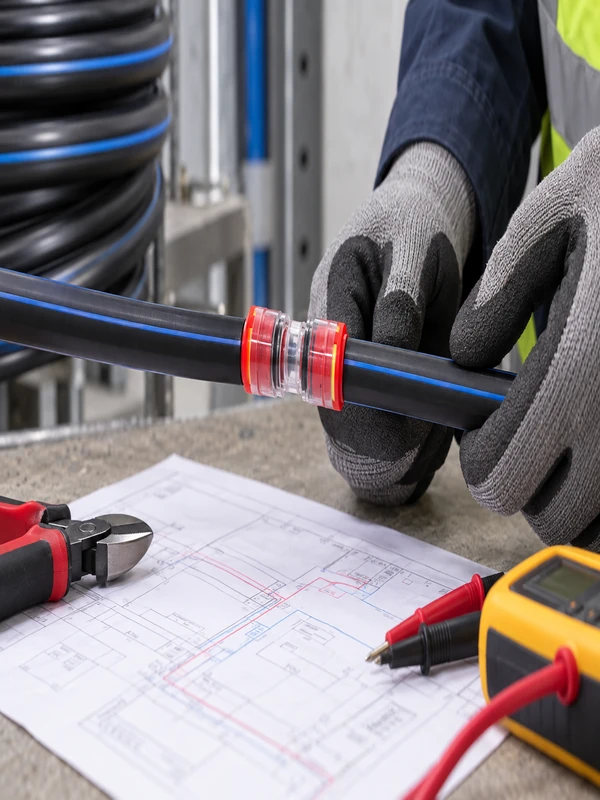
Before blowing fiber, isolate the section and carry out the pressure-decay or other specified test method. Record the route section, test medium, stabilized pressure, duration, instrument, and result. If a test fails, inspect the setup, duct ends, seating, and component condition systematically; raising pressure without diagnosis can obscure the real cause. The test method is not a universal product certification or an automatic rating for every fitting.
Check the standard and the supplier’s evidence
IEC 60794-5-20 addresses microduct cabling intended for blowing; IEC 60794-1-2 provides basic optical-fiber-cable test procedures; and ITU-T L.35 gives installation guidance. They support disciplined system specification, but do not themselves certify a fitting as leak-proof, pressure-rated, or fit for every environment.
Request exact product documentation, duct interfaces, installation instructions, and supportable test information. Destination-market rules, client specifications, and the claimed application determine the evidence required; do not fill gaps with unsupported marketing claims.
What to check before ordering
- Map every joint by location and function before issuing the bill of materials.
- Record duct manufacturer, nominal size, measured OD, wall construction, and ID where cable passage must be assessed.
- Request fitting documentation for the exact duct combination, rather than accepting a broad compatibility statement.
- Set the inspection and pressure-test record before installation begins.
- Keep route labels and spare-path decisions visible for the handover file.
For a specification-led review in Oulu or elsewhere, compare the route needs with documented microduct gas-block options and connector configurations. The productive supplier discussion begins with dimensions, function, route conditions, and required documentation.
مطالعات مرتبط: راهنمای انتخاب اتصالات میکروکانال.
The route stage determines the fitting type
There is no single “best” microduct fitting for every network. The right choice changes with the route stage: equal-size duct extension, planned size transition, unused duct closure, or a boundary that needs an air or water barrier. Add the duct OD tolerance, bore requirement, exposure, access and acceptance test to the purchase request so the supplier is comparing the same duty.
| Route stage | Likely fitting family | مرز تصمیم |
|---|---|---|
| Same-size repair or extension | رابط مستقیم | Confirm both duct ODs and continuous bore |
| Change in duct size | کاهشدهنده | Use a listed transition; do not improvise two nominal sizes |
| Unused or future duct | End stop or end cap | Confirm closure, storage and re-entry limits |
| Entry or zone separation | Gas-block connector where specified | Request the barrier test and installation orientation |
Before standardizing a part, review the fitting role guide, compare end-stop sourcing evidence, and confirm the measured duct against the محدوده اتصالدهنده میکروداکت.
How can a team distinguish route stage from pressure state?
The same duct may be vacant, being tested, occupied by cable or reserved for re-entry. Each state changes the fitting duty. An end stop protects an empty opening, a straight connector joins compatible ducts, a reducer handles a designed size transition and a gas block seals around an installed cable. Select the component from the route state and measured OD, not from a generic product family name.
Before blowing, qualify continuity, cleanliness, obstruction and the sealing condition under the project method. A pressure reading that passes an empty route does not prove a cable-entry seal or a future re-entry closure. IEC 60794-5-20 and ITU-T L.35 provide application context; the product drawing and route acceptance record define the actual limit. If a run fails, isolate the nearest transition while preserving the machine and route conditions.
| Route stage | Part role | First evidence |
|---|---|---|
| Empty continuation | رابط مستقیم | Both OD ranges, cut and insertion |
| انتقال اندازه | کاهشدهنده | Each-side dimensions and cable passage |
| Vacant end | ایستگاه پایانی | Closure, access and re-entry limit |
| Cable installed | بلوک گاز | Cable OD, seal activation and test state |
سوالات متداول
How do I choose the best microduct fittings?
Choose by confirmed duct OD at every port, the fitting’s intended function, route environment, and the project’s acceptance method. Compare model-specific documentation and installation instructions, then verify the completed joint before fiber blowing.
What size microduct connector do I need?
Select a connector port that matches the actual outside diameter of the duct it receives. Also confirm the duct ID and cable route, because a fitting can match the OD while the overall pathway is still unsuitable for the planned cable installation.
Are all microduct fittings compatible with HDPE ducts?
No. Compatibility depends on the fitting design, the duct OD, wall construction, and the manufacturer’s stated application. Do not treat “پلیاتیلن سنگین” as enough information; verify the exact duct and fitting combination in the supplied documentation.
How do microduct fittings affect fiber blowing?
They form part of the air path and cable route, so poor sizing, debris, damage, or incomplete seating can contribute to pressure loss or an obstruction. Test the completed section under the approved project method before a cable-blowing run.
What causes a microduct connector to leak?
Common causes include an incorrect duct OD, an uneven or damaged cut, contamination, incomplete insertion, component damage, or a flawed test arrangement. Investigate each condition against the manufacturer’s instructions and project test record rather than assuming the connector is defective.
Should I use straight connectors, reducers or end stops?
Use straight connectors for equal-size in-line ducts, reducers for a specified size transition, and end stops to close a route that is not meant to pass cable. The route drawing and measured duct interfaces should decide the component, not availability alone.
مطالعات مرتبط: اطلاعات شرکت Oulu Connector.
مراجع
- IEC 60794-5-20 – microduct cabling scope.
- ITU-T L.35 – optical fibre cable installation context.
- ITU-T L.87 – optical cable maintenance context.
- Hexatronic duct-integrity testing guidance.
خلاصه
The best microduct fitting is the one whose function matches the route stage and whose dimensions match the measured duct. Keep empty-duct protection, size transitions and occupied-cable sealing separate, then qualify the route before fiber blowing. IEC and ITU references frame microduct cabling and outside-plant work, but the supplier drawing and project procedure control the acceptance decision. Record the joint, insertion, test condition and future re-entry limit so a later crew can diagnose a leak without guessing. Reinspect any route disturbed by excavation or flooding before reintroducing fiber. Oulu’s microduct fitting range can be compared against the route schedule, connector role and evidence required for handover.



