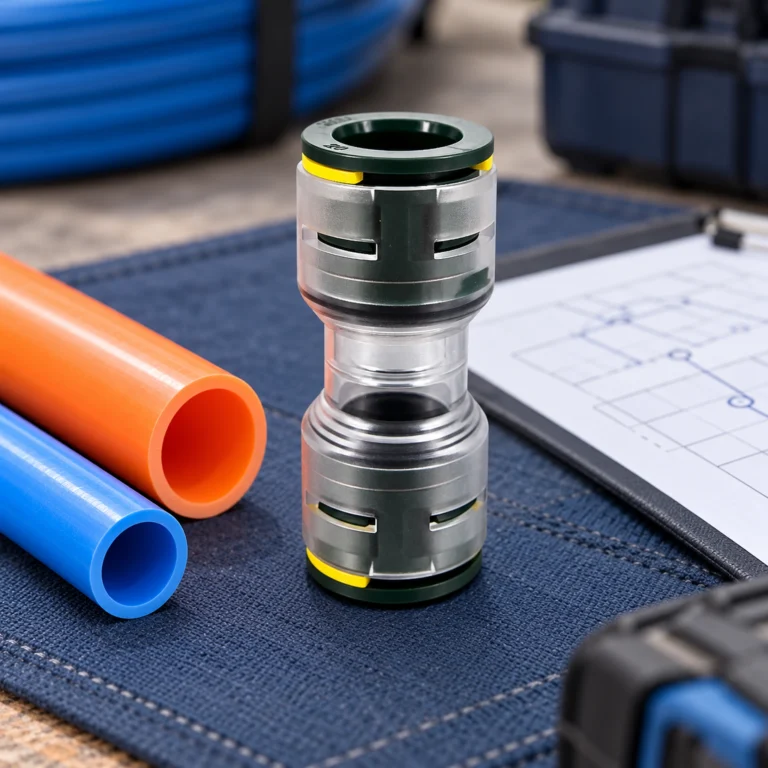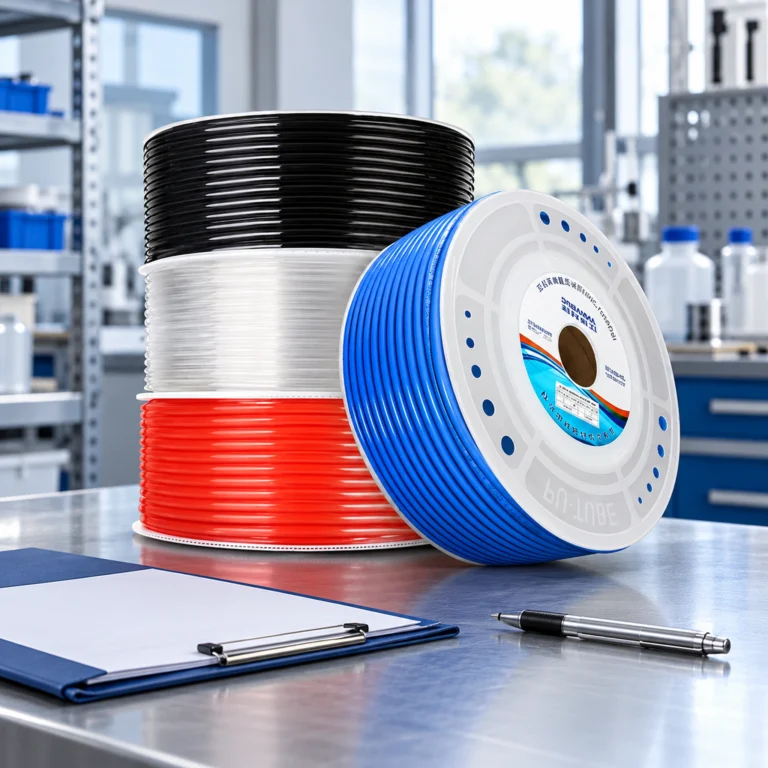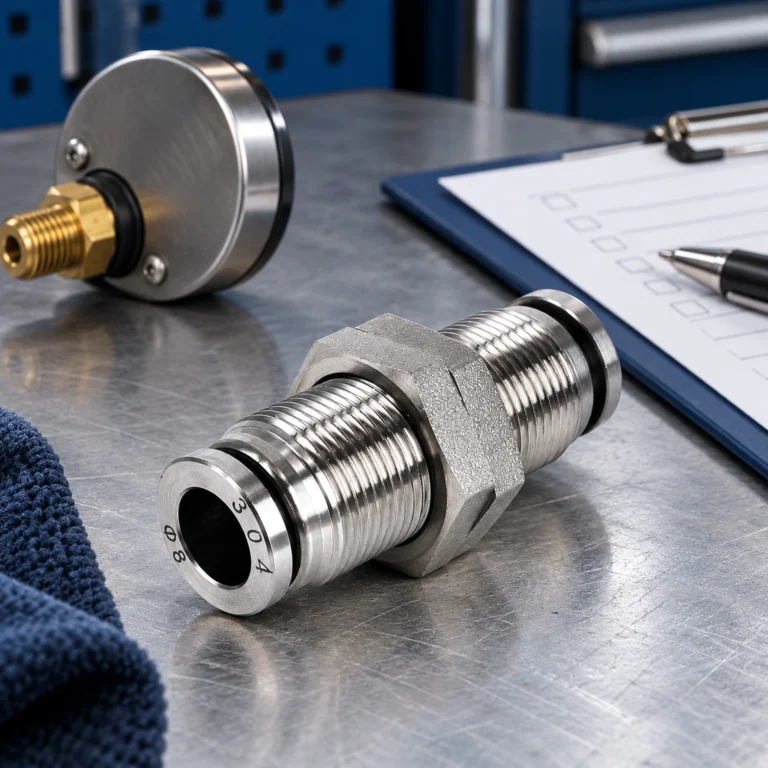
An HDPE compression fitting joins a compatible pipe to another pipe, valve or equipment connection by compressing the specified sealing and gripping components. Its suitability depends on the exact pipe outside diameter, wall condition, fitting design and service conditions. A familiar nut or similar-looking body does not establish pressure suitability or a leak-free installation. Before selecting one, confirm the pipe specification and the manufacturer’s instructions for the offered model. This guide examines the components, dimensional checks, assembly sequence and records needed to approve a compression joint for its intended use.
What do the nut, ring and seat do in a compression fitting?
Compression fittings, as the name suggests, involve the compression of specific parts to create a tight seal between pipes. HDPE compression fittings primarily consist of three essential components: the compression nut, the compression ring, and the compression seat. Let’s take a closer look at each of these components:
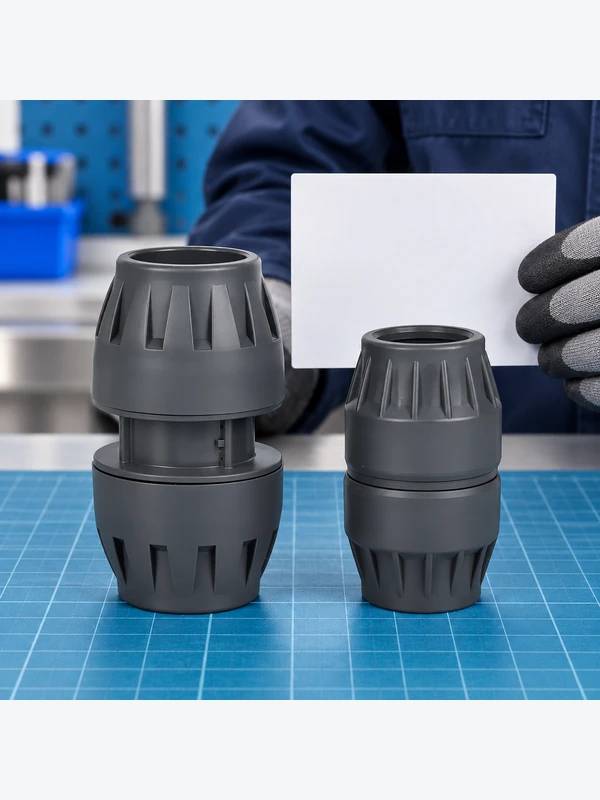
مهره فشاری:
مهفره فشردهسازی، ساخته شده از مواد مقاوم مانند فولاد ضد زنگ یا برنج، مسئول اعمال فشار بر روی حلقه فشردهسازی است. با سفت کردن مهره، حلقه را روی لوله HDPE فشرده میکند و یک اتصال ضد آب ایجاد میکند. مهره فشردهسازی معمولاً دارای طرحهای ششضلعی یا آجدار است تا گرفتن و سفت کردن آن را آسانتر کند.
۲. رینگ کمپرس:
حلقه تراکم که به عنوان فرول نیز شناخته میشود، معمولاً از مواد باکیفیت مانند پلیاتیلن یا پلیپروپیلن ساخته میشود. هدف اصلی آن توزیع یکنواخت نیروی فشاری بر روی لوله پلیاتیلن سنگین (HDPE) است که خطر نشت را به حداقل میرساند. علاوه بر این، طراحی حلقه تراکم نقش مهمی در تضمین این موضوع دارد که اتصالات در شرایط فشار و دمای بالا دستنخورده باقی بمانند.
صندلی فشردهسازی:
نشیمنگاه فشاری بخشی از اتصال است که لولهها در آن وارد میشوند. این نشیمنگاه ثبات و اتصال محکمی را برای لولهها فراهم میکند و به مهره و حلقه فشاری اجازه میدهد تا آببندی محکم ایجاد کنند. اطمینان از سازگاری نشیمنگاه فشاری با اندازه لوله HDPE بسیار مهم است، زیرا عدم تطابق مناسب میتواندپارگی و یکپارچگی اتصال را به خطر بیندازد.
Where are HDPE compression fittings used?
این سه جزء در هماهنگی با یکدیگر کار میکنند تا یک اتصال قابل اعتماد و بادوام بین لولههای HDPE ایجاد کنند. مزایای استفاده از اتصالات پیچی HDPE بسیار زیاد است:
۱. همهکاره بودن:
اتصالات فشاری پلیاتیلن سنگین (HDPE) با اندازهها و انواع مختلف لولههای HDPE سازگار هستند و انعطافپذیری را در سیستمهای لولهکشی و پایپینگ فراهم میکنند. چه در کاربردهای مسکونی، تجاری یا صنعتی، این اتصالات میتوانند نیازهای متنوع را برآورده کنند.
۲. نصب آسان:
یکی از مزایای قابل توجه اتصالات پیچی پلیاتیلن (HDPE)، روند نصب آسان آنها است. با نیاز به حداقل ابزار و تخصص، این اتصالات را میتوان به سرعت مونتاژ کرد که باعث صرفهجویی در زمان و هزینههای نیروی کار میشود.
۳. راه حل بدون نشت:
HDPE compression fittings are designed to create a secure and leak-free connection. The compression nut exerts pressure on the compression ring, effectively sealing the joint. This prevents water leakages, ensuring the integrity and efficiency of the plumbing or piping system.
۴. مقاومت شیمیایی و خوردگی:
اتصالات کوپرسن پلیاتیلن چگالی بالا (HDPE) مقاومت عالی در برابر مواد شیمیایی مختلف ارائه میدهند که آنها را برای کاربردهایی در صنایعی مانند کشاورزی، معدنکاری و تصفیه فاضلاب ایدهآل میسازد. علاوه بر این، ساختار مستحکم آنها مقاومت در برابر خوردگی را فراهم میکند و طول عمر اتصالات را افزایش میدهد.
۵. بادوام و ماندگار:
اتصالات پیچی پلیاتیلن (HDPE) برای تحمل فشار زیاد، نوسانات دما و عوامل محیطی ساخته شدهاند و دوام بلندمدت را تضمین میکنند. با انتخاب این اتصالات، کاربران میتوانند هزینههای نگهداری را کاهش داده و سالها از یک سیستم لولهکشی مطمئن بهرهمند شوند.
۶. راهکار مقرونبهصرفه:
اتصالات فشاری HDPE به دلیل تطبیقپذیری، دوام و نصب آسان، راهحل مقرونبهصرفهای برای پروژههای مختلف لولهکشی و پایپینگ ارائه میدهند. طول عمر بالا و نیازهای تعمیر و نگهداری حداقلی آنها به صرفهجویی قابلتوجهی در هزینهها در درازمدت کمک میکند.
اتصالات پیچی پلیاتیلن کاربرد گستردهای در سیستمهای لولهکشی، شبکههای آبیاری، سیستمهای آبرسانی و لولهکشی صنعتی دارند. از پروژههای مسکونی گرفته تا توسعه زیرساختهای در مقیاس بزرگ، این اتصالات به دلیل مزایای فراوان خود به انتخاب اول تبدیل شدهاند.
Compression fittings can provide a removable connection where the selected system permits that duty. Their practical value depends on pipe preparation, correct insertion, component orientation and a controlled acceptance test. Assess the fitting as part of the complete pipeline rather than assuming every compression product is suitable for drinking water, wastewater or gas. Keep the application approval and exact model limits with the order, and obtain a fitting-specific installation method before work starts. Where the service changes, reassess the seal, pressure-and-temperature limits and pipe compatibility instead of carrying an old approval into a different application.
Which pipe measurements must match the compression fitting?
اتصالات کوپلی پلیاتیلن should be evaluated against measured pipe dimensions and a traceable test. Current standards help define application scope, but they do not turn every fitting into a universal pressure-rated component. Mechanical compression also has different inspection and repair rules from butt fusion or electrofusion.
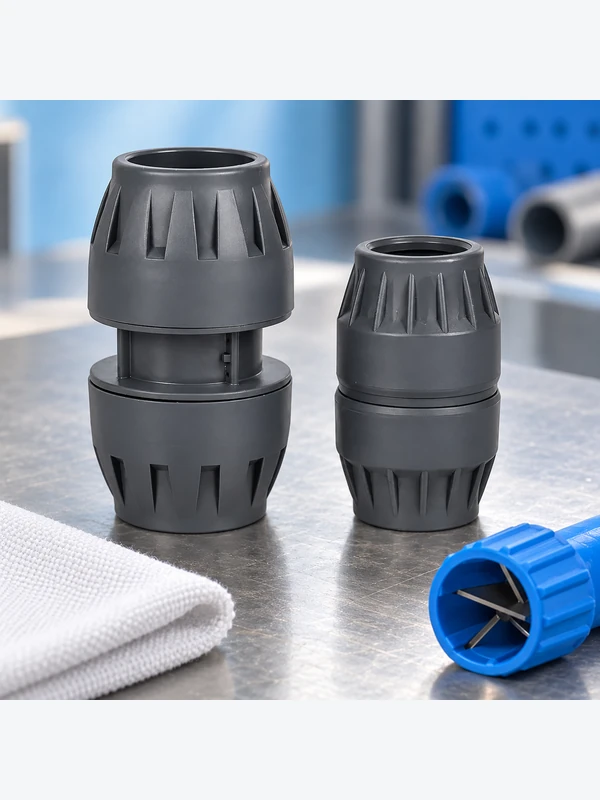
- Measure the pipe and compare it with the fitting drawing.
- Cut square, clean the sealing land and mark insertion depth.
- Assemble the nut, ring and seal in the documented order.
- Use the supplier’s stop, turns or torque method.
- Record the leak or pressure test condition and result.
For fiber pathways, compare dimensions with the site’s میکروداکتهای HDPE rather than transferring a plumbing rating. Do not reuse a pressure value from another SDR or fitting family.
How should an HDPE compression joint be prepared, assembled and tested?
Search results and current manufacturer guidance agree on the same practical sequence: cut the PE pipe square, prepare the end, place the components in the specified order, insert the pipe fully to the stop, and tighten using the selected fitting’s method. Philmac’s 3G guide identifies cut, preparation, insertion, tightening and disassembly as separate steps. That sequence is more useful than a generic claim that a compression fitting is simply leak-free.
| Stage | چه چیزهایی باید بررسی شود | ضبط |
|---|---|---|
| Measure | OD, wall or SDR, ovality and fitting range | Pipe and fitting codes |
| Prepare | Square cut, clean sealing land and undamaged end | Installer and date |
| Assemble | Nut, grip ring, spacer, seal and insertion stop | Method revision |
| تست | Stabilization, medium, hold period and acceptance limit | Pressure or leak result |
Compression, butt fusion and electrofusion are different joining methods. A compression fitting may be valuable where access, repair or disassembly matters, but it should not be presented as a substitute for fusion in every project. The pipe end can be out of round, scored or too short for the seal even when the nominal label looks correct. Do not compensate by adding unapproved torque; overtightening can distort the components and hide the original preparation problem.
For fiber pathways, do not transfer a water-service pressure claim to the site’s میکروداکتهای HDPE. Record the duct or pipe dimensions, route environment and intended test separately. The محدوده اتصالدهنده میکروداکت can be reviewed after the route duty is defined.
How should a leaking joint be investigated before reassembly?
First establish which part of the assembly was actually under test. Record the fitting and pipe identifiers, the test medium, the stabilization period, the hold period and the acceptance criterion. Check the test equipment and endpoints before attributing a change in reading to the compression fitting. If the section has several joints, use the project’s isolation method to narrow the location rather than tightening every nut in turn.
Once the system has been made safe under the approved procedure, compare the pipe end and fitting components with the supplier’s instructions. Look for an incomplete insertion mark, contamination, an out-of-round end or damage at the sealing surface. Record how the components were arranged before dismantling them. Reassembly should use the specified preparation and tightening method; a generic instruction to apply more force can conceal an unresolved dimensional problem.
Keep the findings in a compression-joint inspection record linked to the purchase order and drawing revision. If a different fitting is proposed, compare its approved pipe range, component arrangement, installation access and service conditions before substitution. A test passed after repair establishes the recorded assembly under that test condition. It should not be used to extend approval to another pipe size, a different fluid or a different temperature without the required technical review.
سوالات متداول
Can compression replace fusion in every project?
No. Access, equipment, inspection, repair and the governing project specification differ between joining methods.
What proves that a pipe end is ready?
A square, clean, undamaged end that meets the supplier’s insertion and dimensional requirements; an oval or scored end may need replacement.
What should be written on the test record?
Fitting code, pipe size or batch, assembly date, test medium, stabilisation, hold time, acceptance criterion and result.
What creates the seal in an HDPE compression fitting?
The nut, ring, seat and seal work together to grip and seal the pipe. The exact order and tightening method belong to the selected fitting.
Can an out-of-round pipe be installed without preparation?
Do not assume so. Ovality or a damaged pipe end can prevent even sealing; follow the supplier’s preparation limits or replace the affected section.
How much should the nut be tightened?
Use the documented method for the exact fitting. Avoid substituting a generic torque value when the supplier specifies turns, a stop or a calibrated torque.
When should the joint be pressure tested?
Test after the assembly is complete and the chosen test setup has stabilised, using the project’s approved condition and acceptance criterion.
What information should a buyer provide?
Provide pipe OD, wall or SDR, medium, pressure, temperature, fitting type, installation environment, standard and required quantity.
What does a passing pressure test prove?
It proves the tested assembly under the recorded condition and acceptance criterion. It does not automatically qualify another pipe size, medium or temperature.
مراجع
- ISO 4437-3:2024 – official polyethylene fitting standard page within its stated scope.
- ISO/TS 10839:2022 – official installation and qualification context for PE pipe systems.
- Philmac 3G Metric fitting installation steps
- Philmac 3G Metric technical manual
خلاصه
A reliable compression joint starts with measured dimensions and ends with a documented test. Check OD, wall or SDR, roundness, component order and the supplier’s assembly method before the nut is tightened. If a joint leaks, inspect preparation and insertion before adding torque. Keeping the drawing and test record together gives procurement and installation teams a traceable basis for approval.