PERSPECTIVAS DE LA INDUSTRIA

Noticias y blog

Noticias de la industria, guías técnicas y conocimientos prácticos de proyectos para profesionales de microconductos, instalación de fibra y conexión neumática.

Últimos Artículos

Artículos

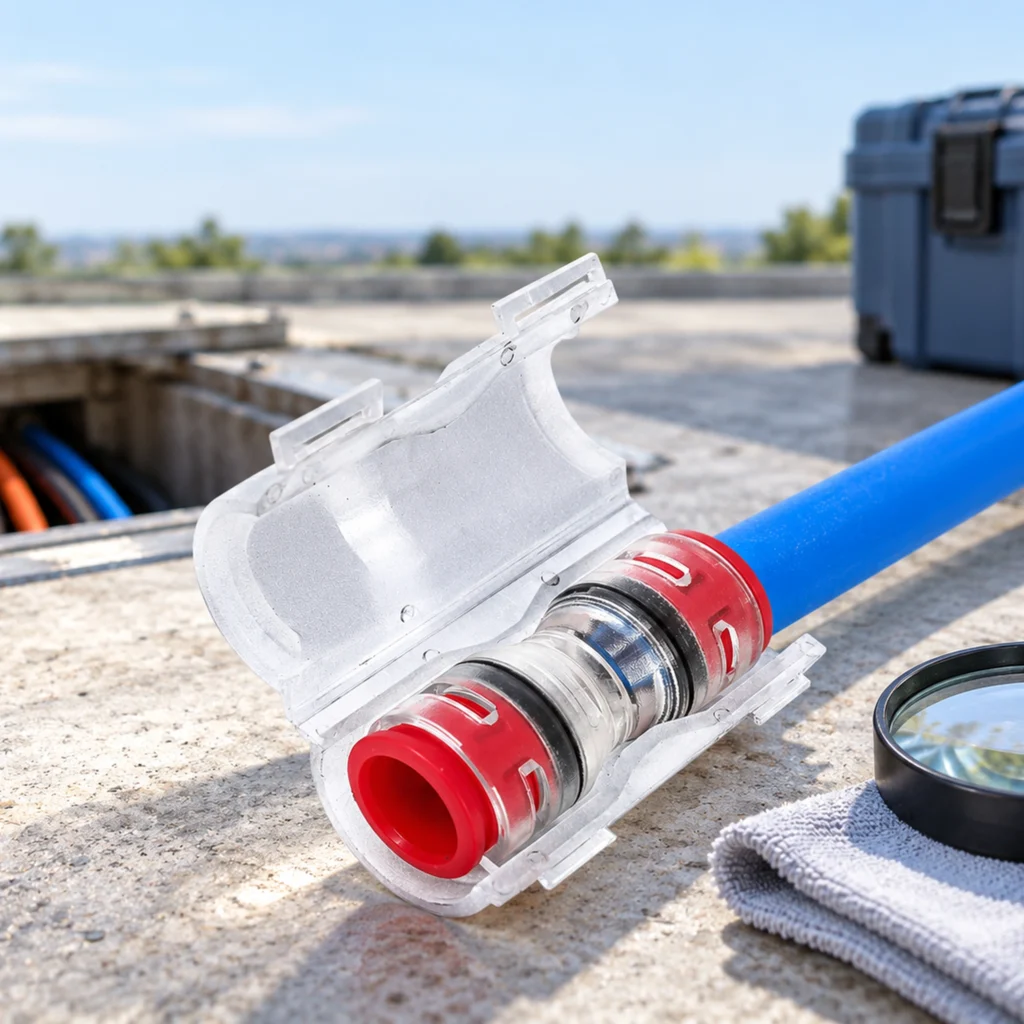
Microduct Cover Shell Troubleshooting: Why the Cap Comes Loose and How to Fix It

Microduct Cover Shell Troubleshooting: Why the Cap Comes Loose and How to Fix It

A displaced microduct cover shell creates two different questions: has the external protection lost its grip, and is the fitting underneath still correctly installed? Treating these as one fault can lead to unnecessary duct disconnection or leave a genuine leak unresolved. A shell that opens during handling does not automatically mean the duct seal has failed; a shell that looks secure does not prove…

Ver detalle
Microduct Locking Clip vs. Gas-Block Connectors: Which Closure Should You Use?

Microduct Locking Clip vs. Gas-Block Connectors: Which Closure Should You Use?

A connector that stays attached can still leak, and a sealed connector can still need protection against accidental release. That distinction matters when a crew replaces a loose end stop, prepares a spare duct for cable blowing, or specifies a gas block at a building entry. Adding a stronger-looking clip may address the release mechanism without changing the actual leakage path. Conversely, replacing a…

Ver detalle
HDPE block microduct connector Pressure Testing: A Simple Checklist for Installers

HDPE block microduct connector Pressure Testing: A Simple Checklist for Installers

A pressure-test schedule can look complete while leaving the most important question unanswered: which interface is being tested? An empty microduct prepared for cable blowing, a connector gripping the duct, and an activated seal around an installed cable are different configurations. Applying a pressure copied from a product headline to all three can produce an unsafe test or an acceptance record that proves the…

Ver detalle
14mm Gas Block Microduct Connector Installation Guide: Keep Moisture Out of Fiber Ducts

14mm Gas Block Microduct Connector Installation Guide: Keep Moisture Out of Fiber Ducts

A 14 mm duct connection can appear correct while the cable seal remains unsuitable. The duct dimension identifies only one interface; a cable passing through the fitting introduces a second interface with its own diameter range and assembly condition. Procurement teams therefore need more than a matching size label before approving a building-entry connection. Confusing the two can lead to unsuitable stock, repeated assembly…

Ver detalle
Water Block Microduct Connector Explained: When Should You Activate the Seal?

Water Block Microduct Connector Explained: When Should You Activate the Seal?

A cable route can pass a blowing check yet still leave a path for water into a building. For contractors selecting a water-block connector, the difficult question is not simply whether the fitting grips the duct. It is whether the supplied seal matches the installed cable, whether its assembly state is correct, and which migration path the connector actually closes. Assuming every waterblock needs…

Ver detalle
Gas Block Microduct Connector: How to Block Gas and Water at a Microduct Entry

Gas Block Microduct Connector: How to Block Gas and Water at a Microduct Entry

A microduct connection that holds air during cable blowing can still leave a migration path around the installed cable. At a building or optical distribution frame entry, that difference changes the purchasing decision: does the route need a duct joint, an occupied-duct seal, or a separate penetration system? Choosing by nominal duct size or a single pressure figure can leave those functions unresolved and…

Ver detalle
How to Specify Direct buried microduct connector for HDPE and FTTx Duct Networks

How to Specify Direct buried microduct connector for HDPE and FTTx Duct Networks

A connector that grips a microduct in a chamber is not automatically suitable for placing directly in soil. For contractors and buyers, the difficult decision is whether the ordered fitting and the duct around it are both intended for the proposed buried route. A familiar nominal size, an ingress-protection claim, or a successful empty-duct pressure check cannot answer every part of that question. Once…

Ver detalle
Need a Microduct push fit connector? Compare Sizes, Pressure Ratings and Applications

Need a Microduct push fit connector? Compare Sizes, Pressure Ratings and Applications

A connector ordered by nominal duct size can still be unsuitable for the assembled route. Procurement teams need to compare the actual outside diameter, the bore available for the cable, the wall construction and the installation environment, not just a catalogue pressure column. A tube may be retained before it is fully seated, while two ducts with the same outside diameter can have different…

Ver detalle
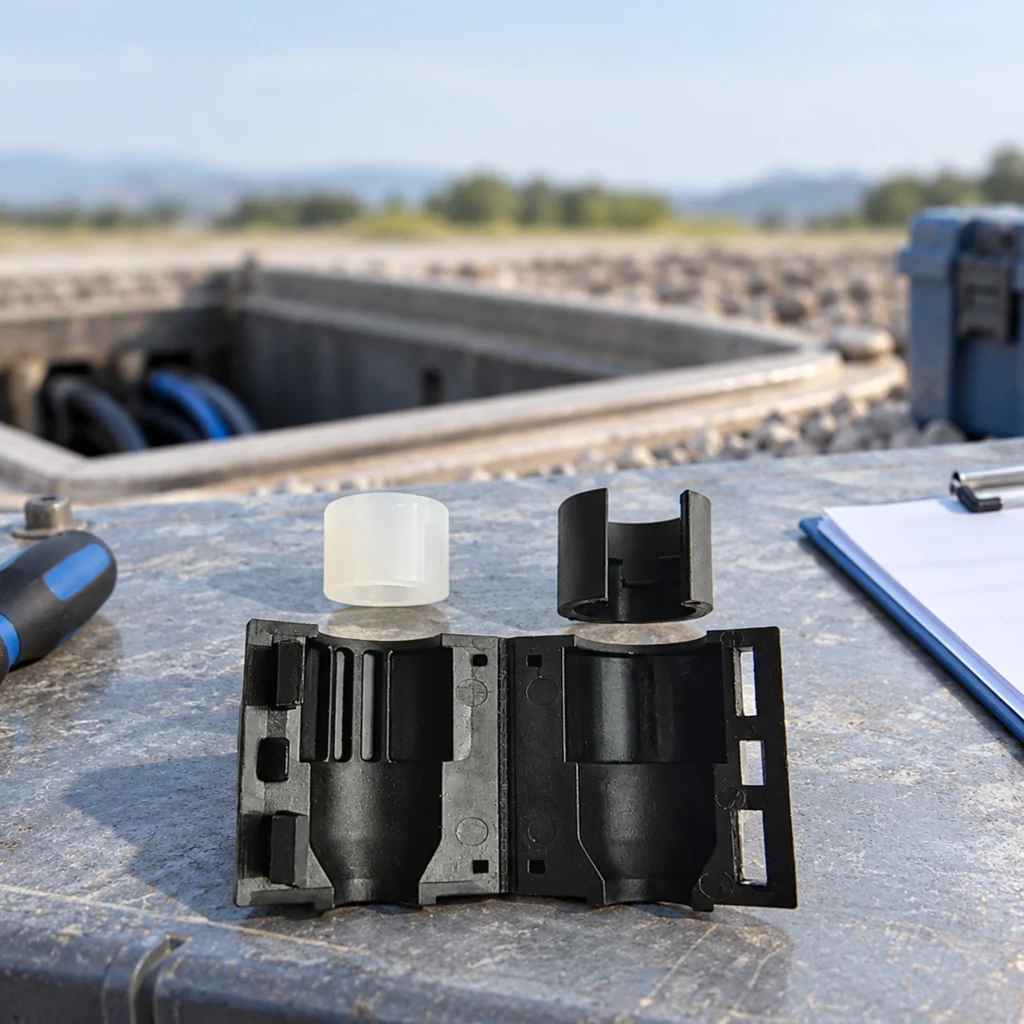
Microduct end cap Troubleshooting: Why the Cap Comes Loose and How to Fix It

Microduct end cap Troubleshooting: Why the Cap Comes Loose and How to Fix It

A microduct end cap that comes loose creates two questions for the maintenance team: has the fitting lost its grip, or has the duct stopped sealing? Those faults can occur together, but treating them as the same problem encourages repeated reseating without finding the cause. A cap can grip a tube before the tube reaches its sealing position; conversely, visible water around a cap…

Ver detalle