INDUSTRY INSIGHTS

News & Blog

Industry news, technical guides and practical project insights for microduct, fiber installation and pneumatic connection professionals.

Latest Articles

Articles

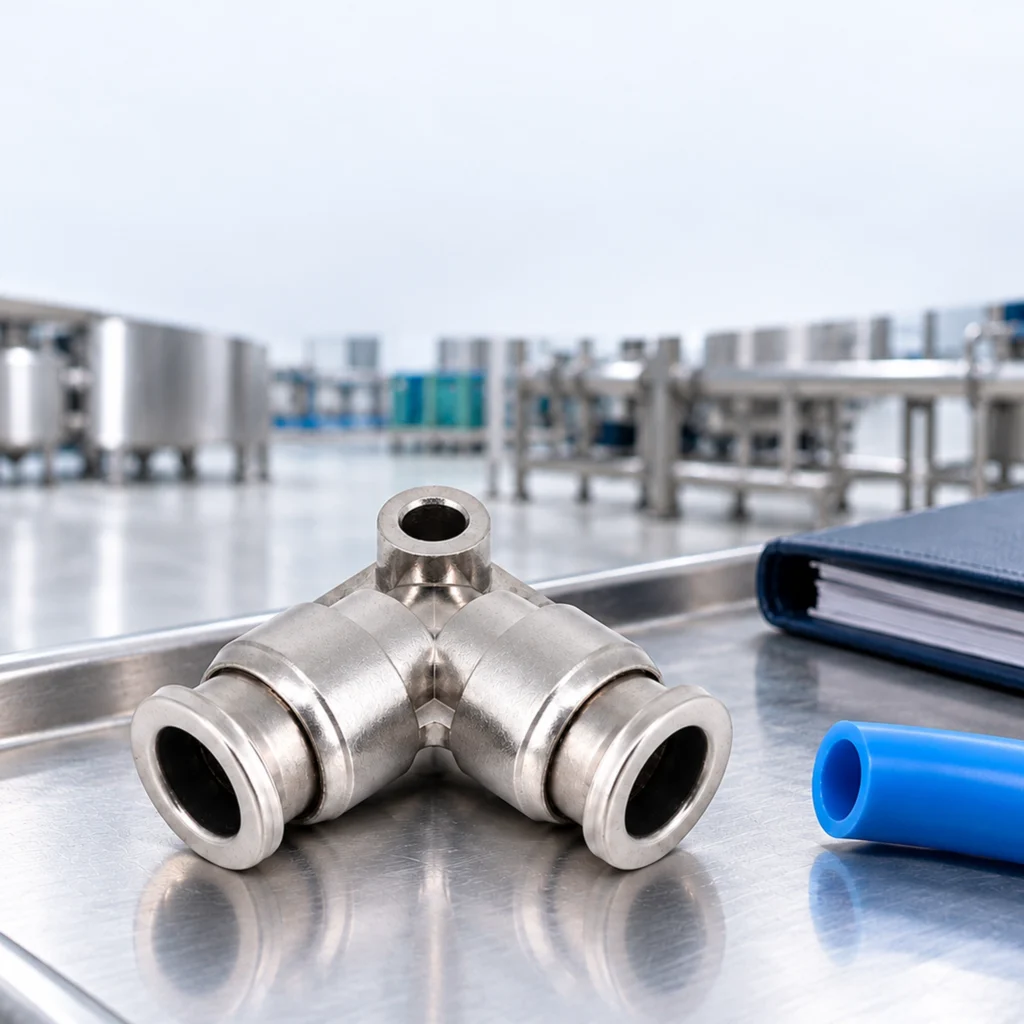
Metal Fittings Installation Guide: Make Push-In Connections Hold

Metal Fittings Installation Guide: Make Push-In Connections Hold

In a hypothetical commissioning job in Leeds, an assembly technician connects a new pneumatic valve using a metal push-in fitting. The tube seems secure during a quick hand check, but slips when the machine cycles. The cause is not necessarily a weak metal body. A mixed tube size, incomplete insertion or a route that pulls on the connection can produce the same visible failure.…
View Detail
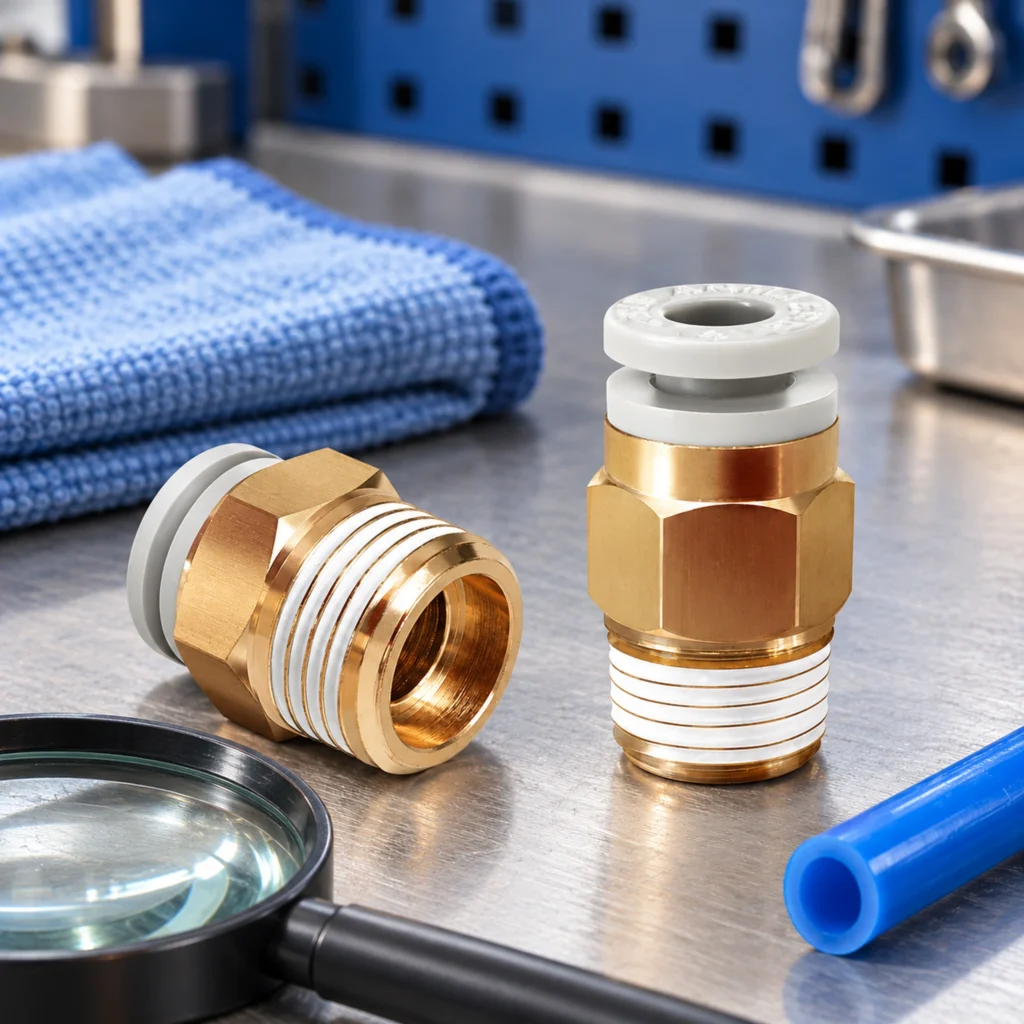
Why Is Your Brass Fitting Leaking? 6 Checks That Usually Find the Cause

Why Is Your Brass Fitting Leaking? 6 Checks That Usually Find the Cause

Imagine a maintenance technician in Manchester tightening a brass air fitting after hearing a hiss at a machine inlet. The sound briefly changes, then returns as soon as the cylinder moves. In this hypothetical case, the threaded port was already sealed: a scratched tube and sideways pull at the release collar caused the leak. More torque could not repair either condition. A leaking brass…

View Detail
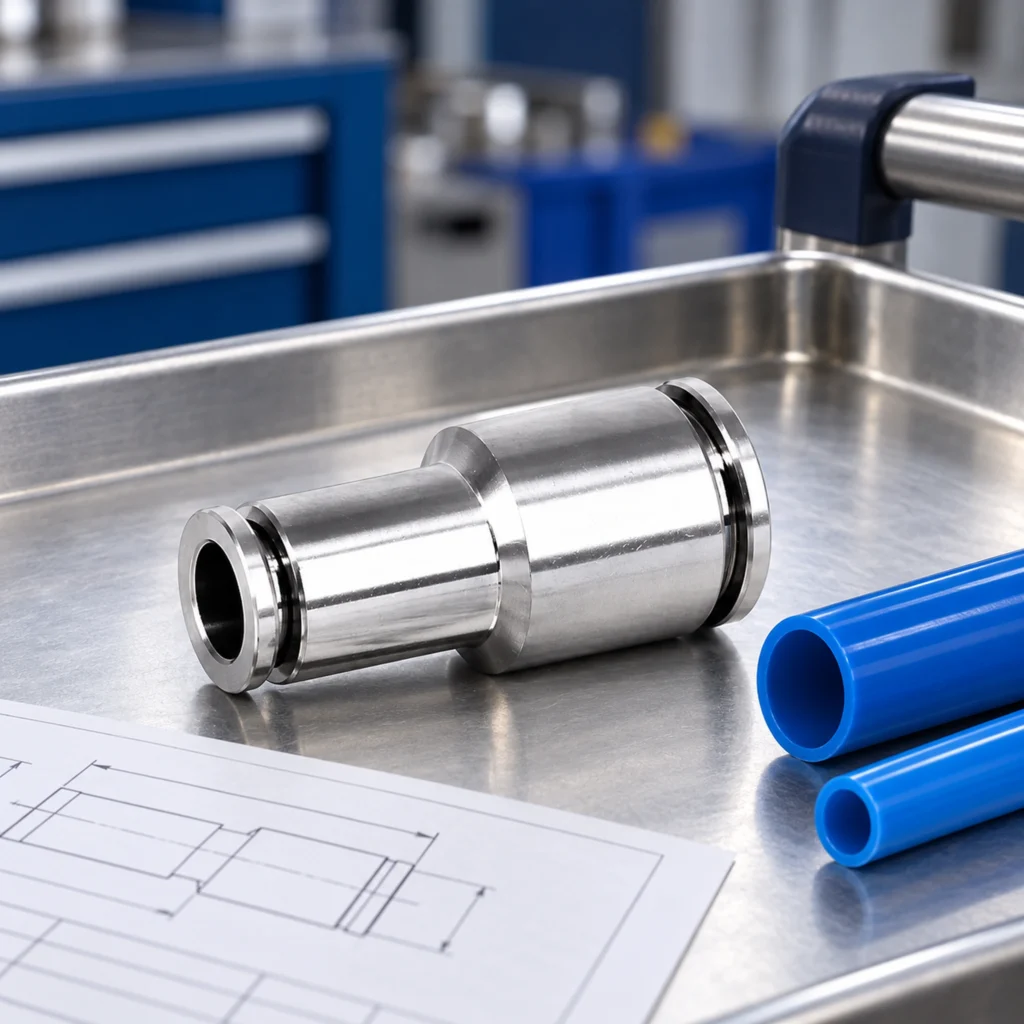
Stainless Steel Reducer: How to Choose Grade, Thread and Pressure Rating

Stainless Steel Reducer: How to Choose Grade, Thread and Pressure Rating

Consider a hypothetical maintenance job: a technician in Birmingham replaces a corroded adapter with a stainless steel reducer, reconnects the air line and restarts the machine. The connection stays dry, but the actuator now moves too slowly. The new part matches the visible tube sizes; its smaller passage and the downstream tubing were never checked against demand. Changing the material has solved one concern…

View Detail
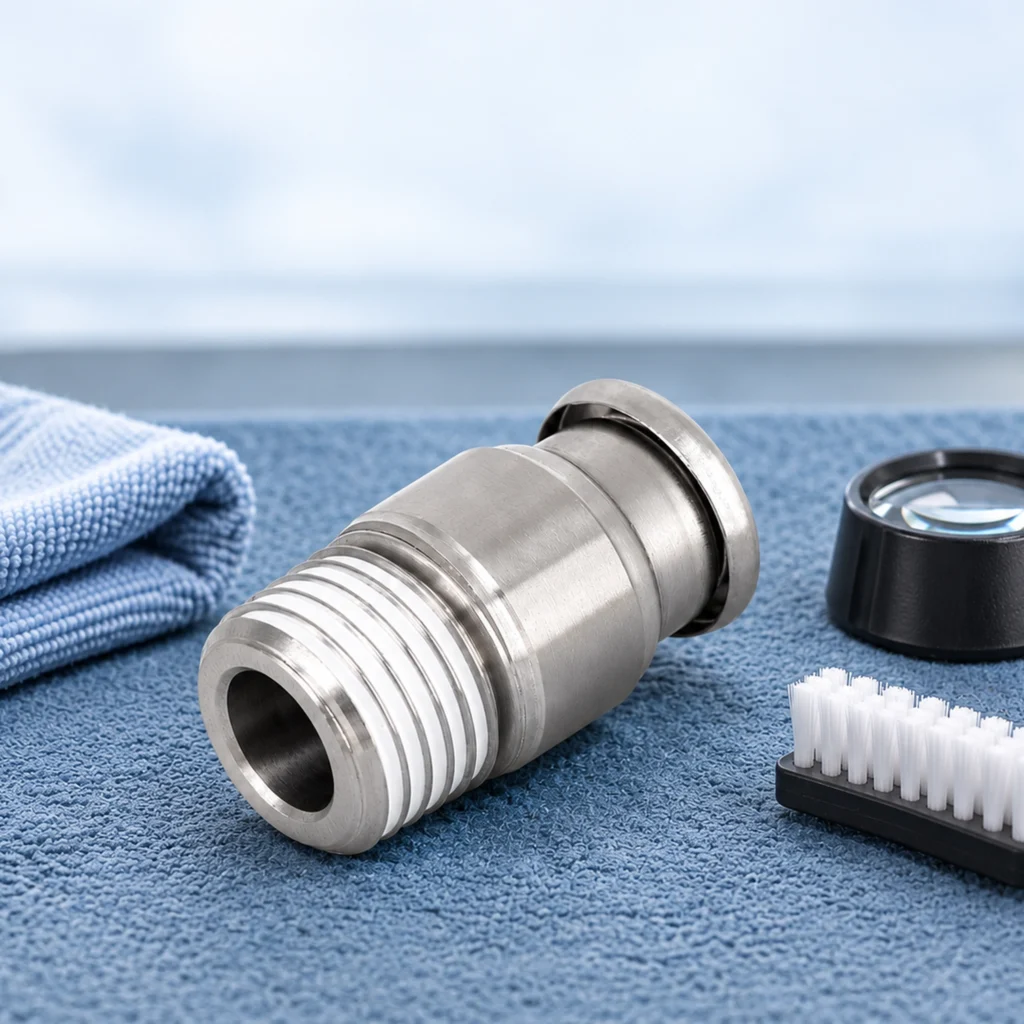
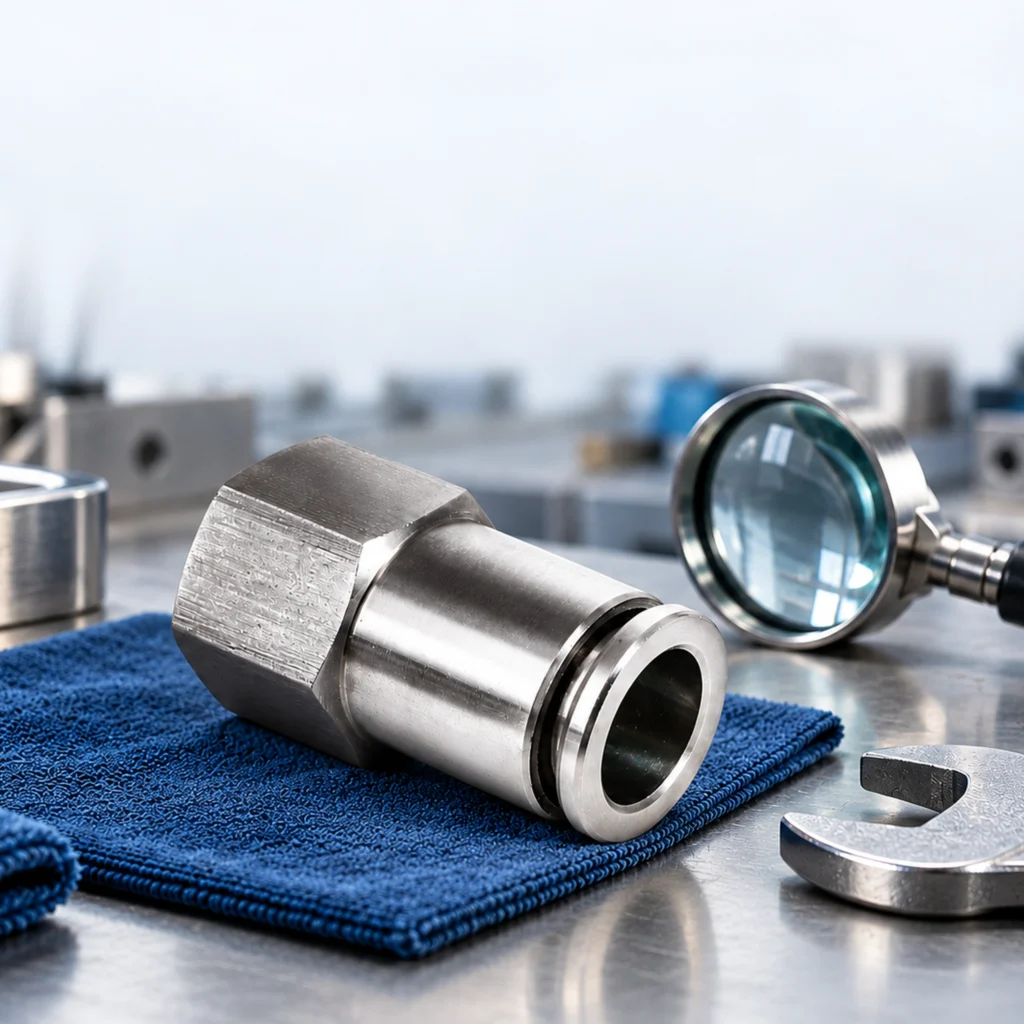
How to Clean and Maintain Stainless Steel Air Fittings

How to Clean and Maintain Stainless Steel Air Fittings

A clean-looking pneumatic connection can still leak, and a discolored connection does not reveal the cause of the problem by itself. Maintenance needs to distinguish removable contamination from damaged tubing, worn connection surfaces, unsuitable cleaning exposure and faults elsewhere in the circuit. Otherwise a fitting may be polished and reinstalled while the condition that caused the failure remains unchanged. Maintain stainless steel air fittings…

View Detail
How to Select Stainless Steel Push-In Fittings for Air, Water and Chemicals

How to Select Stainless Steel Push-In Fittings for Air, Water and Chemicals

A stainless fitting that works on a compressed-air line is not automatically suitable for water or a cleaning chemical. The metal body is only one part of the connection. The fluid also meets sealing materials and tubing, and the working conditions may differ substantially from those of the original pneumatic application. A reliable selection starts with the actual fluid and operating cycle, then checks…

View Detail
Push-In or Threaded Stainless Steel Pipe Fitting: Which Connection Is Better?

Push-In or Threaded Stainless Steel Pipe Fitting: Which Connection Is Better?

A buyer may be asked to choose a push-in fitting or a threaded fitting even though the proposed part contains both. One end accepts a tube and the other connects to an equipment port. Comparing those descriptions as complete alternatives can lead to ordering the wrong interface, overlooking a sealing element or assuming that a quick tube connection removes the need for controlled thread…

View Detail
How Long Should a Stainless Steel Tube Fitting Last in an Automated System?

How Long Should a Stainless Steel Tube Fitting Last in an Automated System?

A fitting that has worked for years in a fixed panel may leak quickly when the same connection is placed beside a moving actuator. The difference may be tube loading, contamination, cleaning exposure or an incorrect replacement tube, rather than the age of the stainless body. Buyers asking how long a fitting lasts need to define what is wearing and under which conditions. A…

View Detail
How to Choose a Stainless Steel Push-In Fitting for Washdown Areas

How to Choose a Stainless Steel Push-In Fitting for Washdown Areas

A stainless fitting can look clean after washing while cleaner remains around its release collar or tube entry. The metal body may tolerate the exposure better than the seal or tubing, and a connection that holds compressed air during production may behave differently immediately after a hot cleaning cycle. Selecting the body grade alone leaves those questions unanswered. The purchasing specification needs to describe…

View Detail
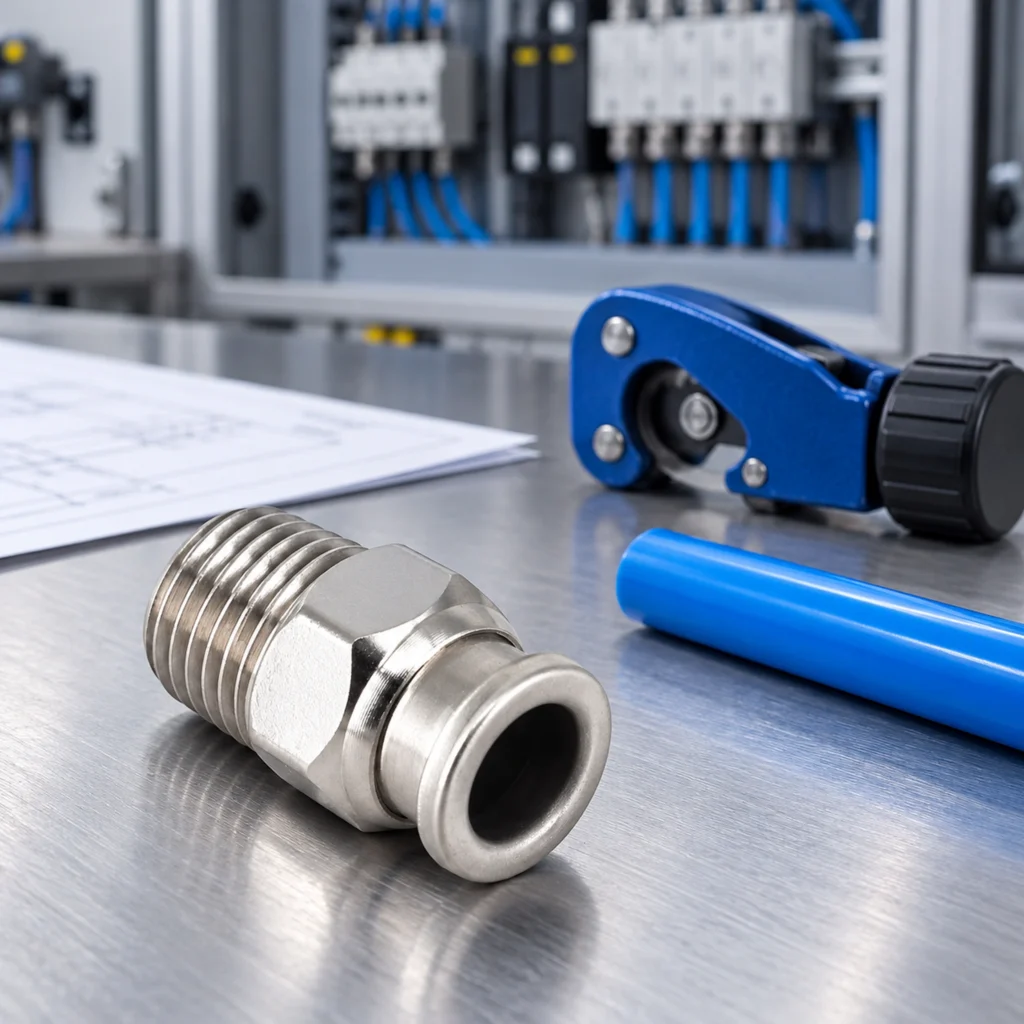
How to Install Stainless Steel Pneumatic Fittings Without Galling or Leaks

How to Install Stainless Steel Pneumatic Fittings Without Galling or Leaks

A stainless fitting that becomes difficult to turn during installation may be cross-threaded, contaminated or beginning to gall. Applying a longer wrench can turn a recoverable assembly problem into damaged threads and a connection that cannot be serviced. Another leak may come from the tube socket rather than the threaded joint, so extra tightening can miss the actual fault entirely. Reliable installation needs separate…

View Detail