
マイクロダクトコネクタ 最初のケーブル敷設から長い時間が経過した後でも、適切なサイズでアクセス可能かつ文書化された接続部は、後の延長工事を支えることができます。一方、文書化されていない移行部では、予備の配管路を使用する前に、再度の調査や掘削作業が必要になることがあります。したがって、マイクロダクト網の整備は、施工品質と活用可能な記録に加え、コネクタの設計にも大きく左右されます。.
信頼性の高いブローファイバー施工のために、空気圧経路全体の一環としてコネクタの仕様を定め、試験を行ってください。例えば、公称10/8 mmのマイクロダクトは、外径10 mm、内径8 mmを示します。継手は、実際の外径、オーバル度および使用条件に応じて選定する必要があります。漏れ試験および保持力試験の結果が文書化されていることを指定し、現場でダクトと継手の組み合わせを確認したうえで、ケーブル吹込前にその結果を記録してください。この手法により、施工時間を確保し、保守可能な光ファイバーネットワークの展開を支援します。.
コネクタの選択が後のネットワーク拡張に与える影響
コネクタは、ダクト同士を接続したり、未使用の経路を終端したり、あるダクトサイズを別のサイズに変換したり、分岐部を形成したりします。エアブロー工法では、接合部が不適切だと利用可能な圧力が低下し、ケーブルの移動が妨げられることがあります。埋設経路では、汚染物質の侵入を招くおそれがあります。実用上の目標は、連続した適切なサイズの通路を確保することです。比較してください マイクロダクトコネクタのオプション ルート計画に反して。.
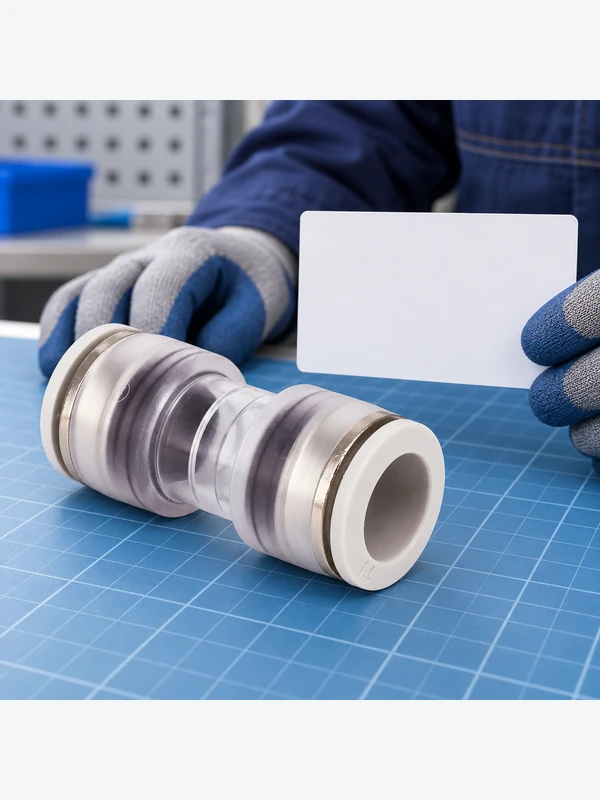
購入の意思決定は、単価だけにとどまりません。短時間の修理であっても、作業員の稼働時間、交通管理、設置可能な時間枠を消費します。たとえば、半日分の手戻りを1回回避できれば、部品単価のわずかな節約を上回る可能性があります。プロジェクトの人件費、アクセス条件、運転停止期間などの前提を考慮して精査してください。.
適切な出発点は、製品名ではなくダクトの実測外径です。マイクロダクト用コネクタは、メーカーが提示する寸法公差範囲および設置後のダクト状態に耐えられるものでなければなりません。プッシュフィット方式のコネクタを使用する場合は、施工者が、チューブの切断面が垂直で清潔であること、ストップ位置まで完全に挿入されていること、側方からの荷重がかかっていないことを確認してください。視覚的な挿入深さの確認に加え、供給元が定める保持力試験を実施することで、一瞥だけの確認よりも信頼性の高い検収記録が得られます。.
ダクト経路に加圧する前に、接合部を確認してください。
マイクロダクトシステムは、通路と空気供給システムが一体となって機能するものとして理解するのが最も適切です。ダクト内径、ルートの長さ、曲げ部、継手、シール、コンプレッサーの設定、ケーブルの特性などがすべて送り込み性能に影響します。コネクターの役割は、各接続部で通路の形状を保持し、密閉することであり、潰れたダクトや不適切なケーブル、あるいは機器の設計仕様を超えるルートに対応することはできません。.
そのため、設置チームは、組み立てられた接合部に対して、部品供給業者が指定する試験方法を用いるべきです。接合部の漏れ試験手順には、選定された組み立てに対する試験媒体、圧力、安定化期間、保持時間、および許容損失を明確に定義する必要があります。ケーブル経路に関しては、IEC 60794-5-20 は、ブローイング工法による敷設を想定したマイクロダクトケーブリングについて取り扱っています。いずれの規格も、ネットワーク所有者および製品仕様書によって定められるべき、プロジェクト固有の受入基準に代わるものではありません。.
最終試運転前に、完成した区間から代表的な箇所を切り離し、合意済みの加圧・保持手順を適用し、各接続部について挿入不良、損傷、および意図しない変位がないか点検してください。ダクトの種類、外径、コネクタの品番、試験結果、設置位置を記録してください。これらの記録は、特に複数の施工業者が同一ルートで作業を行った場合に、後の作業チームが不具合箇所を特定し調査する際に役立ちます。.
次の施工チームが利用できるルート記録を保持してください。
A 予備の穴 他の作業員が両端を特定し、連続性を確認し、承認されたケーブル敷設方法を選択できる場合に限り、有効な容量となります。1つを作成してください。 ルート識別子 図面、室ラベル、ダクトの識別記号および試験ファイルを関連付けるものです。各接合部では、コネクタのメーカー名と部品コード、実際のダクト外径および内径、入手可能な場合はロット番号、設置日、およびリデューサーの設置位置を記録してください。未使用の色を一律に「予備」と呼ぶのではなく、使用中、予約済み、閉塞済み、未検証のダクトを記録内で明確に区分してください。.
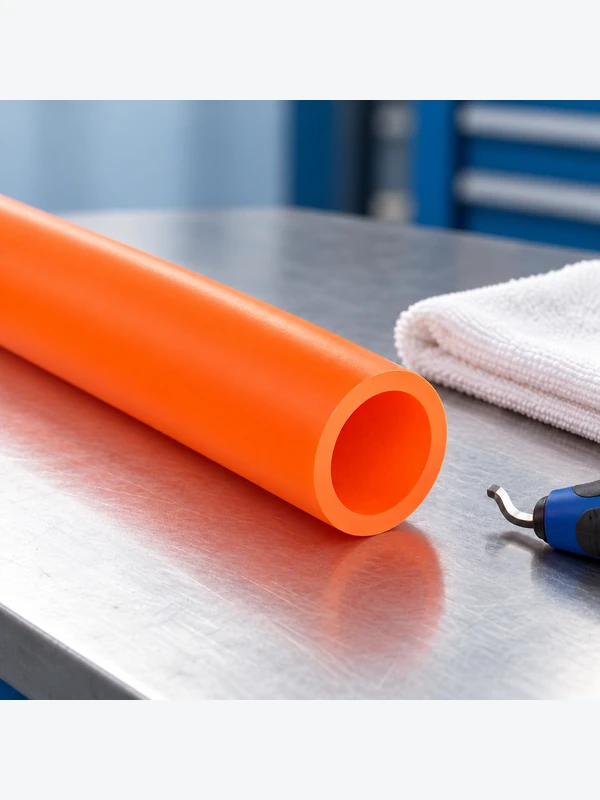
設置時の経路を、曲がり部分、アクセス点、補修箇所を含めて記録してください。一方のチャンバーでの測定結果だけでは、経路上のさらに先にある未記録の接続部にも同じ通り径があるとは限りません。写真は、適宜スケールや図面を参照として添えるなどして補助的な証拠として日付入りで保管し、写真そのものを適合性の全記録とすることは避けましょう。将来の技術者が、許可された取り外し可能な継手と交換すべき継手を区別できるよう、当時使用した設置指示書も保管してください。.
2026の欧州FTTH/B市場概況レポートでは、EU39年に約295百万戸が敷設可能とされ、普及率は約54%であると報告されています。これらの地域統計は、段階的なサービス開始が依然として重要である理由を示していますが、個々の事業者の配管整備状況を測定するものではありません。有用な現地指標としては、端点が追跡可能で、現在の受入証拠が確認できる予約済みルートの数があります。この指標は、普遍的なコネクタの耐用年数や仮定された掘削コスト削減を想定することなく、資産台帳から算出することができます。.
後日のケーブル追加工事の前に、新規ケーブルの直径、曲げ限界、および敷設方法を記録済みの配線経路と照合してください。経路が変更されたり、水没したり、開放されたままとなったり、試験記録と一致しない場合は、ネットワーク所有者の手順に従って、該当箇所を点検し、再認定を行ってください。 FTTH計画に関する記事 その物理経路の選択がサービスのアクティベーションにどのように関連するかを説明します。.
さまざまな用途に応じて、ストレートカップリング、レデューサー、エンドキャップを選択してください。
| コネクタのアプローチ | 最適の用途 | バリュードライバー | ウォッチポイント |
|---|---|---|---|
| ストレートプッシュフィットカップラー | 同一サイズのダクト管路の接続 | Fast, repeatable field assembly | Exact OD range and full insertion |
| Locking or mechanically retained coupler | Routes exposed to movement or higher handling risk | Additional retention confidence where specified | Follow the maker’s torque/assembly process |
| Reducer or transition fitting | Controlled change between duct sizes | Enables staged architecture without improvised adapters | Check bore transition against cable/blowing plan |
| End cap or closure | Protecting spare pathways | Limits ingress before future use | Label the route and inspect before activation |
For routes that also need carefully matched duct material and wall construction, review the specifications for HDPE microducts alongside the fittings. Compatibility should be confirmed by the supplier’s documented range, not inferred because two products have similar nominal names.
Select by route condition, then validate in the field
| ルートの状況 | 選択問題 | Field validation | 商業的な影響 |
|---|---|---|---|
| New direct-buried section | Will the connector stay within the duct maker’s OD tolerance after handling? | Inspect cut, insertion depth and seal condition | Reduces re-excavation exposure |
| Long air-blown run | Does the assembly maintain the agreed pneumatic performance? | Use the documented pressure/hold procedure | Protects crew and equipment time |
| Cabinet or chamber transition | Is the fitting accessible for inspection and future change? | Label duct path and part number | Improves troubleshooting speed |
| Mixed legacy route | Are material, OD and wall-thickness data known? | Measure a sample; do not assume nominal equivalence | Avoids avoidable compatibility claims |
Request a dimensional compatibility matrix, state assembly and leakage checks in the method statement, and define how spare routes are capped and labeled. Trial the actual cable, duct and fiber blowing machines together before committing to production quantities.
Separate blowing-pressure checks from gas and fire protection
A connector pressure test answers a bounded question: did the identified assembly meet the agreed leakage criteria under the recorded conditions? It does not automatically prove retention under every mechanical load, indefinite underground sealing or suitability as a gas barrier at a building entry. Leakage, mechanical retention and gas migration are distinct acceptance questions. They may require different configurations and evidence, particularly when a cable occupies a duct that was originally tested empty.
At a premises boundary, identify the pathway that needs sealing. Gas or water may travel through an empty duct, around an installed cable, or through a gap around the conduit penetration. An ordinary straight coupler joining two outside duct surfaces does not, by that fact alone, close all those routes. Ask the responsible designer to specify the required barrier, installation location, approved cable range and verification method. Do not substitute an end cap where an occupied cable seal is required.
Fire stopping is a further, separate building requirement. A pressure-hold result or a plastic body material description is not a tested fire-resistance classification for a wall or floor penetration. Check the complete penetration arrangement and the applicable building requirements. Keep evidence for the supplied configuration with the route file, and leave any performance field unapproved when the relevant test or installation detail has not been provided.
List the joining, end-protection and migration-barrier requirements separately in the purchase specification. The HDPEマイクロダクトのオプション should be reviewed with the selected couplers, entry seals and installation method. A quotation can then identify which item joins a duct, which protects a spare end and which, if any, provides a documented migration barrier. It avoids describing every connector as an all-purpose seal.
Check which component and conditions each test covers
Identify the product and test conditions covered by each cited standard. IEC 60794-5-20 is concerned with microduct optical-fiber cables installed by blowing; a project leakage procedure evaluates the stated assembled joint; and IEC 61386-1 sets general requirements for conduit systems for cable management. A passing test to one method does not automatically certify a complete connector, duct-and-cable assembly, or a network installation. Destination-market regulation, installation environment and any marketing claim determine what additional evidence is necessary.
Outside-plant acceptance must follow the applicable network design, local rules and the installation documents for the selected components. For FTTH infrastructure, project documents should distinguish the pathway hardware, the optical cable, and the installed system acceptance criteria. Unsupported “compliant” language can create bid risk, rejected submittals or warranty disputes; purchasers should ask for the precise standard edition, test condition and product configuration behind every claim.
ANMASPC / Microduct Connector can be a practical sourcing partner when buyers need configurable fittings, compatibility documentation and a disciplined sample-validation process. The productive discussion is not “which connector is cheapest?” but “which documented assembly matches this duct, route and acceptance plan?”
よくある質問
What are microduct connectors used for?
They join, transition, branch, cap or terminate microduct pathways used to install and protect fiber cables. Their central function is to maintain a continuous, appropriately sealed route; the exact function depends on the fitting type and network design.
Why are microduct systems used in telecom networks?
They let network owners install capacity in stages by reserving small pathways for later cable placement. This can reduce repeat civil work, provided duct routing, labeling and sealing are planned from the first build stage.
How do microduct connectors prevent air leaks?
Correctly matched fittings use internal seals and retention elements to grip the duct and limit leakage at the joint. Clean, square cuts and full insertion are essential; validate the assembled joint using the supplier’s specified pressure or leakage procedure.
Can microduct connectors be reused?
Some designs may be removable, but reuse should never be assumed. Check the manufacturer’s instructions, inspect seals and retention parts, and replace the fitting when the documented condition or performance cannot be verified.
What is the role of microducts in FTTH infrastructure?
They provide protected, organized pathways for fiber from aggregation points toward premises and distribution locations. Their value lies in enabling later cable additions with less disruption, but only if pathways remain accessible and accurately identified.
How do you choose a microduct connector size?
Start with the actual measured duct outside diameter and the connector’s approved dimensional range; then check application, route condition and duct material. Do not select from the nominal duct label alone, and confirm the chosen pairing with a documented field trial.
Are microduct connectors only an installation accessory?
No. They influence the continuity, sealing and maintainability of the pathway. Their role should be evaluated together with the duct, cable, route conditions, access points and the documented installation method.
What makes connector documentation useful for a future network upgrade?
A useful record identifies the exact connector and duct, route location, cable pairing, installation and test evidence, inspection notes and approved replacement conditions. Generic product photos are not enough for a later intervention.
Does a pressure-hold test prove that a microduct joint is a fire stop?
No. A leakage check is evidence for the stated pressure test, not a fire-resistance classification. Building penetrations need the applicable tested arrangement and installation documentation. Identify the duct interior, cable annulus and surrounding penetration separately; one barrier may not address all three.
When should a spare microduct be checked again?
Recheck it when the route, cable pairing or installation method changes, when damage or water ingress is suspected, or when continuity and previous acceptance records cannot be confirmed. The network owner should define the inspection and requalification procedure; there is no universal calendar interval established here.
参考文献
- Fibre Council Europe — European FTTH/B Market Panorama 2026, published 17 March 2026
- IEC 61386-24:2004 — Conduit systems buried underground, official scope
- Griffioen および Jonker/Plumettaz — ケーブル吹付試験実施のためのガイドライン、IWCS 2021 要旨
要約
Microduct connectors contribute to network expansion when they preserve a compatible pathway and leave a usable maintenance record. Select the joint against measured duct dimensions, prepare and seat it correctly, and keep the actual test conditions with its route location. For future work, verify spare-bore continuity and identify every transition before selecting the new cable. Treat blowing leakage, mechanical retention, building-entry gas migration and fire stopping as separate questions with separate evidence. A successful pressure hold should never become an unsupported claim about all four. Documented duct routes, accessible joints and correctly protected spare ends give the next installation crew a practical starting point for an upgrade.



