
A جفتکننده لوله پلاستیکی باید برای یک محیط مسیر تعیینشده انتخاب شود، نه صرفاً به خاطر داشتن برچسب «خارج ساختمان». یک کابینت پوشیده، یک حفره دسترسی مرطوب و یک اتصال زیرزمینی مستقیم در معرض عوامل مختلف قرار دارند. اتصال مناسب باید دارای سازگاری اندازهای، تراکم، ثبات و محافظت مستند شده برای موقعیت واقعی باشد.
ابتدا مسیر لوله و کابل را مشخص کنید، سپس شرایط آب، نور خورشید، دما و شرایط مکانیکی را بررسی کنید. از شواهدی حمایت بخواهید که دقیقاً به محصول و لوازم جانبی مورد نیاز آن مربوط باشد. رنگ سیاه، بدنه ضخیم به نظر رسیدن یا داشتن اسم «زیرزمینی» در نام محصول به تنهایی کفایت نمیکند تا مناسب بودن آن را ثابت کند.
آیا اتصالدهنده لوله پلاستیکی در یک حفره قرار خواهد گرفت یا مستقیماً زیرزمینی خواهد بود؟
ثبت کنید که جوش در معرض نور خورشید قرار دارد، در داخل یک پوشش حفاظتشده است، در یک اتاقک واقع شده است یا مستقیماً در زمین قرار دارد. دسترسی پیشبینیشده برای نگهداری و احتمال وجود آب ساکن را نیز ذکر کنید. در معرض قرار گرفتن طی حملونقل، انبارداری و نصب ممکن است با موقعیت عملیاتی نهایی متفاوت باشد.
یک کمپرس ممکن است از یک اتصال در برابر نور مستقیم خورشید محافظت کند، همانطور که در طول کارهای بعدی شبکه، آن را در معرض آب و دستکاری قرار میدهد. یک کابینت روی زمین ممکن است میزان تأثیر مستقیم باران را کاهش دهد، اما همچنان با تغییرات دما و کابلگذاری پرازدحام روبرو باشد. مدفون کردن مستقیم، الزامات مکانیکی و نصبی خود را به همراه دارد. این شرایط باید به صورت جداگانه در درخواست خرید توصیف شوند.
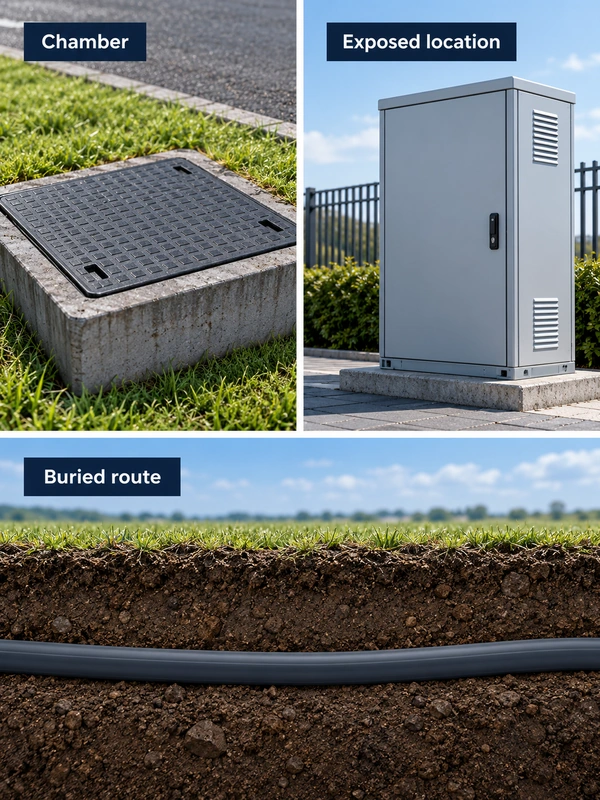
| مکان | سوالات برای بررسی | مستندات مورد نیاز برای درخواست |
|---|---|---|
| کابینت پناهگاهی | دمای محیط، تکثیف و دسترسی برای نگهداری | محدودیتهای عملیاتی و فاصله نصب |
| چَمْبَر دسترسی | آبزدگی، پشتیبانی مسیر و دستکاری مکرر | شرایط بستهبندی و پیکربندی محافظتی |
| نصب روی هوا | نور خورشید، آب و هوا و تغییرات دما | شواهد قابل مشاهده مربوط به مدل خاص |
| دفن مستقیم | تماس با خاک، بارهای نصب و محافظت مورد نیاز | تصویب کلیه مجموعههای زیرزمینی |
هرگز فرض نکنید که محافظت در برابر یک نوع تأثیر، محافظت در برابر نوع دیگری را نیز شامل میشود. یک امتیاز مقاومت در برابر آب به طور خودکار مقاومت در برابر اشعه UV را تضمین نمیکند، و یک ادعای مربوط به اشعه UV نشاندهنده مقاومت در برابر بارهای نصب نیست. هر یک از الزامات را باید به قطعه و تنظیمات واقعی که تأمین میشوند، ردیابی کرد.
کدام ابعاد لوله باید با اتصالدهنده پلاستیکی مطابقت داشته باشد؟
قطر بیرونی، قطر داخلی، ماده و انحراف مجاز هر گونه انتهای لوله را ثبت کنید. یک اتصال مستقیم معمولاً برای دو سطح تماس متناسب و یکسان استفاده میشود؛ در حالی که یک تبدیلکننده نیاز به دو مشخصات اندازه جداگانه دارد. در مواردی که فاصله کابل یا انتقال مهم است، مسیر داخلی را بررسی کنید.
برای بهروزرسانی، لوله کانال موجود را اندازهگیری و شناسایی کنید، نه اینکه تنها به یک نقشه قدیمی تکیه کنید. تغییر شکل، خسارت یا جایگزینیهای غیرمستند میتوانند باعث گمراهکننده بودن اندازه اسمی شوند. برای اندازهگیری از مواد مناسب استفاده کنید و ساختار لوله کانال را در مقایسه با تأیید سازنده اتصالات، بررسی کنید.
The راهنمای اتصال دهنده میکروکابل مستقیماً زیر زمین قرار دارد متن مرتبط با انتخاب را ارائه میدهد، اما هنوز باید مدل دقیق با مسیر واقعی مطابقت داده شود. یک قطعهای که برای خاکسپاری تبلیغ میشود، به طور خودکار با هر لولهای که میتوان آن را در ورودی خود فرو کرد، سازگار نیست.
چه مدارکی مقاومت یک اتصال دهنده لوله در برابر آب، اشعه فرابنفش و بار را تأیید میکنند؟
قابلیت مناسب برای محیط زیست نیازمند بیش از یک فهرست از ویژگیهای جذاب مواد است. درخواست اطلاعات مربوط به قرار گرفتن در معرض آب، دما، نور خورشید (در صورت لزوم) و شرایط مکانیکی کنید. بپرسید که آزمایشها چگونه با اندازه کنکتور، ماده لوله و اضافات ذکر شده در عرضه قیمت مرتبط هستند.
مستندات MPB30601+ شرکت Hexatronic مثالی مفید از الزامات ویژه به کنفیگوراسیون است: استفاده زیرزمینی مستقیم آن شامل یک پوشش بیرونی میشود. این موضوع پوشش را اختیاری نمیکند و فیوز بدون پوشش سایر سازندگان را قابل قبول نمیداند. مجموعه کامل تستشده یا تأییدشده مهم است.
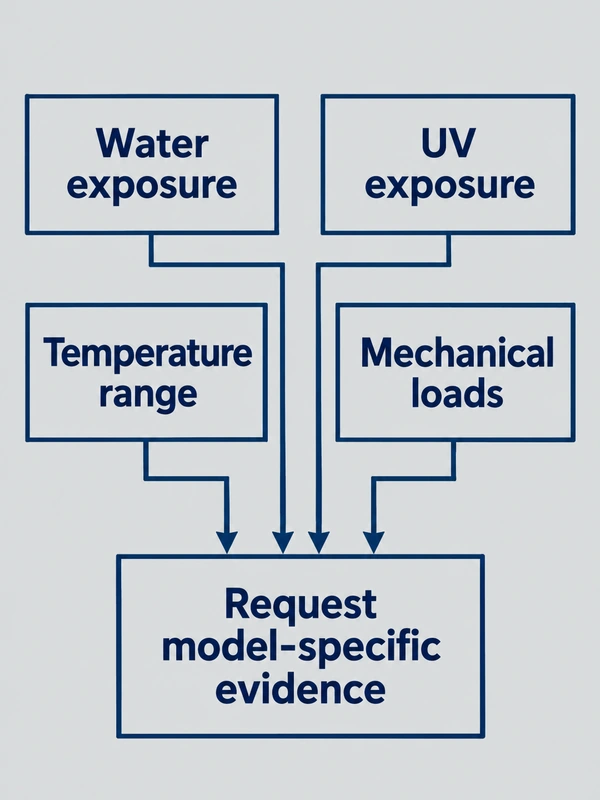
وقتی یک تأمینکننده به یک استاندارد اشاره میکند، درخواست دامنه اعمال و گزارش مربوطه را بدهید. تنها ذکر شماره استاندارد، نشاندهنده اعتبار مستقل، پوشش تمام انواع ابعاد یا معادل بودن با محصول دیگر نیست. نسخه معتبر سند را ثبت کنید تا تیمهای خرید و نصب از همان اطلاعات استفاده کنند.
| این ادعا در یک لیست | Useful follow-up question | Insufficient substitute |
|---|---|---|
| Water resistant | Under what conditions and for which assembly? | A photograph of the part near water |
| UV resistant | What evidence covers this material and variant? | Black body colour alone |
| کابل زیرزمینی مستقیم | Are a cover or other protective measures required? | The words underground in a title |
| Pressure rated | Working, proof, burst or sealing pressure? | An unexplained maximum number |
| Tested to a standard | Which model, method, conditions and results? | A standard number without supporting scope |
Where evidence is missing, request it before approving the part. Do not fill gaps by borrowing ratings from a visually similar connector. Product-specific data is especially important when a family includes several body materials, sizes or protective configurations.
Does the route need a duct coupler, a cable seal or both?
A coupler joining the outside surfaces of two ducts can leave the space around the cable open. If the route requires control of gas or water migration along that space, specify a separate sealing function. Emtelle describes its gas-block connector as sealing between connector, tube and fibre cable.
Its gas-block datasheet also separates tube dimensions from fibre-unit or cable ranges and distinguishes gas sealing from pressure information associated with fibre installation. These distinctions matter at building entries and other defined boundaries. They do not mean that every coupler needs a gas block or that a gas block replaces a building penetration seal.
Assess a suitable اتصال دهنده گاز-بلوک میکرودیوود when the route design calls for cable-annulus sealing. Confirm cable diameter, activation sequence, location and sealed-state conditions. Do not infer those properties from the outdoor rating of the adjacent straight coupler.
When does a microduct coupler need a protective cover and supports?
An external shell can be part of a connector’s approved protective arrangement, but it cannot correct a wrong duct diameter or damaged seal. Install the specified accessory and check that it closes correctly without trapping debris or pressing a release mechanism.
The راهنمای رفع مشکلات پوشش-پوسته میکروکانال discusses common protection and fit issues. Investigate the underlying joint before covering it. If a shell repeatedly opens or does not seat, confirm the model pairing and route loading instead of improvising a fastening method.
Support the duct to avoid continuous tension, sharp bending and unintended loads at the connector. Keep the final arrangement accessible where maintenance is expected. A well-protected body can still be undermined by a duct forced into a misaligned route or a collar pressed against nearby hardware.
Which connector checks should be completed before burial or enclosure?
Check component identity, duct dimensions, cut quality, outside sealing surfaces, insertion and retention according to the manufacturer’s instructions. Complete the route’s approved passage and leakage checks before handover. Keep them separate: a pressure-tight joint does not prove an unobstructed cable route.
Use the project-defined pressure, duration, temperature conditions and acceptance criteria within the limits of every component in the test assembly. Check temporary adapters and closures as well as installed joints. Isolate and release pressure before making adjustments; never use a catalogue burst figure as a routine operating instruction.
Record whether tests were completed before or after final placement. If subsequent handling, covering or burial can affect the joint, follow the project requirement for inspection or verification at that stage. A record should identify the final configuration, not just a successful bench assembly.
Can the existing duct coupler accommodate a future cable upgrade?
Network maintenance planning begins with an identifiable joint. Record location, connector variant, duct dimensions, accessories and acceptance results. Include cable details where a reducer or cable seal makes them relevant. Future crews should be able to determine what was installed without excavating solely to identify it.
For a hypothetical upgrade to a larger cable, an existing coupler might remain compatible with the duct outside diameter while the smaller route bore becomes limiting. A gas seal may also need replacement because of the new cable diameter. Review the whole route rather than approving the upgrade from the coupler’s external appearance.
Follow the manufacturer’s reuse and release policy during repairs. Inspect previously gripped duct surfaces and preserve enough length for a supported replacement. If cutting back creates tension, use an approved repair arrangement rather than stretching the remaining duct into the joint.
What to include when requesting an outdoor duct coupler quotation
A useful enquiry includes both duct dimensions, cable details, installation location, water and sunlight exposure, temperature requirements, operating conditions and required documentation. State whether the quote must include covers or other accessories. This prevents two suppliers from pricing different assemblies under the same coupler name.
سوالات متداول
Can a plastic duct coupler be used outdoors and underground?
Only when the exact variant and configuration are documented for the location. Distinguish exposed, chamber and direct-buried conditions. Required covers, supports and installation methods are part of the approval rather than optional extras.
What should be inspected on a plastic duct coupler before cable installation?
Check identification, dimensions, cut and surface condition, seating, retention, supports and protective accessories. Verify the approved passage and leak-test records. Investigate damage or uncertainty before cable installation rather than using the installation itself as a test.
How does a plastic duct coupler differ from a standard telecom coupler?
Plastic describes the body material, while standard telecom coupler is an imprecise category. Compare actual function, interfaces, bore, sealing, retention and environment. Two differently named products can serve the same role, while two similarly named ones can differ substantially.
How is a plastic duct coupler replaced during a network upgrade?
Plan access and isolation, follow the release instructions and inspect the remaining duct. Install a documented compatible replacement without route tension, reassess cable passage and any cable seal, then complete the specified acceptance checks and update the route record.
Which materials protect a coupler from moisture and UV?
Suitability depends on the exact formulation, seal system, configuration and exposure evidence. A broad resin name or black colour is insufficient. Request model-specific documentation rather than treating a material category as an unconditional performance guarantee.
Which installation errors can cause a plastic duct coupler to fail?
Wrong dimensions, damaged or dirty duct ends, incomplete insertion, unsupported loads, accidental release contact and missing required protection are all concerns to investigate. A site-specific examination is needed to identify the cause; appearance alone cannot establish it.
مراجع
- کنکتورهای هگزاتورنیک، MPB30601+ و توقفهای انتهایی: application, construction and external-cover conditions.
- امتل، اتصالات بلوک گازی: sealing around the fibre cable as a separate requirement.
- امتل، اتصالات گازی، شماره ۵: separate duct and fibre interfaces and sealing information.
خلاصه
Select an outdoor duct coupler by the actual route: dimensions, cable passage, water, sunlight, temperature and mechanical exposure. Confirm the complete protective configuration and keep cable sealing separate from duct joining. Document installation and acceptance before access becomes difficult so future repairs begin with reliable information.
The black direct-buried microduct connector is a product to assess against those requirements. Request the exact size, current installation instructions and environmental evidence. Its intended application provides a starting point, while the project-specific confirmation determines whether it belongs in the route.



